.webp&w=384&q=75)

Loading, please wait...
Loading, please wait...
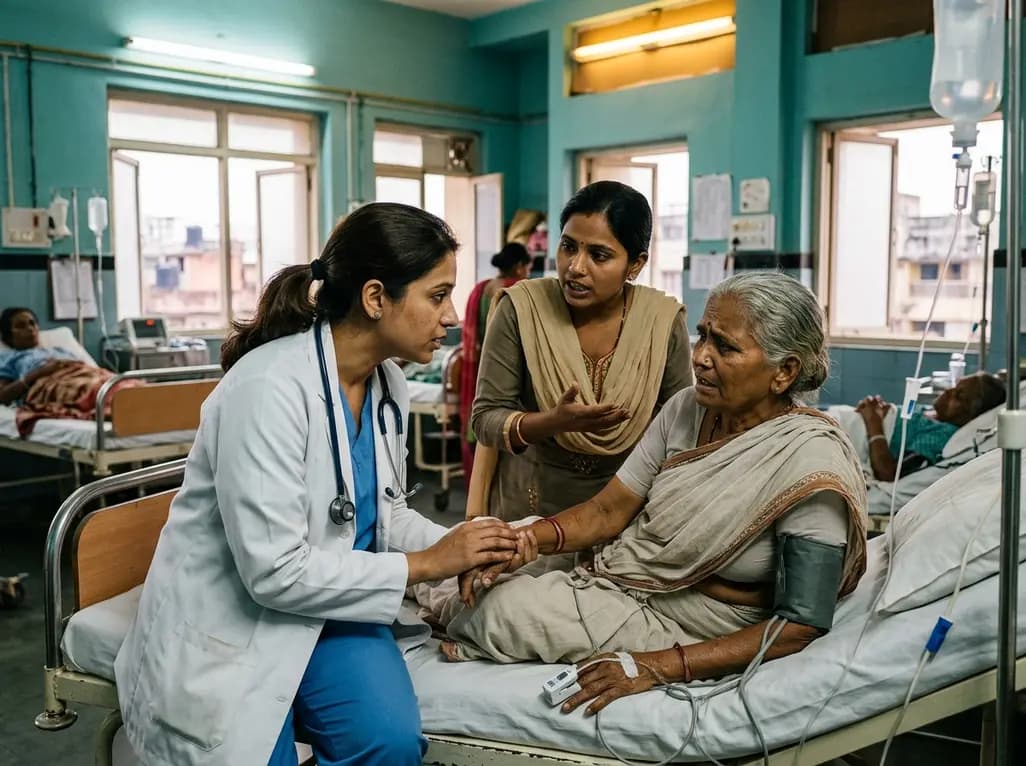
Researchers recently identified significant linguistic and gender-based differences in sepsis outcomes. These sepsis mortality disparities remain largely unrecognized in the public health sector. A single-center study analyzed data from 677 patients over a two-year period. The findings highlight a critical need for culturally and linguistically sensitive care in emergency settings. Furthermore, this research suggests that patient background significantly influences clinical trajectories and survival probabilities.
Non-English-speaking patients faced significantly higher mortality rates compared to English-speaking individuals. The study noted a stark incidence rate difference of -0.36. Consequently, these patients also required more aggressive interventions to manage their condition. For instance, clinicians administered vasopressors and mechanical ventilation more frequently to this cohort. Therefore, linguistic diversity directly correlates with the intensity of care and survival outcomes. Moreover, communication gaps often lead to delayed diagnosis, which is fatal in sepsis cases.
The research examined secondary outcomes across various demographic groups. Differences in ICU admission rates and the incidence of septic shock were statistically significant. While biological factors may contribute, social determinants often play a major role in how patients access care. Therefore, addressing systemic inequities is essential for improving global health outcomes. Similarly, healthcare providers must recognize that gender and ethnicity can alter the presentation of sepsis symptoms.
Clinicians must prioritize clear communication to mitigate these treatment gaps. Utilizing professional translation services can significantly reduce delays in recognizing severe infection. Additionally, hospital systems should implement standardized protocols that account for demographic diversity. Because sepsis is highly time-sensitive, every communication delay impacts the survival chance of the patient. Ultimately, personalized medicine must include a focus on the patient\'s social and linguistic context.
Linguistic barriers, gender-based biological differences, and socioeconomic factors significantly contribute to variations in sepsis outcomes and mortality rates.
Patients with limited English proficiency often experience higher rates of ICU admission and mechanical ventilation due to delayed symptom recognition and treatment initiation.
Disclaimer: This content is for informational and educational purposes only. It does not constitute professional medical advice, diagnosis, or treatment. Always seek the advice of your physician or other qualified health provider with any questions you may have regarding a medical condition. Refer to the latest local and national guidelines for clinical practice.
References
Gill HS et al. Racial, gender and language based disparities in sepsis: a public health perspective. Intern Emerg Med. 2026 Jun 07. doi: 10.1007/s11739-026-04424-9. PMID: 42251623.
Jacobs ZG, et al. The Association between limited English proficiency and sepsis mortality. J Hosp Med. 2024;19(1):140-146.
Rudd KE, et al. Global, regional, and national sepsis incidence and mortality, 1990–2017: analysis for the Global Burden of Disease Study. The Lancet. 2020;395(10219):200-211.
"
Read summarized clinical updates, watch expert medical content, and earn CME certifications right from your smartphone.
Open your smartphone camera to scan and install.





A 2026 study reveals that non-English speaking patients face higher sepsis mortality and more aggressive interventions, highlighting critical care inequitie...
4 months ago

As monsoon seasons elevate arboviral disease threats, Tamil Nadu has initiated an ICMR-monitored evaluation of the tetravalent dengue vaccine in Tenkasi district. Clinicians emphasize clinical monitoring, public prevention, and high-quality early pediatric care to reduce disease morbidity across endemic regions.
Today

Leucine Rich Bio has introduced South Asia's first comprehensive vaginal microbiome test, BugSpeaks. By profiling microbial dysbiosis, pathogens, and antimicrobial resistance, this next-generation diagnostic platform provides clinicians with deeper insights into recurrent infections, fertility, and reproductive health.
Today

Review how tailored exercise programs benefit frail older patients with heart failure. Explore pathophysiological mechanisms, individualized training prescriptions, and strategies to overcome adherence barriers in clinical practice.
Today

This comparative study evaluates posterior labral tears with and without glenohumeral instability, highlighting distinct demographic patterns, MRI underestimation in stable shoulders, and successful arthroscopic repair outcomes.
Today

A clinical study demonstrates that early intervention with tocilizumab, either as monotherapy or bridged with corticosteroids, achieves significant proptosis reduction and resolves active inflammation in treatment-naive thyroid eye disease.
Today
