.webp&w=384&q=75)

Loading, please wait...
Loading, please wait...

Sentinel lymph node biopsy (SLNB) is currently the most effective prognostic indicator for cutaneous melanoma. However, clinicians often face challenges when applying this procedure to elderly populations. Because of increased comorbidities and lower perceived benefits, the standard surgical indication is frequently debated. To address this, researchers developed the SENTINOLD nomogram, a predictive model specifically designed for patients aged 75 years and older.
The study utilized a large multicenter cohort consisting of 795 patients from Spanish hospitals. By evaluating 12 clinicopathologic variables, the researchers sought to improve prediction accuracy for sentinel node involvement. Consequently, the SENTINOLD nomogram demonstrated superior discrimination with an AUC of 0.71. This significantly outperformed the Memorial Sloan Kettering Cancer Center (MSKCC) calculator, which scored 0.66, and the Melanoma Institute Australia (MIA) model, which scored 0.64. Furthermore, decision curve analysis highlighted that this tool provides the highest net benefit for risk stratification.
Notably, the model underwent temporal validation using a hold-out dataset. This rigorous testing confirmed its robustness in contemporary clinical settings. Therefore, the nomogram serves as a vital resource for personalized medicine. It allows surgeons to identify high-risk individuals who truly benefit from staging while avoiding unnecessary procedures in frail patients. Moreover, better stratification ensures that elderly patients gain appropriate access to adjuvant therapies that depend on accurate nodal staging.
Elderly patients often have different prognostic profiles and higher surgical risks than younger individuals. Traditional models like MSKCC and MIA may not accurately predict risk in this specific demographic. The SENTINOLD nomogram provides a tailored approach to ensure more precise staging decisions.
The model incorporates 12 distinct clinicopathologic variables to estimate the likelihood of sentinel lymph node metastasis. These factors help refine the risk assessment beyond simple Breslow thickness or age-based guidelines.
Disclaimer: This content is for informational and educational purposes only. It does not constitute professional medical advice, diagnosis, or treatment. Always seek the advice of your physician or other qualified health provider with any questions you may have regarding a medical condition. Refer to the latest local and national guidelines for clinical practice.
References
1. Martínez Campayo N et al. Improving Risk Stratification for SLNB in Elderly Patients With Melanoma: The SENTINOLD Nomogram. Int J Dermatol. 2026 Apr 12. doi: 10.1111/ijd.70413. PMID: 41966754.
2. Lo SN et al. Improved Risk Prediction Calculator for Sentinel Node Positivity in Patients With Melanoma: The Melanoma Institute Australia Nomogram. J Clin Oncol. 2020;38(24):2719-2727.
3. Wong SL et al. A nomogram that predicts the presence of sentinel node metastasis in melanoma with better discrimination than the American Joint Committee on Cancer staging system. Ann Surg Oncol. 2005;12(4):282-288.

Read summarized clinical updates, watch expert medical content, and earn CME certifications right from your smartphone.
Open your smartphone camera to scan and install.





The SENTINOLD nomogram provides superior accuracy in predicting sentinel lymph node positivity in melanoma patients aged 75 and older....
6 months ago

An observational study from the NIH All of Us Research Program reveals that adding a multi-ancestry polygenic risk score to machine learning models provides only modest improvements in predicting adult weight gain, underscoring the enduring significance of routine clinical and lifestyle factors.
Today

A study in JAMIA Open shows lightweight open-source reasoning LLMs achieve up to 95% sensitivity and accelerate evidence synthesis screening by nearly twentyfold, presenting a cost-effective, scalable AI solution for biomedical research and systematic reviews.
Today
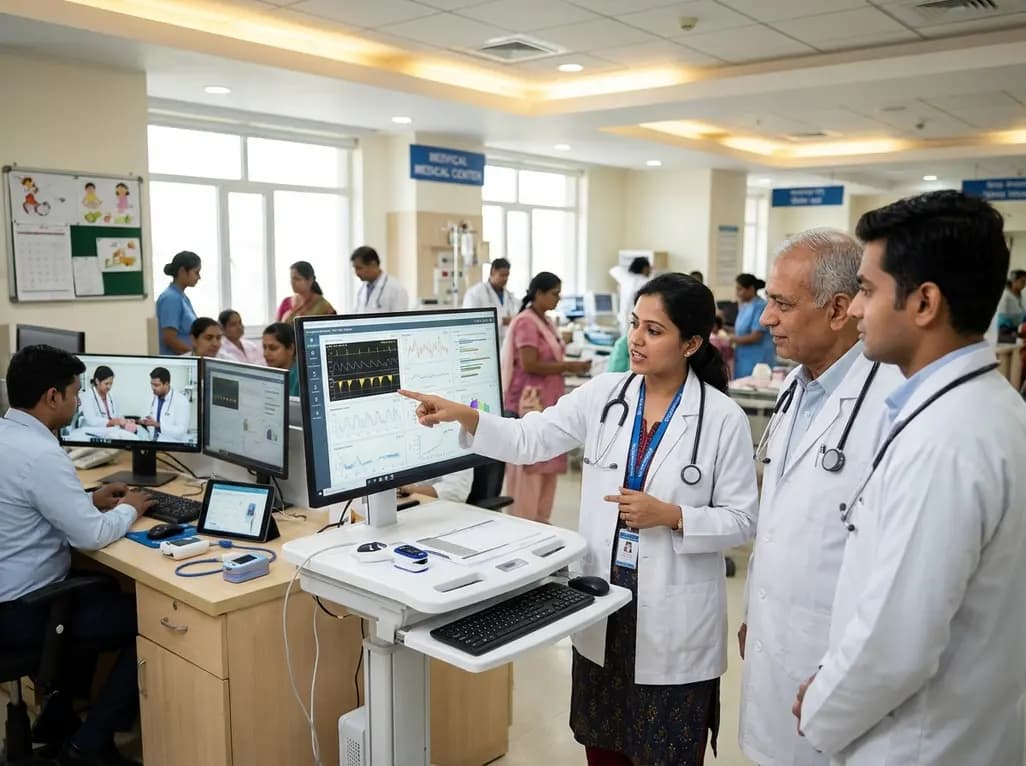
A landmark study details how an enterprise pediatric remote patient management model expanded from a single cardiology pilot to 16 diverse specialty programs by combining centralized digital operations with specialty clinical leadership.
Today
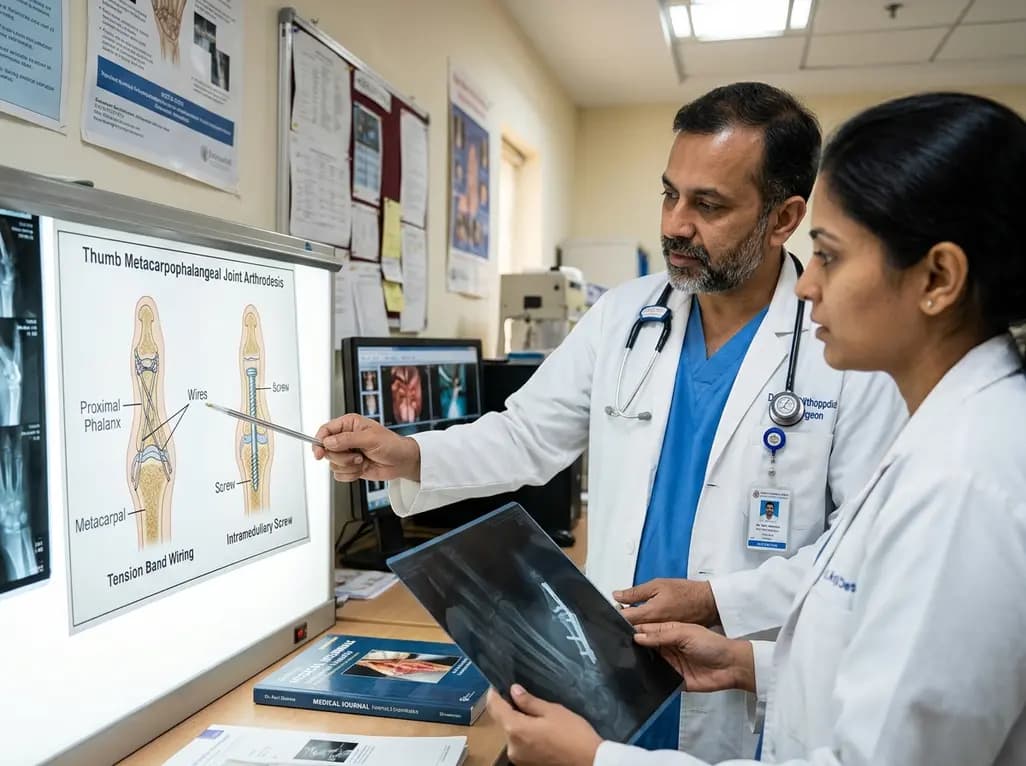
A comparative review of tension band wiring and intramedullary screw fixation in thumb metacarpophalangeal arthrodesis, evaluating union rates, hardware complications, and clinical outcomes.
Yesterday
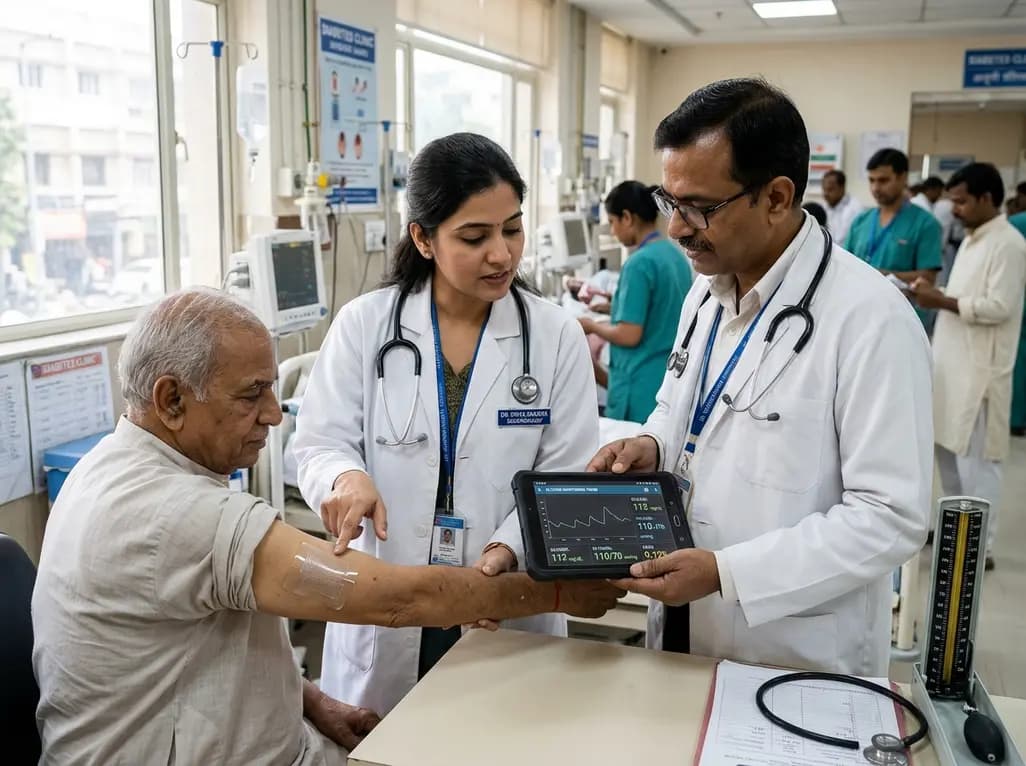
A breakthrough ultrathin multimodal sensor decouples physical hemodynamic monitoring from disposable electrochemical calibration, achieving long-term wearable glucose prediction with 81.36% accuracy and a 9.12% MARD. This offers a robust, drift-free solution for outpatient metabolic surveillance.
Yesterday
