

Loading, please wait...
Loading, please wait...
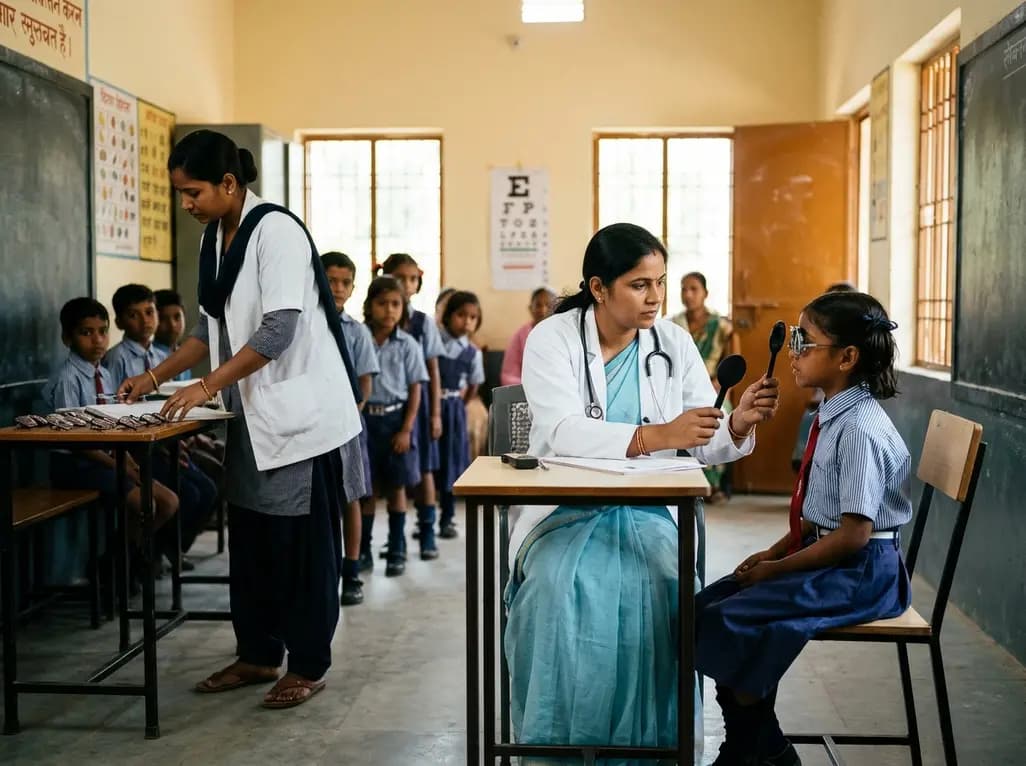
Uncorrected refractive errors and undetected amblyopia pose a profound threat to childhood development and academic achievement. A well-organized school-based vision screening program provides a vital avenue to identify visual deficits early in life. Consequently, proactive outreach initiatives bridge persistent healthcare disparities by bringing diagnostic and therapeutic eye care directly to vulnerable students within their educational environments.
Childhood visual impairment predominantly stems from preventable or easily treatable conditions, particularly refractive errors and amblyopia. However, pediatric patients rarely report visual difficulties because they adapt quickly to subnormal sight. As a result, undetected deficits often lead to permanent amblyopic visual loss if clinicians fail to intervene during critical neurodevelopmental stages. Recent clinical evidence demonstrates the substantial yield of structured outreach programs. In a large retrospective review of over thirty-six thousand screening encounters across three years, approximately twenty-six percent of encounters resulted in screening failure. Furthermore, comprehensive clinical evaluations revealed that over four thousand students required prescription spectacles. In addition, nearly eight hundred children required specialized referrals for potential vision-threatening diseases. These robust findings emphasize that visual impairment remains heavily underdiagnosed among school-age children. Therefore, systematic screening protocols remain indispensable for timely clinical intervention. Routine pediatric surveillance empowers clinicians to identify anisometropia and strabismus before permanent suppression occurs. Ultimately, early refractive correction restores bilateral visual acuity, strengthens binocular fusion, and fosters healthy neurosensory maturation throughout childhood.
Children from economically disadvantaged backgrounds experience substantial hurdles when accessing standard ophthalmic care. Specifically, persistent barriers such as parental work constraints, limited transportation, and financial limitations prevent families from attending distant outpatient clinics. Consequently, high failure rates during initial screenings rarely produce completed clinical evaluations without direct intervention. To solve this problem, optometrist-led outreach models deliver comprehensive examinations directly within the academic setting. In addition, providing on-site cycloplegic refractions and dispensing custom spectacles eliminates significant logistical friction for vulnerable families. Because clinical care takes place in a familiar school setting, parental consent and student cooperation improve dramatically. Moreover, this community-oriented model aligns seamlessly with public health priorities in developing nations, such as India. Through government initiatives like Rashtriya Bal Swasthya Karyakram, mobile medical teams address similar barriers by screening underserved school children across rural districts. Therefore, eliminating geographical and financial obstacles ensures equitable access to sight-saving care. Ultimately, delivering comprehensive clinical services directly to schools bridges critical care gaps and ensures that identified students receive appropriate therapeutic corrections.
Modern pediatric screening models increasingly incorporate automated photoscreening devices, such as the Welch Allyn Spot Vision Screener, to evaluate visual acuity quickly. These portable instruments non-invasively assess refractive status, pupillary alignment, and gaze symmetry within seconds. Furthermore, automated photoscreeners operate effectively without requiring active, subjective literacy responses from young students. However, clinical teams must recognize that photoscreening tools function solely as screening instruments rather than definitive diagnostic modalities. For example, uncalibrated instruments or inappropriate referral thresholds can generate elevated false-positive rates, thereby burdening secondary eye facilities. Conversely, undetected false negatives may delay critical medical interventions for subtle vision-threatening conditions. Therefore, successful outreach initiatives combine automated assessments with confirmatory examinations performed by qualified optometrists or ophthalmologists. When a student fails initial instrument testing, skilled practitioners perform thorough cycloplegic refractions and dilated fundus examinations. In addition, clinician-led evaluations differentiate routine refractive errors from complex ocular conditions, including keratoconus, media opacities, and retinal anomalies. As a result, this tiered diagnostic approach maintains superior clinical sensitivity while optimizing public healthcare resources.
Amblyopia represents the leading cause of preventable monocular visual impairment in children worldwide. Specifically, pathological conditions such as uncorrected anisometropia, high bilateral hyperopia, and strabismus disrupt normal synaptic connectivity within the primary visual cortex. Fortunately, clinical practitioners can successfully reverse amblyogenic deficits if they initiate evidence-based therapy during early neurodevelopmental windows. However, older children and adolescents can also achieve functional visual gains when clinicians provide customized refractive correction. Consequently, outreach screening programs spanning kindergarten through secondary school capture broad student populations during sensitive developmental phases. Primary therapeutic strategies focus on providing full optical correction with precisely prescribed eyeglasses. Furthermore, clinicians introduce occlusion patching or optical penalization when visual acuity fails to equilibrate with optical correction alone. In addition, healthcare providers must diligently monitor treatment adherence, because poor compliance remains the primary reason for treatment failure. By coordinating closely with school teachers and parents, outreach teams can track daily spectacle wear effectively. Thus, integrating clinical oversight with classroom encouragement dramatically improves long-term visual prognosis and binocular function.
Although refractive errors represent the vast majority of failed vision screenings, a notable proportion of children require specialized subspecialty evaluations. In large-scale screening initiatives, approximately eight percent of examined students present with suspected vision-threatening pathologies. These conditions include congenital cataracts, pediatric glaucoma, optic nerve abnormalities, and unexplained retinal dystrophies. Consequently, screening programs must establish robust referral pathways connecting educational centers with regional tertiary eye hospitals. Clear communication protocols ensure that high-risk pediatric patients receive prompt tertiary care without administrative bottlenecks. In addition, clinicians must educate parents thoroughly regarding the clinical significance of specialized referrals to minimize non-attendance. For Indian practitioners working under the National Programme for Control of Blindness and Visual Impairment, structured referral networks are paramount. Connecting school outreach teams with district medical centers ensures timely surgical and medical management of rare ocular conditions. Furthermore, primary care physicians and pediatricians play a critical role in evaluating coexisting systemic disorders, such as neurofibromatosis or juvenile arthritis. Therefore, well-coordinated outreach initiatives serve as vital entry points into comprehensive pediatric healthcare systems. Ultimately, seamless referral networks protect children from lifelong, avoidable blindness.
Early screening identifies amblyogenic risk factors, such as anisometropia and strabismus, during critical neurodevelopmental periods when the visual cortex remains highly plastic. Because young children rarely notice unilateral vision loss, screening detects silent visual deficits before irreversible cortical suppression occurs. Prompt optical correction or patching restores balanced visual input, preventing permanent amblyopia and supporting optimal academic performance. Consequently, timely detection within school settings protects long-term pediatric visual development.
Automated photoscreeners provide rapid, objective measurements of refractive status, pupillary reflexes, and ocular alignment without requiring active subjective feedback from the patient. Therefore, these non-invasive devices are ideal for screening young or anxious children in high-volume educational settings. However, instrument screenings only identify risk factors and cannot replace comprehensive cycloplegic refractions. Consequently, clinicians must evaluate all flagged children to confirm diagnoses and prescribe appropriate optical interventions accurately.
Delivering eye examinations and dispensing spectacles directly at schools removes key barriers, including family financial hardship, transportation difficulties, and missed parental workdays. Furthermore, integrating care within the school allows teachers and school nurses to encourage consistent spectacle use during daily classes. When children receive attractive, durable frames in a familiar environment, peer normalization reduces social stigma. As a result, on-site outreach substantially improves longitudinal compliance and optimizes visual rehabilitation outcomes.
Disclaimer: This content is for informational and educational purposes only... Refer to the latest local and national guidelines for clinical practice.
References

Read summarized clinical updates, watch expert medical content, and earn CME certifications right from your smartphone.
Open your smartphone camera to scan and install.





A 3-year study reveals school-based vision screening identifies high rates of uncorrected refractive error and ocular disease in children. Optometrist-led outreach and on-site care remove socioeconomic barriers, ensuring timely spectacle dispensing, amblyopia management, and subspecialty referral.
Today

A novel smartphone-assisted biosensor utilizing molecularly imprinted polymers and catalytic nanozymes offers antibody-free, enzyme-free urinary microalbumin testing, enabling rapid, low-cost point-of-care screening for early chronic kidney disease.
Today

Public health experts urge policymakers to review rigorous clinical evidence before scaling up double fortified salt. With only half of India's anaemia cases stemming from iron deficiency, specialists highlight structural trial limitations, dietary diversity needs, and pending data from the SAMPADA national survey.
Today
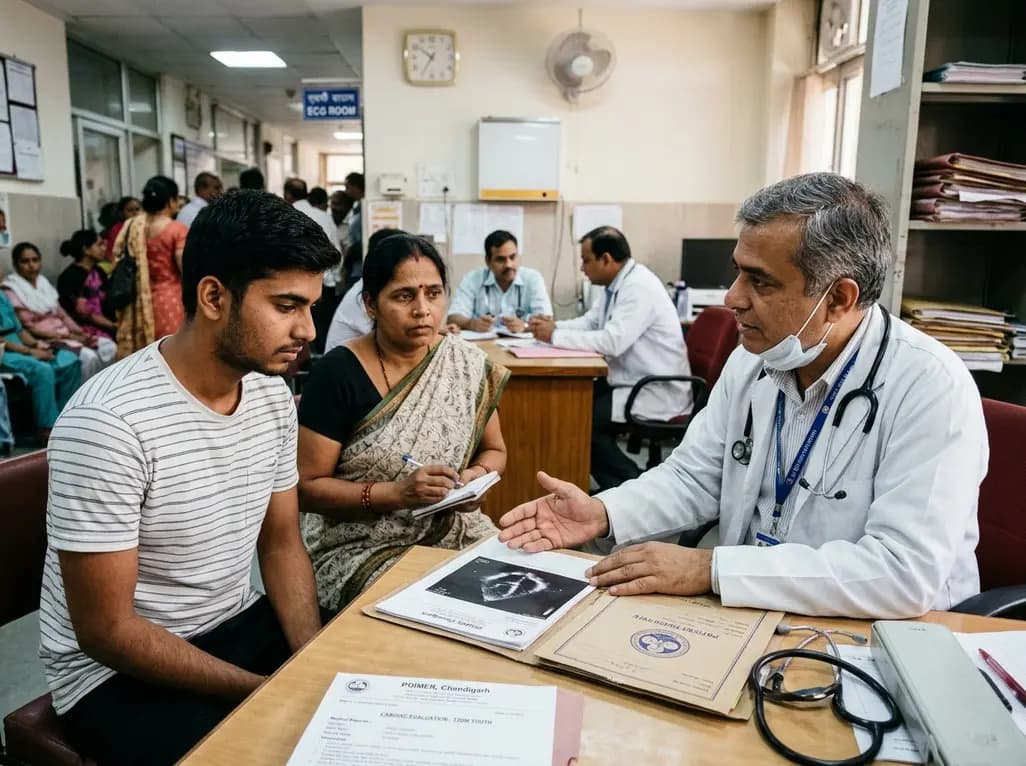
Recent data from PGIMER reveals that young adults diagnosed with type 2 diabetes face an aggressive disease trajectory. They encounter severe cardiovascular and microvascular damage within five years, occurring at higher rates than in type 1 diabetes despite lower mean blood glucose levels.
Today

A clinical overview of resveratrol supplementation in mitigating exercise-induced muscle damage. This narrative review explores physiological mechanisms, reductions in soreness markers like creatine kinase, dosage strategies, and bioavailability enhancements for sports medicine and nutrition practitioners.
Today
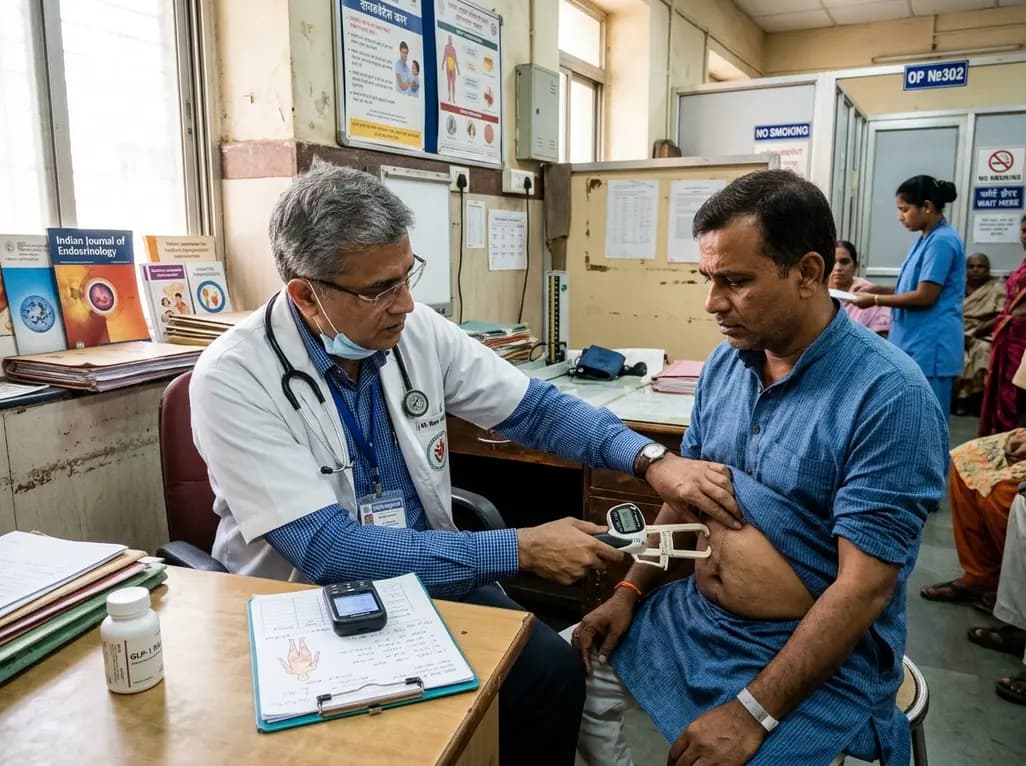
Indian patients present unique metabolic traits, including lower muscle mass and higher visceral adiposity at lower BMI levels. Endocrinologists urge moving past simple scale weight when prescribing GLP-1 receptor agonists, highlighting comprehensive nutritional assessments, muscle function, and organ protection.
Today
