

Loading, please wait...
Loading, please wait...

As India evaluates national nutrition policies, health debates have intensified around double fortified salt as a population-level intervention. However, prominent public health specialists urge authorities to delay universal implementation until verified scientific evidence emerges. Currently, policymakers are shifting focus from fortified rice toward salt fortified with iron and iodine. Nevertheless, embarking on costly universal schemes without published national survey data risks wasting vital public healthcare resources.
The Indian government has invested considerable financial capital into large-scale micronutrient initiatives over the past decade. For example, authorities allocate approximately Rs 2,700 crore annually toward mandatory rice fortification across welfare programmes. Today, strategists propose expanding double fortified salt across social safety nets, including the Public Distribution System and midday meals. Proponents argue that table salt provides a universal vehicle because almost every citizen consumes it in predictable daily quantities. Therefore, adding microencapsulated iron alongside iodine seems like an attractive shortcut to bypass poor supplement compliance.
However, seasoned nutrition researchers caution that administrative convenience must never substitute for rigorous clinical efficacy. Universal food fortification requires immense recurring fiscal commitments from the public exchequer year after year. Consequently, spending billions on unvalidated interventions drains vital funds from primary clinics, maternal infrastructure, and nutritious food subsidies. In addition, critics argue that industrial food processing benefits commercial suppliers rather than vulnerable rural communities. Furthermore, high dietary phytates in typical cereal diets often inhibit iron absorption from fortified vehicles. Thus, medical experts recommend assessing local bioavailability, shelf stability, and clinical efficacy before institutionalizing national salt mandates.
India currently navigates public health policy without published national anaemia metrics collected since the 2019-21 survey. That earlier NFHS round reported an alarming surge in anaemia across demographics. However, government officials challenged those findings because technicians used capillary blood from finger pricks. Published studies confirm that capillary sampling frequently produces erroneous haemoglobin values due to uneven plasma distribution. In contrast, the Comprehensive National Nutrition Survey utilized venous blood drawn directly from veins. Because venous sampling represents the clinical gold standard, it demonstrated substantially lower prevalence rates nationwide.
To establish accurate data, the National Institute of Nutrition launched the Diet and Biomarkers Survey of India in December 2022. Investigators recently renamed this extensive project SAMPADA, concluding primary field collection in November 2025. This survey evaluated 2.6 lakh individuals across Indian states using gold-standard venous samples. Nevertheless, official authorities have not released the final analytical report. Clinicians emphasize that releasing this dataset remains critical. Specifically, these numbers will determine whether previous rice fortification succeeded or failed. Therefore, launching another sweeping dietary intervention before publishing SAMPADA data appears methodologically premature.
Real-world programmatic evidence from Indian states casts doubt on the clinical efficacy of double fortified salt. Tamil Nadu pioneered this approach in 2004 through school lunches, later expanding it to fair price shops. Yet, successive NFHS surveys revealed that over 50% of women and children remained persistently anaemic. Furthermore, over a quarter suffered from moderate anaemia, while young children showed high iron deficiency rates. Clearly, decades of universal distribution failed to resolve the state's clinical anaemia burden.
Similarly, northern state trials have failed to demonstrate convincing community-wide improvements. A study funded by the Gates Foundation evaluated salt distribution across five districts in Uttar Pradesh during 2020. The researchers discovered that fortified salt reduced iron deficiency risk among reproductive-age women. However, it generated no statistically significant change in actual anaemia prevalence or mean haemoglobin levels. Meanwhile, Gujarat and Madhya Pradesh rolled out fortified salt in 2018 across welfare programmes. Despite high distribution coverage exceeding 90%, child anaemia in Madhya Pradesh actually climbed from 69% to 73%. Consequently, empirical data indicates that providing fortified salt does not reliably cure clinical anaemia in community settings.
A primary clinical flaw in universal fortification policies is assuming that all anaemia originates from dietary iron deficiency. In reality, epidemiological investigations reveal that iron deficiency accounts for only approximately half of all anaemia cases in India. Anaemia represents a clinical sign of various underlying pathological processes rather than a standalone disease entity. For instance, malaria and soil-transmitted helminth infections like hookworm cause continuous blood loss and systemic red cell destruction. Additionally, untreated chronic inflammatory disorders impair systemic iron recycling by elevating serum hepcidin concentrations.
Furthermore, non-iron nutritional deficits play an enormous role in haematopoiesis across diverse patient populations. Deficiencies in vitamin B12, folate, and essential proteins frequently trigger defective erythropoiesis. Genetic hemoglobinopathies, including sickle cell anaemia and beta-thalassaemia trait, also remain highly prevalent in several Indian communities. In such patients, providing unnecessary iron supplementation offers zero haematological improvement while creating risks of secondary iron overload. Moreover, structural social factors such as adolescent pregnancy, child marriage, and heavy menstrual bleeding accelerate blood loss. Therefore, treating anaemia requires comprehensive differential diagnoses rather than uniform, single-nutrient dietary interventions.
To address high anaemia rates effectively, public health authorities must transition from narrow chemical fortification toward holistic nutrition strategies. Leading public health advocates, including Dr Sylvia Karpagam and Dr Veena Shatrugna, emphasize that artificial fortification undermines community food sovereignty. When governments mandate fortified items, local populations become dependent on centralised corporate supply chains. Meanwhile, industrial fortification raises overall procurement costs while reducing the natural shelf life of staple kitchen ingredients. In contrast, supporting local agricultural production and fair distribution of fresh whole foods fosters lasting nutritional resilience.
Furthermore, socioeconomic determinants require decisive policy interventions to achieve tangible clinical outcomes. Families need adequate living wages, equitable food rations, and accessible clean water to eliminate recurrent parasitic infections. Additionally, healthcare programmes must make nutrient-dense foods like pulses, dairy, eggs, and green vegetables affordable through public subsidies. Primary care clinicians also need point-of-care diagnostic tools to distinguish microcytic iron deficiency from haemoglobinopathies. Targeted clinical management and improved maternal education yield superior outcomes compared to blanket nutrient supplementation. Consequently, investing national funds into comprehensive dietary diversity and rural public health infrastructure delivers far greater therapeutic value.
Q1: Why are public health experts questioning the universal rollout of double fortified salt?
Experts question the universal rollout because clinical field evidence demonstrates mixed outcomes across Indian states. In Uttar Pradesh and Tamil Nadu, widespread distribution did not significantly lower anaemia rates despite reducing iron deficiency biomarkers. Moreover, large-scale fortification consumes immense public expenditure without addressing the primary socioeconomic root causes. Policymakers should therefore examine definitive national biomarker data before mandating expensive, population-wide supplementation through social safety net programs.
Q2: How does blood sampling methodology affect reported anaemia prevalence in India?
Methodology plays a decisive role in estimating true prevalence. Historical surveys like NFHS relied on capillary blood drawn from finger pricks, which frequently overestimates anaemia due to tissue fluid contamination. Conversely, the Comprehensive National Nutrition Survey and the SAMPADA survey used venous blood, considered the clinical gold standard. Venous sampling consistently reports substantially lower prevalence rates, proving that precise laboratory diagnostics are crucial before implementing expensive national food fortification interventions.
Q3: Why is iron fortification alone insufficient to eliminate anaemia across Indian populations?
Iron fortification alone cannot eliminate anaemia because nutritional iron deficiency accounts for only about half of all cases. Anaemia is clinically complex and multifactorial. Patients often suffer from chronic infections, malaria, hookworm infestations, or hemoglobinopathies like sickle cell disease and thalassaemia. Furthermore, deficiencies in vitamin B12, folate, protein malnutrition, and blood loss also trigger anaemia. Consequently, medical practitioners must deliver targeted diagnostics, diversified diets, and sanitation improvements rather than single-nutrient solutions.
Disclaimer: This content is for informational and educational purposes only. It does not constitute medical advice or replace professional judgment. Refer to the latest local and national guidelines for clinical practice.
References

Read summarized clinical updates, watch expert medical content, and earn CME certifications right from your smartphone.
Open your smartphone camera to scan and install.





Public health experts urge policymakers to review rigorous clinical evidence before scaling up double fortified salt. With only half of India's anaemia cases stemming from iron deficiency, specialists highlight structural trial limitations, dietary diversity needs, and pending data from the SAMPADA national survey.
Today
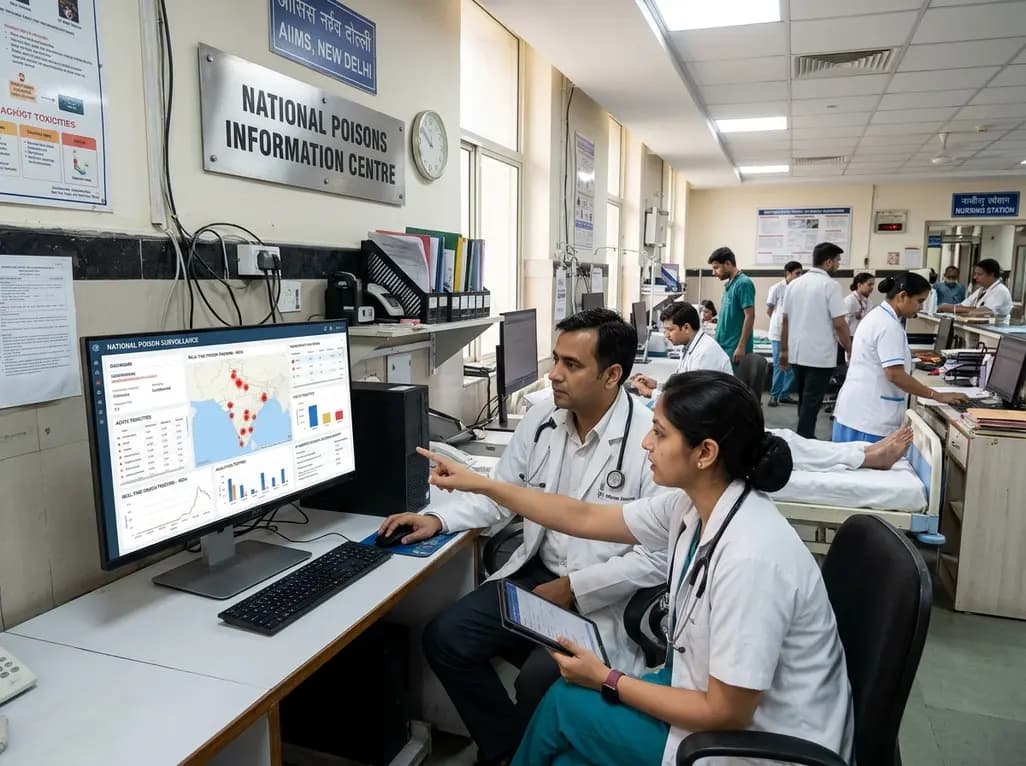
AIIMS New Delhi is establishing a real-time digital surveillance network to track acute toxicities nationwide. Upgrading the National Poisons Information Centre into a nodal research hub, this initiative introduces central antidote banking, analytical testing, and AI-assisted clinical decision support for clinicians.
Today

A multicenter registry of 854 patients shows that re-isolating multiple reconnected pulmonary veins during second catheter ablation significantly lowers atrial arrhythmia recurrence, particularly in patients without heart failure, whereas extra-PV ablation provided no clear additive benefit.
Today

A clinical overview of resveratrol supplementation in mitigating exercise-induced muscle damage. This narrative review explores physiological mechanisms, reductions in soreness markers like creatine kinase, dosage strategies, and bioavailability enhancements for sports medicine and nutrition practitioners.
Today
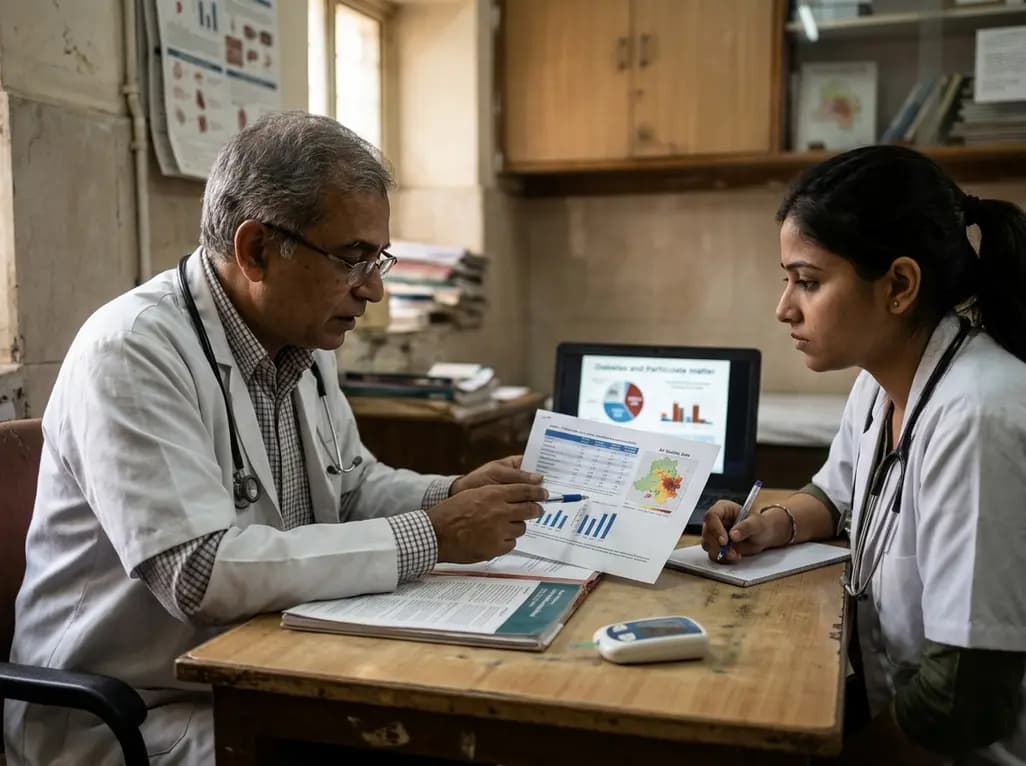
The global APEX-T2D umbrella review synthesises data from over 200 million individuals, establishing that long-term PM2.5 exposure raises type 2 diabetes risk by 10% to 16% per 10 ug/m3. Clinicians must recognize ambient air pollution as an independent systemic metabolic disruptor alongside traditional risk factors.
Today
