.webp&w=384&q=75)

Loading, please wait...
Loading, please wait...
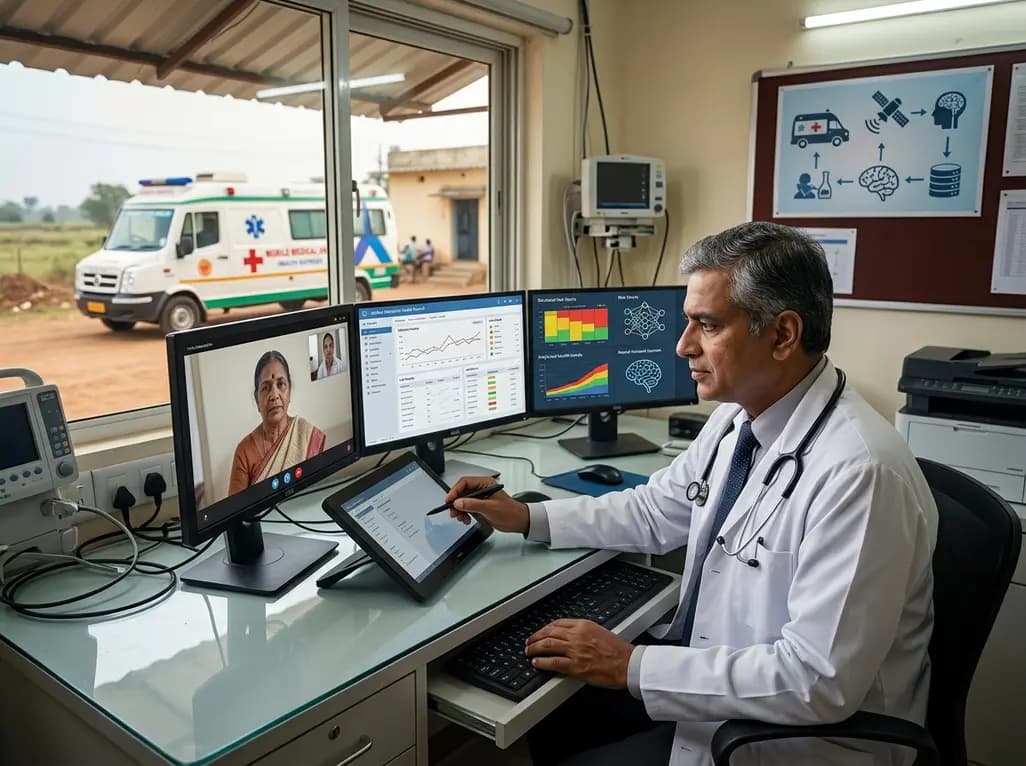
The Government of Andhra Pradesh has officially launched the Sanjeevani digital health record pilot project in Aspari, Kurnool district. Chief Minister N. Chandrababu Naidu unveiled this ambitious initiative to establish a technology-driven, proactive healthcare system across the state. Furthermore, the program focuses on predictive, preventive, and curative healthcare strategies to enhance public wellness. By integrating comprehensive health data from primary health centers to state-level institutions, the initiative creates unified digital health profiles for every resident. Consequently, this transformation aims to streamline patient care and mitigate the burden of non-communicable diseases.
The Sanjeevani digital health initiative establishes a synchronized digital health network across Andhra Pradesh. Under this comprehensive program, every individual receives a unique digital health profile that aggregates medical history, diagnostic reports, and ongoing treatments. Primary Health Centres (PHCs) sync patient data directly into a centralized state registry in real time. Consequently, clinicians gain immediate access to verified medical records during routine visits and medical emergencies.
Additionally, the platform integrates Ayushman Bharat Health Account (ABHA) IDs for all citizens, ensuring seamless interoperability across national and state networks. The project consolidated existing public health channels, including 104 mobile medical units, laboratory diagnostics, e-Aushadhi distribution, and emergency services. As a result, healthcare workers can monitor population health metrics while tracking individual wellness progress.
By bringing disparate clinical services onto a single digital network, Andhra Pradesh addresses long-standing fragmentation in rural healthcare delivery. Patients no longer need to carry physical diagnostic papers or duplicate clinical tests when visiting higher-tier facilities. Furthermore, centralized health records help healthcare providers detect disease patterns early, enabling prompt clinical intervention. This structured approach ensures that medical resources are deployed efficiently across both urban and rural primary care settings.
The vision for Sanjeevani extends far beyond basic electronic health record storage. Chief Minister Naidu highlighted the inclusion of artificial intelligence doctor support, predictive analytics, tele-consultation services, and digital nerve centres to modernize care delivery. Furthermore, these advanced tools assist clinicians in identifying individuals who face high risks of developing severe chronic conditions.
Approximately 80 lakh people in Andhra Pradesh currently battle serious illnesses, including non-communicable conditions like hypertension, diabetes, and cardiovascular disorders. Predictive analytics tools analyze aggregated health profile data to alert physicians about high-risk patient cohorts before acute complications arise. Subsequently, primary care teams can initiate preventive screening, lifestyle interventions, and tailored treatment plans.
Moreover, AI-assisted decision support tools aid rural practitioners by providing evidence-based clinical recommendations and treatment pathways. Tele-medicine capabilities connect remote rural clinics directly with specialized medical consultants, overcoming geographic barriers to quality care. Digital nerve centres monitor regional healthcare performance, managing medical logistics, patient follow-ups, and specialist referral networks. Therefore, integrating predictive technology transforms static medical care into a dynamic, proactive wellness monitoring framework.
A central component of the new healthcare framework is the Sanjeevani Citizen Wellness App, which empowers individuals to manage their own health. Through this user-friendly mobile application, citizens can conveniently schedule doctor appointments, view diagnostic lab results, and review personal electronic medical records anytime. Consequently, patients gain direct ownership over their medical information and treatment schedules.
In addition to record access, the platform offers comprehensive tele-consultation services connecting patients with health experts. These specialists provide professional advice regarding prescription medications, nutrition, exercise, and preventive wellness strategies. Moreover, the integrated app streamlines emergency care delivery by coordinating rapid responses for acute non-communicable disease events.
Furthermore, mobile medical units and localized screening tests operate under this digital umbrella to provide community-level diagnostics. Citizens receive reminders for routine health screenings, immunization schedules, and follow-up clinical appointments. By facilitating direct digital engagement between patients and healthcare providers, the state encourages proactive health monitoring. Therefore, this digital ecosystem reduces unnecessary hospital visits while optimizing outpatient clinical workflow.
Public health outcomes are closely linked to environmental factors, clean water access, and nutritional security. During the launch of the project, Chief Minister Naidu emphasized holistic development by connecting healthcare initiatives with agricultural reform and water management. Specifically, adverse El Nino conditions and reduced rainfall in the Krishna river basin have impacted regional groundwater levels and agricultural output.
To address these environmental challenges, the government launched the Jaladhara project aimed at restoring groundwater reserves. Additionally, the state is encouraging farmers in drought-prone regions like Rayalaseema to transition from traditional paddy cultivation to high-value horticulture crops. Because global dietary habits are shifting toward nutrient-rich fruits and vegetables, cultivating horticulture crops enhances both economic stability and dietary nutrition.
The government plans to invest Rs 1 lakh crore through public and private partnerships to transform Rayalaseema into a global horticulture hub. Consequently, improving local food systems directly impacts community nutrition, reducing malnutrition and lifestyle-related health disorders. Furthermore, infrastructure investments, such as completing the Vedavati irrigation project and 36 ongoing water projects, ensure sustainable water access for rural communities. Overall, combining health infrastructure with agricultural reform creates a resilient foundation for long-term public health.
The statewide rollout of the Sanjeevani program is scheduled to begin in August, setting a precedent for digital health governance in India. Initial implementations, such as the Digital Nerve Center pilot in Kuppam, have demonstrated effective integration across primary health centres, area hospitals, and village health clinics. Consequently, scaling this framework statewide will bridge clinical communication gaps across all levels of care.
Looking ahead, the government aims to complete full health record digitization while simultaneously implementing supporting digital initiatives. For instance, land resurvey exercises using blockchain technology are being completed alongside health digitization to protect property rights and foster socioeconomic stability. Economic security and comprehensive health access work together to reduce poverty-induced health vulnerabilities.
Moreover, integrating free diagnostic services, digitized pharmacy management through e-Aushadhi, and universal health coverage ensures equitable access for underprivileged populations. As digital health profiles expand across all districts, clinical decision-making will rely increasingly on real-time epidemiological data. Therefore, Andhra Pradesh is building a scalable blueprint for technology-driven public healthcare that prioritizes early detection, continuous monitoring, and accessible medical services for every citizen.
Q1: What is the primary objective of the Sanjeevani digital health project in Andhra Pradesh?
The primary objective of the Sanjeevani digital health project is to establish a technology-driven, integrated healthcare ecosystem across Andhra Pradesh. By creating digital health profiles and issuing ABHA IDs for all citizens, the system unifies data from primary health centers to state hospitals. Furthermore, it focuses on predictive, preventive, and curative care using AI support, tele-consultations, and digitized health records to improve patient outcomes state-wide.
Q2: How does the Sanjeevani Citizen Wellness App assist patients?
The Sanjeevani Citizen Wellness App allows residents to access their personal electronic health records at any time from their smartphones. Patients can easily schedule doctor appointments, request tele-consultations for medical advice and nutrition, and view diagnostic test results. Additionally, the application integrates emergency health service requests and sends automated reminders for preventive health screenings, facilitating seamless communication between patients and healthcare providers.
Q3: How does Sanjeevani integrate AI and predictive analytics into public healthcare?
Sanjeevani leverages artificial intelligence and predictive analytics to analyze aggregated patient health data for early disease detection. The platform assists clinicians by identifying individuals at high risk for severe non-communicable diseases such as hypertension and diabetes. Consequently, healthcare teams can deliver early interventions, offer personalized tele-consultations, and optimize clinical decision-making across primary health centers and digital nerve hubs.
Disclaimer: This content is for informational and educational purposes only. It does not constitute medical advice or replace professional judgment. Refer to the latest local and national guidelines for clinical practice.
References

Read summarized clinical updates, watch expert medical content, and earn CME certifications right from your smartphone.
Open your smartphone camera to scan and install.





Andhra Pradesh Chief Minister N. Chandrababu Naidu has launched the Sanjeevani digital health pilot project in Aspari. The initiative combines AI-driven predictive analytics, tele-consultations, unified electronic health records, and mobile medical units to establish proactive, technology-driven healthcare.
2 months ago

Review how tailored exercise programs benefit frail older patients with heart failure. Explore pathophysiological mechanisms, individualized training prescriptions, and strategies to overcome adherence barriers in clinical practice.
Today

Leucine Rich Bio has introduced South Asia's first comprehensive vaginal microbiome test, BugSpeaks. By profiling microbial dysbiosis, pathogens, and antimicrobial resistance, this next-generation diagnostic platform provides clinicians with deeper insights into recurrent infections, fertility, and reproductive health.
Today

In high-risk pulmonary embolism complicated by severe anemia and active uterine bleeding, systemic thrombolysis is contraindicated. Large-bore aspiration thrombectomy provides rapid hemodynamic rescue without fibrinolysis, supported by inferior vena cava filter placement and multidisciplinary critical care.
Today

This comparative study evaluates posterior labral tears with and without glenohumeral instability, highlighting distinct demographic patterns, MRI underestimation in stable shoulders, and successful arthroscopic repair outcomes.
Today

A clinical study demonstrates that early intervention with tocilizumab, either as monotherapy or bridged with corticosteroids, achieves significant proptosis reduction and resolves active inflammation in treatment-naive thyroid eye disease.
Today
