

Loading, please wait...
Loading, please wait...

Evaluating rural neurofibromatosis outcomes provides crucial insights into systemic healthcare disparities across specialized surgical fields. Neurofibromatosis types 1 and 2 represent complex genetic conditions that cause debilitating central and peripheral nervous system tumors. Consequently, affected individuals frequently require sophisticated neurosurgical interventions that metropolitan academic centers traditionally provide. In contrast, non-metropolitan community facilities face persistent resource constraints and subspecialty shortages. Therefore, patients residing in rural areas encounter substantial structural barriers when acute neurosurgical emergencies arise. A comprehensive investigation utilizing the National Inpatient Sample evaluated adult hospitalizations to clarify these geographic discrepancies rigorously. Specifically, researchers analyzed whether rural residence influences acute inpatient outcomes, resource utilization, and procedural volume. In addition, the investigators compared general medical admissions against highly complex cranial tumor resections. While past literature thoroughly established geographic disparities in trauma and vascular neurosurgery, data on rare neuro-oncological disorders remained sparse. Consequently, this national study addresses an essential knowledge gap for clinical practitioners. Understanding these structural referral mechanisms enables healthcare teams to anticipate transfer delays and optimize triage networks. Ultimately, improving geographic equity ensures timely surgical intervention for all individuals living with neurofibromatosis.
The nationwide analysis assessed an estimated 25,000 neurofibromatosis inpatient admissions to understand national distribution patterns. Importantly, the findings revealed extreme centralization of specialized neurosurgical interventions within metropolitan healthcare systems. Over 99% of all neurosurgical procedures for neurofibromatosis took place at urban hospital facilities. In contrast, rural community hospitals handled general medical admissions but almost never executed complex cranial or spinal surgeries. This pronounced centralization stems from the necessity of specialized multidisciplinary teams and advanced operative equipment. Managing complex neurofibromatosis tumors safely requires dedicated neuro-anesthesiologists, microsurgical instruments, and intraoperative neuro-monitoring specialists. Furthermore, experienced post-operative neuro-intensive care units substantially reduce perioperative complication rates for extensive tumor resections. Consequently, rural hospitals lack the procedural caseload and specialized personnel necessary to maintain high-complexity neurosurgical programs. Therefore, rural patients must travel significant distances to receive definitive surgical treatment at urban centers. While centralization guarantees treatment by experienced high-volume surgical teams, it simultaneously places substantial financial stress on rural families. For instance, families must manage travel costs, lodging expenses, and disrupted employment during extended clinical stays. Thus, geographic centralization creates distinct logistical challenges for remote patient populations.
A central finding from the national analysis centers on striking disparities in interhospital transfer patterns. Specifically, rural patients experienced substantially higher adjusted odds of interhospital transfer compared to metropolitan residents. Moreover, this statistical association intensified directly alongside the clinical complexity of the required neurosurgical care. For general neurofibromatosis admissions, rural residence correlated with a threefold increase in interhospital transfer odds. However, when patients required advanced neurosurgical operations, rural residence triggered more than an eightfold rise in transfer likelihood. Conversely, rural facilities rarely received transferred patients from external medical centers. This stark imbalance demonstrates that community hospitals serve predominantly as initial triage stations rather than definitive treatment facilities. Additionally, repeated interhospital transfers introduce tangible clinical risks, including ambulance transit delays and handoff communication errors. Patients may also endure redundant diagnostic testing before arriving at a definitive neurosurgical theater. Nevertheless, timely transfers remain vital because secondary care facilities cannot safely deliver specialized neuro-oncological management. Therefore, regional trauma and referral networks must formalize interfacility transfer pathways to eliminate unnecessary administrative bottlenecks. Streamlined transfer protocols protect rural patients from clinical decompensation during urgent transit.
Despite facing extensive transfer hurdles, rural patients achieved reassuring clinical outcomes once admitted to definitive care facilities. Notably, survey-weighted multivariable regressions demonstrated that rural residence was not associated with increased in-hospital mortality. Rural patients survived at rates equivalent to their urban counterparts across all surgical and medical cohorts. Furthermore, researchers identified no statistically significant differences in non-home discharge rates between rural and urban patients. Similarly, total hospital charges and inpatient length of stay remained remarkably consistent across both geographic groups. These findings suggest that urban tertiary centers deliver high-quality neurosurgical interventions that neutralize baseline geographic disadvantages effectively. Thus, centralized surgical expertise succeeds in safeguarding immediate inpatient survival for remote populations. However, healthcare professionals must interpret these hospital-based metrics with appropriate clinical discretion. Because the National Inpatient Sample records only acute inpatient stays, it cannot evaluate pre-hospital diagnostic delays or post-discharge outcomes. In addition, lingering financial toxicity, caregiver burden, and outpatient rehabilitation access remain undocumented within administrative hospital databases. Consequently, equivalent in-hospital survival figures do not necessarily indicate comprehensive healthcare equity across the complete disease continuum. Clinicians must continue tracking long-term functional recovery among remote patients.
Addressing healthcare disparities in neurofibromatosis demands structured clinical collaboration between rural practitioners and academic medical institutions. First, rural primary care clinicians must maintain sharp vigilance for signs of progressive neurological impairment. Timely detection of emerging sensory deficits or cranial neuropathies prevents chaotic emergency transfers later. Second, health systems must deploy telemedicine consultations to connect rural clinics directly with specialized multidisciplinary neurofibromatosis centers. Through secure digital video platforms, academic specialists can review high-resolution neuroimaging and formulate coordinated longitudinal care plans. As a result, patients can complete routine surveillance locally while scheduling complex surgical procedures proactively. Additionally, regional health authorities should establish rapid transport agreements to streamline acute transfers between referring and tertiary facilities. Coordinated transit protocols reduce transit delays and ensure continuous neuro-critical monitoring throughout long distances. Moreover, health systems must provide robust social work services to assist rural families with transportation costs and lodging. Dedicated patient navigators can coordinate follow-up appointments and arrange local physical rehabilitation after discharge. Ultimately, integrating telemedicine, structured transfer protocols, and community support networks bridges the geographic divide effectively. These practical interventions ensure equitable, high-quality neuro-oncological care for all patients regardless of residence.
Rural patients face significantly higher odds of interhospital transfer than urban residents. Specifically, transfer likelihood increases threefold for general hospital admissions and escalates more than eightfold for complex neurosurgical procedures. This pattern occurs because over 99% of neurosurgical interventions for neurofibromatosis take place in centralized, urban tertiary healthcare facilities.
Current national registry data show that rural residence does not increase in-hospital mortality among patients hospitalized with neurofibromatosis. Furthermore, adjusted lengths of stay and total hospital charges remain comparable between rural and urban patients. High-quality tertiary care appears to mitigate baseline disparities once rural patients arrive at specialized metropolitan centers.
Healthcare systems can optimize care coordination by implementing structured digital telemedicine consults and regional referral algorithms. Additionally, connecting rural clinicians with multidisciplinary tumor boards facilitates early diagnosis and timely transfer coordination. Providing patient navigation programs also mitigates financial strain and ensures continuous outpatient surveillance after discharge from tertiary centers.
Disclaimer: This content is for informational and educational purposes only... Refer to the latest local and national guidelines for clinical practice.
References

Read summarized clinical updates, watch expert medical content, and earn CME certifications right from your smartphone.
Open your smartphone camera to scan and install.





A nationwide analysis evaluates how rurality impacts inpatient outcomes in neurofibromatosis. While over 99% of neurosurgical care is centralized in urban centers and rural patients face an eightfold increase in transfers, in-hospital mortality, length of stay, and total charges remain comparable.
Today

A retrospective study of 6,113 adults shows that combining GLP-1 receptor agonists with digital health apps nearly doubles the odds of achieving significant weight loss. Frequent progress logging serves as a primary behavioral driver of long-term metabolic success.
Today

Sexual dysfunction affects a high proportion of reproductive-age females with multiple sclerosis. This comprehensive review highlights multi-tier etiologies, proactive clinical screening tools, preconception counseling considerations, and integrated therapeutic options across multidisciplinary care pathways.
Today

Researchers have engineered an innovative CRISPR-Cas12a fluorescent diagnostic kit for clinical sST2 detection. By combining nanotechnology with enzymatic trans-cleavage, this platform enables rapid, ultrasensitive heart failure diagnosis and risk stratification, outperforming conventional laboratory ELISA methods.
Today

Non-union fractures occur in 2-5% of cases, causing significant disability and cost. Conservative modalities such as LIPUS, PEMF, and focused ESWT offer non-surgical healing options for defects up to 5-10 mm when adequate mechanical stability exists without infection.
Today
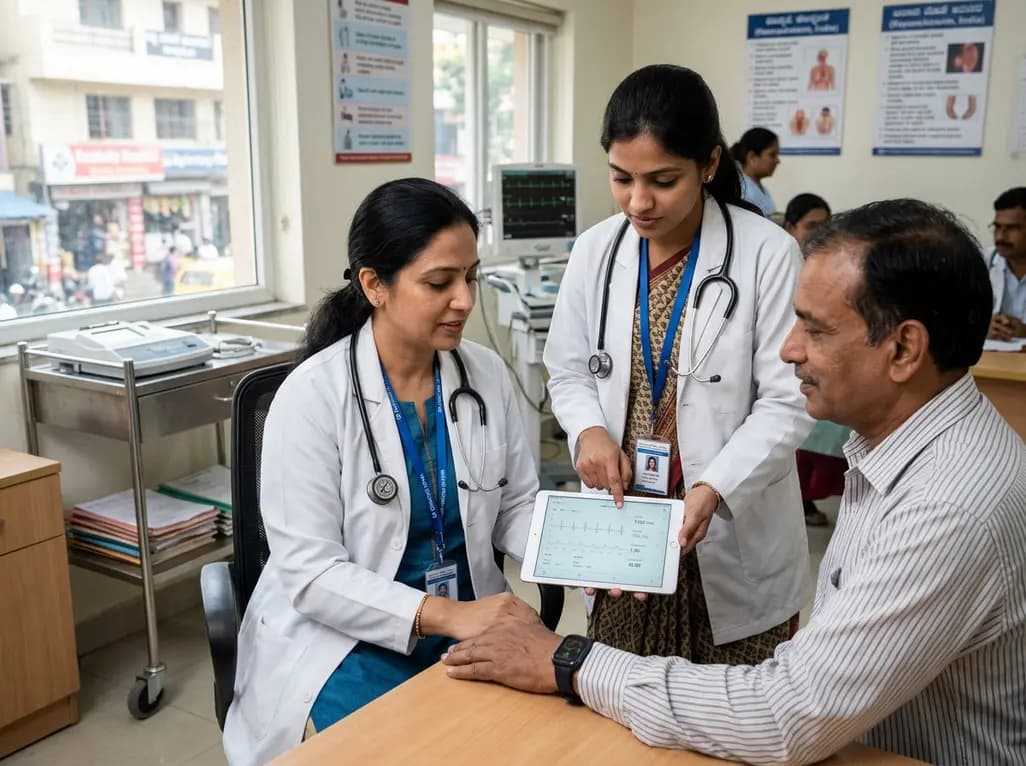
India is poised to transform chronic disease management through wearable health technology. Discover how continuous remote monitoring and predictive algorithms empower clinicians to detect early cardiovascular signals, personalize metabolic interventions, and deliver equitable preventive care across populations.
Yesterday
