.webp&w=384&q=75)

Loading, please wait...
Loading, please wait...
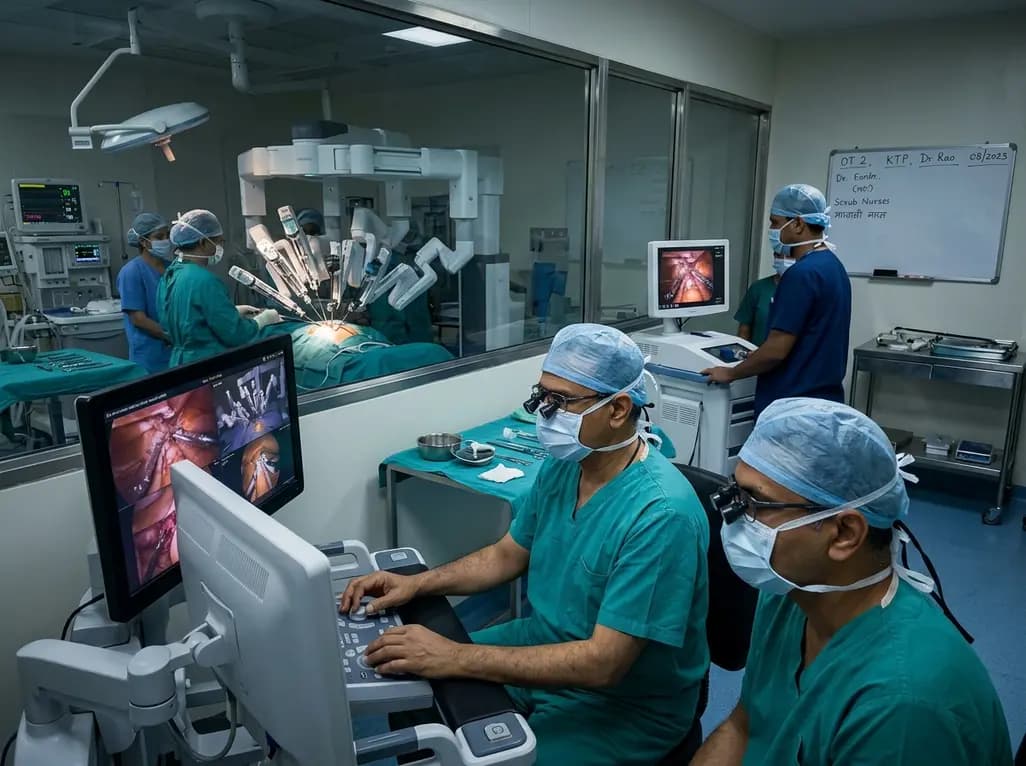
Jupiter Hospital in Thane achieved a significant surgical milestone by performing the world's first robotic kidney transplant procedures outside China using the Toumai robotic surgical system. Medical teams successfully operated on two consecutive patients suffering from end-stage kidney disease. Both individuals experienced smooth recoveries following their procedures. Consequently, this accomplishment highlights the rapidly expanding role of advanced robotic platforms in complex solid organ transplantation across India and globally.
Robotic kidney transplant procedures represent a major evolutionary step in solid organ transplantation. Historically, traditional open kidney transplantation required large abdominal incisions. Consequently, patients often faced prolonged recovery times, significant postoperative pain, and heightened risks of wound complications. In contrast, robotic-assisted techniques allow transplant surgeons to work through small keyhole incisions. Therefore, recipients experience substantially lower rates of surgical site infections and incisional hernias.
Furthermore, the integration of robotic technology enhances surgical dexterity during intricate maneuvers. Renal transplantation demands precise suturing for vascular anastomoses between donor blood vessels and recipient iliac arteries and veins. Additionally, delicate handling is necessary when reconstructing the urinary tract. The robotic system filters human hand tremors and translates surgeon movements into micro-movements. As a result, surgical teams can achieve superior technical precision in deep pelvic spaces.
Moreover, these technical advantages translate directly into improved clinical safety. Studies show that robotic approaches reduce intraoperative blood loss compared to open surgery. Patients also report lower pain scores and require significantly fewer opioid medications during recovery. Therefore, expanding access to robotic options offers immense promise for end-stage renal disease patients needing life-saving transplantation.
The successful procedures at Jupiter Hospital utilized the CE-certified Toumai robotic surgical system developed by MicroPort MedBot. This advanced surgical platform provides high-definition three-dimensional visualization with exceptional optical magnification. Consequently, operating surgeons gain an extraordinarily detailed view of fine anatomical structures, small blood vessels, and delicate ureteral tissues. This crystal-clear visualization is essential for managing complex vascular anatomical variations during organ implantation.
Additionally, the platform features wristed instruments that offer seven degrees of freedom. This superior dexterity enables natural, fluid movements inside restricted anatomical compartments. Therefore, transplant surgeons can execute complex suturing patterns with remarkable ease and control. The console ergonomics also reduce physical fatigue for surgeons during prolonged and high-stress surgical procedures.
Furthermore, the introduction of platforms like Toumai broadens the competitive landscape of robotic healthcare equipment. Historically, single-vendor dominance limited high-capacity robotic adoption due to elevated capital expenses. However, CE-certified alternatives provide high clinical efficacy alongside lower operational costs. Consequently, hospitals across emerging markets can adopt advanced robotic technology more affordably. Thus, more surgical centers can offer state-of-the-art care to patients suffering from end-stage kidney failure.
Performing a robotic kidney transplant requires meticulous surgical planning and seamless multidisciplinary coordination. During the procedure, the donor kidney is introduced into the retroperitoneal or peritoneal cavity through a small gel-port incision. Subsequently, the surgical team docks the robotic arms and initiates the micro-vascular reconstruction. The surgeon operates from a remote master console, directing robotic instruments with high-precision controllers.
Specifically, vascular anastomosis represents the most critical phase of the operation. Surgeons must carefully join the renal artery and vein to the recipient's external iliac vessels. The high-definition 3D vision system allows surgeons to place fine vascular sutures with sub-millimeter accuracy. Consequently, this level of precision minimizes the risk of vascular thrombosis, anastomotic leaks, or vessel torsion.
Furthermore, ureteroneocystostomy—attaching the donor ureter to the recipient bladder—demands careful tissue handling to prevent post-transplant urinary leaks or strictures. Robotic articulation allows surgeons to construct a secure anti-reflux mechanism efficiently. In addition, warm ischemia time remains tightly controlled throughout the robotic docking and suturing phases. Consequently, immediate graft function rates in robotic procedures remain comparable to traditional open transplantation techniques.
Postoperative recovery after robotic kidney transplantation offers clear advantages for patient rehabilitation and overall clinical outcomes. Both patients treated at Jupiter Hospital recovered smoothly, demonstrating rapid restoration of renal function. Typically, patients undergoing robotic procedures experience shorter hospital stays compared to those receiving traditional open surgery. Therefore, individuals can return to their daily routines and families much faster.
Additionally, wound complications represent a major source of post-transplant morbidity, particularly in high-risk populations. For instance, patients with elevated body mass index or diabetes face increased risks of wound dehiscence and surgical site infections after open surgery. In contrast, small robotic port incisions significantly lower these risks. Consequently, immunosuppressed transplant recipients enjoy safer healing environments with minimal scar formation.
Furthermore, decreased postoperative pain leads to earlier patient mobilization. Early ambulation reduces the risk of deep vein thrombosis and pulmonary complications following surgery. Moreover, clinical data show that robotic transplant recipients experience fewer readmissions within the first thirty days post-surgery. As a result, robotic kidney transplantation delivers excellent short-term and long-term graft survival while minimizing total healthcare resource utilization.
The landmark operations at Jupiter Hospital mark a significant milestone in Indian healthcare and global transplant medicine. This achievement coincides with the hospital's fifteenth year of kidney transplant excellence and third year of robotic transplant innovation. Senior transplant surgeon Dr. P. P. Rao and robotic transplant surgeon Dr. Lokesh Sinha emphasized that integrating advanced robotic systems enhances surgical precision while maintaining patient safety as the primary priority.
Moreover, establishing successful robotic transplant programs expands the horizons of minimally invasive surgery nationwide. As surgical teams gain experience with diverse robotic platforms, more centers across India can adopt these cutting-edge techniques. Consequently, India continues to solidify its reputation as an international hub for high-quality, affordable medical care and complex surgical procedures.
Looking forward, ongoing technological advancements will further refine robotic transplant capabilities. Future innovations may include real-time intraoperative tissue perfusion imaging and artificial intelligence guidance. Ultimately, combining clinical expertise with advanced robotic platforms will democratize access to minimally invasive organ transplantation worldwide. Thus, thousands of end-stage renal disease patients will benefit from safer surgeries, faster recoveries, and improved long-term outcomes.
Q1: What is a robotic kidney transplant, and how does it differ from open surgery?
A robotic kidney transplant is a minimally invasive surgical procedure where surgeons use robotic arms to implant a donor kidney. Unlike open surgery, which requires a large abdominal incision, robotic surgery uses tiny keyhole incisions. Consequently, patients experience less pain, reduced blood loss, lower risk of wound infection, and faster postoperative recovery while achieving equivalent graft survival rates.
Q2: Who is an ideal candidate for a robotic kidney transplant?
Most individuals with end-stage kidney disease who qualify for kidney transplantation can consider a robotic approach. It is particularly beneficial for patients with high body mass index or diabetes, who face higher risks of wound complications with open incisions. However, a comprehensive medical evaluation by a transplant multidisciplinary team determines final candidacy based on individual vascular anatomy and overall health.
Q3: How does the Toumai robotic surgical system assist transplant surgeons?
The Toumai robotic surgical system provides high-definition 3D visualization, optical magnification, and wristed instruments with seven degrees of freedom. These technological features effectively filter hand tremors and enable sub-millimeter precision during delicate vascular suturing and urinary tract reconstruction. Furthermore, its cost-effective design expands access to high-precision robotic surgery in emerging healthcare markets, allowing more patients to receive advanced surgical interventions safely.
Disclaimer: This content is for informational and educational purposes only. It does not constitute medical advice or replace professional judgment. Refer to the latest local and national guidelines for clinical practice.
References

Read summarized clinical updates, watch expert medical content, and earn CME certifications right from your smartphone.
Open your smartphone camera to scan and install.





Jupiter Hospital in Thane performed the world's first robotic kidney transplants outside China using the CE-certified Toumai system. Led by Dr. P. P. Rao and Dr. Lokesh Sinha, two end-stage renal disease patients recovered successfully, highlighting major advances in minimally invasive transplant surgery.
last month

A recent clinical report details an atypical presentation of bilateral proptosis as the primary manifestation of aggressive multiple myeloma. Explore the diagnostic pathway, imaging findings, and critical multidisciplinary management strategies essential for handling extramedullary plasma cell dyscrasias.
Today

Prenatal evaluation of fetal growth restriction requires an integrated diagnostic approach. While chromosomal microarray remains fundamental, exome sequencing offers significant diagnostic yield in isolated and syndromic cases, especially when ultrasound shows skeletal anomalies or normal placental function.
Today
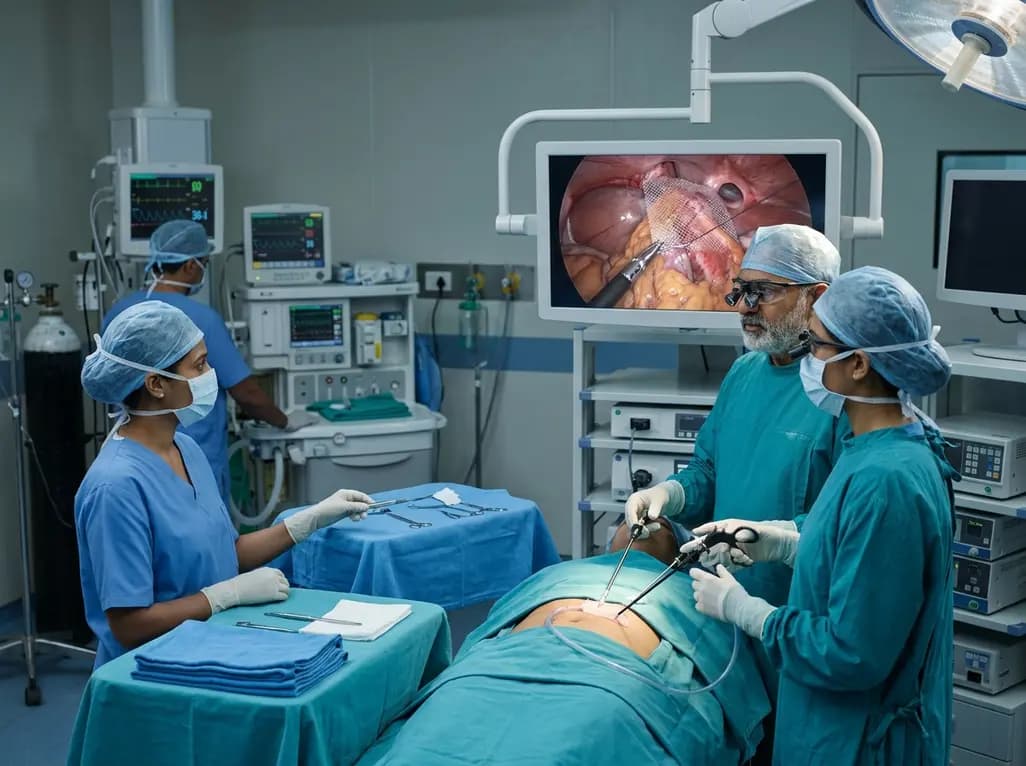
Discover a novel laparoscopic approach for iatrogenic diaphragmatic hernia repair following pedicled omentoplasty. This modified Sugarbaker technique integrates dorsal pedicle lateralization and round ligament reinforcement to secure the diaphragmatic defect while preserving vital omental vascularity.
Today

High-grade trochlear dysplasia disrupts patellofemoral stability. Although the patellotrochlear index measures cartilage overlap on MRI, cartilage contact does not ensure osseous containment. Relying solely on two-dimensional metrics may lead surgeons to overlook necessary tibial tubercle osteotomy procedures.
Today
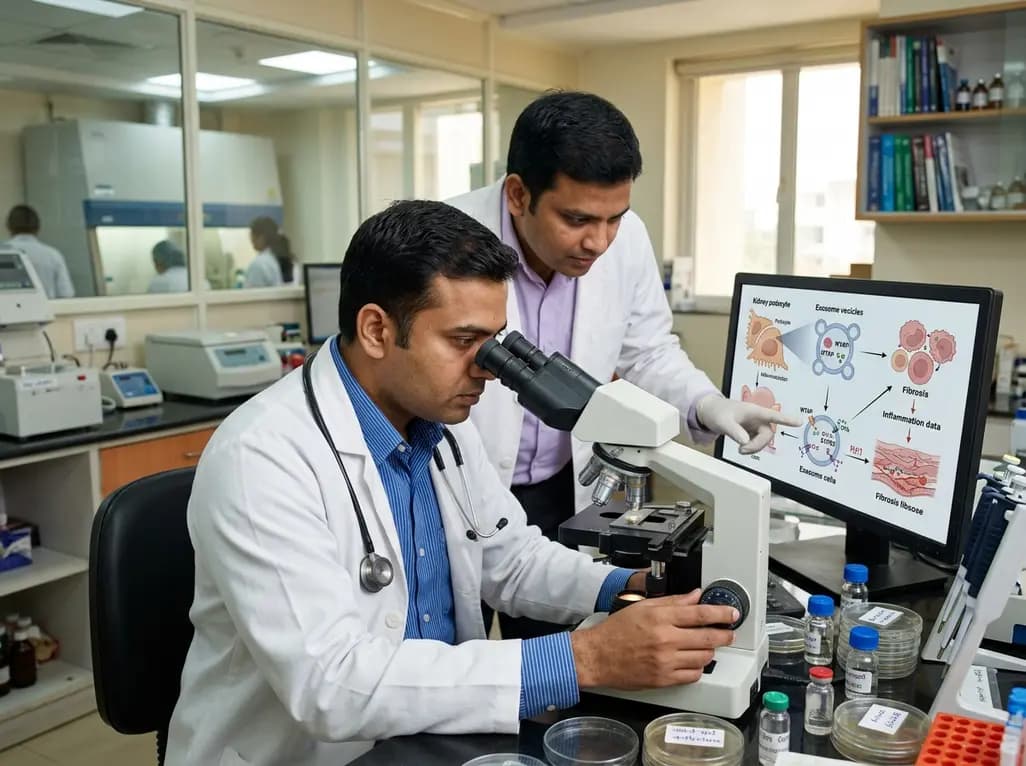
New research reveals that M1 macrophage-derived exosomes aggravate diabetic nephropathy by transferring WTAP to stabilize S1PR2 mRNA. Silencing WTAP in these vesicles attenuates endothelial injury and renal fibrosis, pointing toward innovative nanomedicine therapies.
Today
