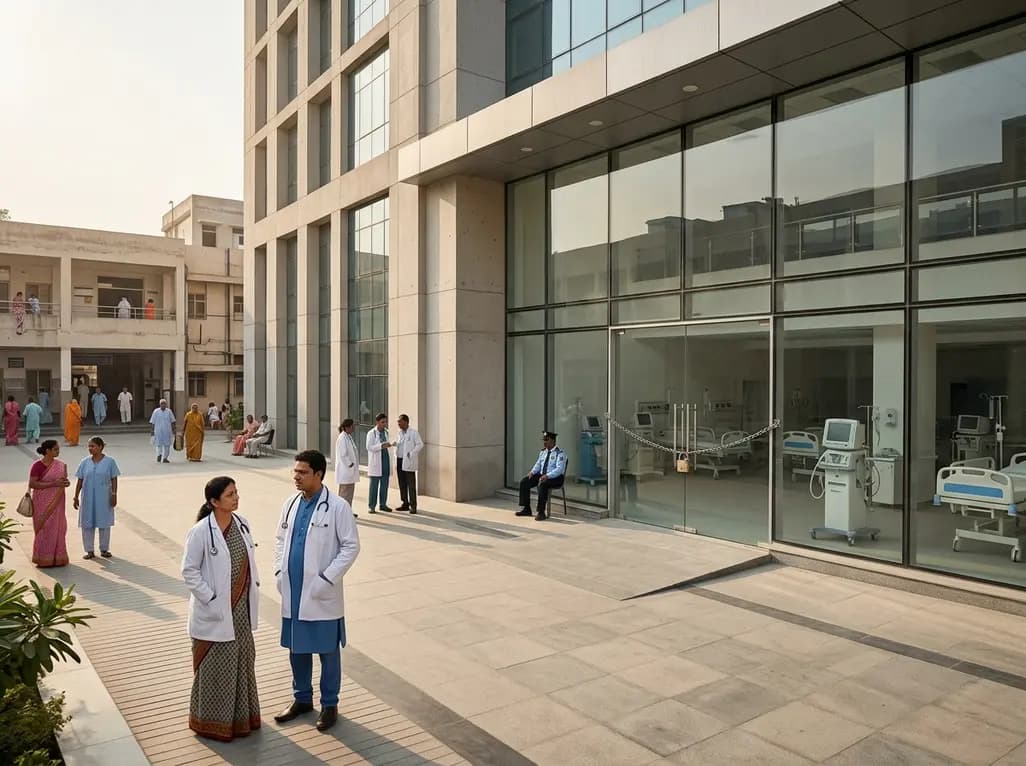
The public healthcare system in New Delhi faces immense pressure. Recently, a Public Interest Litigation in the Delhi High Court sought the immediate operationalisation of the newly constructed RML Super Speciality Block. Although the government spent ₹400 crore of taxpayers' money, the building remains entirely non-functional, depriving thousands of patients.
The Vision Behind the RML Super Speciality Block
Initially, healthcare planners conceived the ambitious RML Super Speciality Block to dramatically augment Delhi's public medical infrastructure. The multi-storey facility was specifically designed to increase the hospital's capacity by adding nearly 666 specialized beds. This expansion would effectively raise the total bed strength of Dr. Ram Manohar Lohia Hospital from 1,532 to 2,198 beds. Furthermore, the new project features eighteen state-of-the-art operation theatres and highly advanced diagnostic facilities. Most importantly, it includes a dedicated Oncology Department equipped with modern PET-CT scanning technology. This facility aims to provide high-quality and affordable cancer care to patients who cannot pay for expensive private hospital services. However, despite the complete physical installation of these sophisticated machines, the wing has not opened to the public. As a result, critical life-saving equipment lies completely idle. Healthcare advocates express deep concern over this prolonged wastage of crucial public resources. They argue that leaving such critical medical technology unused directly compromises patient care. Ultimately, opening this wing remains a top priority. Consequently, the delayed launch represents a severe setback for Delhi's public health system.
Understanding the Causes of the Operational Delay
Many citizens wonder why a fully completed ₹400-crore building has remained non-operational for over a year. Investigative reports indicate that a combination of administrative hurdles and missing clearances stalled the project. Specifically, the Delhi Urban Arts Commission withheld the mandatory completion certificate due to critical discrepancies in project plans. The regulatory body pointed out that the hospital's submission lacked a functional multi-level car parking scheme. Although the commission had previously approved a parking design, the builders failed to construct it during the primary phase. Consequently, the lack of sufficient parking space became a major roadblock to securing the final clearance. Additionally, bureaucratic delays in obtaining a stable high-voltage electricity connection further postponed the block's launch. For many months, the lack of a proper power meter prevented technicians from testing the newly installed medical equipment. Fortunately, local power authorities finally released the necessary electricity supply in early April of this year. However, the hospital still must complete several mandatory safety trials before patients can finally enter this brand-new facility. Indeed, these final safety trials remain absolutely necessary to protect patient safety.
The Severe Impact on Patient Care and Public Resources
The prolonged delay in opening the new facility has severely affected patients who rely heavily on government hospitals. Overcrowded wards and long waiting lists for surgeries remain persistent issues at RML Hospital. Every single day of delay forces poor families to seek expensive treatments at private clinics. Alternatively, many patients simply wait for months in pain, hoping for an available bed. Furthermore, this delay represents an egregious waste of public funds and taxpayers' money. Valuable clinical infrastructure, built with immense public investment, continues to deteriorate without serving its intended purpose. For instance, the highly advanced diagnostic machines and sterile operating theatres require active maintenance. Leaving these sensitive systems inactive for long periods can lead to technical malfunctions. Moreover, the delay creates an artificial shortage of critical oncology services in the region. Patients diagnosed with aggressive cancers cannot afford to wait months for PET-CT scans or chemotherapy sessions. Therefore, the immediate operationalisation of this block is crucial for community wellness. Thus, swift, coordinated action is urgently needed from all responsible authorities.
Legal Arguments and Constitutional Obligations of the State
To address this administrative failure, the civil rights group Social Jurist filed a Public Interest Litigation. This legal action contends that the state's failure to utilize ready medical infrastructure violates fundamental rights. Specifically, the advocates argue that the delay directly breaches Article 14 and Article 21 of the Indian Constitution. Article 21 guarantees the right to life, which the Supreme Court has consistently interpreted to include the right to health. Additionally, the petition cites the landmark judicial precedent of Paschim Banga Khet Mazdoor Samity versus State of West Bengal. In that historic case, the Supreme Court clearly recognized the government's constitutional obligation to provide adequate medical facilities. Consequently, the current delay at RML Hospital represents a clear failure of this state duty. Therefore, the petitioner seeks strict, time-bound directions from the Delhi High Court to resolve all pending clearances. They argue that administrative bodies must not hide behind red tape while citizens suffer. Clearly, this legal system serves as a powerful instrument to enforce accountability and transparency in governance.
Steps Needed for Immediate Commissioning of the Block
To quickly resolve the current crisis, RML Hospital must execute a comprehensive operational strategy. First, the hospital administration must address all parking discrepancies flagged by the Delhi Urban Arts Commission. This requires submitting an updated plan that clearly incorporates the promised multi-level parking structure. Second, engineers must finish testing all electrical lines and medical equipment using the newly provided power supply. This testing phase is crucial to ensure that high-voltage diagnostics like PET-CT scanners function safely. Third, the administration must immediately deploy the necessary medical, nursing, and technical staff to the new wing. Currently, hospital authorities are accelerating recruitment drives to fill vacant positions specifically for this block. Furthermore, the Union Health Ministry must provide active logistical support to fast-track any pending inter-departmental clearances. Meanwhile, senior medical administrators must closely supervise the entire transition process. By setting strict weekly deadlines, the leadership can ensure rapid progress. Ultimately, a coordinated effort between engineers, doctors, and regulators will ensure that the facility opens successfully. Therefore, immediate, decisive and coordinated collaboration is essential to achieve this milestone.
Frequently Asked Questions
Q1: Why has the RML Super Speciality Block remained closed despite being completed?
The delay stems from pending regulatory clearances and missing power supply. Specifically, the Delhi Urban Arts Commission withheld the completion certificate due to parking discrepancies. Additionally, bureaucratic delays postponed the high-voltage electricity meter installation, which was only recently resolved. Consequently, these hurdles kept this fully equipped ₹400-crore healthcare facility non-operational for over a year.
Q2: How will the new block benefit patients once it becomes operational?
Once operational, the block will significantly augment public healthcare by adding nearly 666 beds. This increases RML's total capacity to 2,198 beds, reducing severe hospital overcrowding. Furthermore, the facility will offer eighteen modern operation theatres, advanced diagnostic labs, and a dedicated Oncology Department. Ultimately, these additions will provide affordable, specialized treatments to thousands of underprivileged patients daily.
Q3: What legal actions have been taken to open the RML Super Speciality Block?
A civil rights group named Social Jurist filed a Public Interest Litigation in the Delhi High Court. The petition seeks urgent judicial directions to make this facility functional. It argues that keeping this ₹400-crore facility idle violates constitutional rights under Articles 14 and 21. Therefore, the lawsuit demands immediate regulatory clearances and staff deployment to prevent further patient suffering.
Disclaimer: This content is for informational and educational purposes only. It does not constitute medical advice or replace professional judgment. Refer to the latest local and national guidelines for clinical practice.
References
- PIL in Delhi HC seeks immediate operationalisation of Rs 400-cr Super SpecialityBlock at RML Hospital, alleges delay affecting patients - ETHealthworld
- RML block opens soon - Hindustan Times
- RML power delay - TOI
.webp&w=384&q=75)