.webp&w=384&q=75)

Loading, please wait...
Loading, please wait...
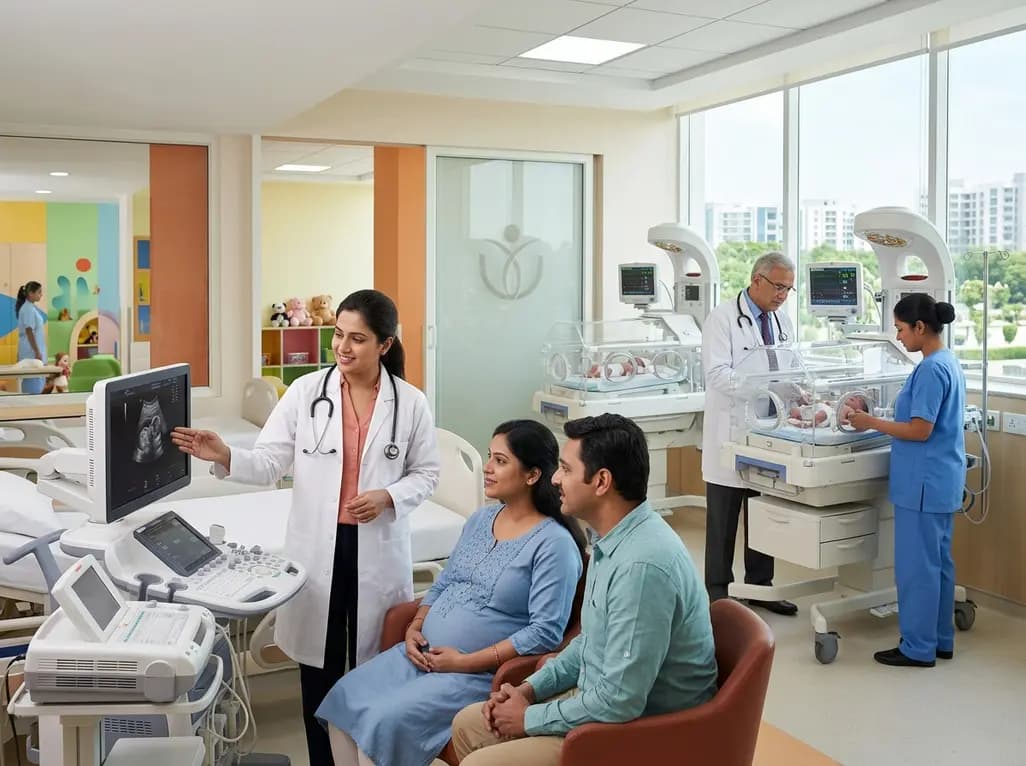
The rapid expansion of specialized tertiary healthcare infrastructure in India marks a major milestone for regional healthcare delivery. Recently, RJ Corp Healthcare expanded its footprint to Chandigarh by launching Cocoon Hospital, significantly rendering advanced maternal and child care capabilities across Northern India. Consequently, this development addresses a vital demand for advanced obstetric, gynecological, neonatal, and pediatric interventions in the Tricity area. Additionally, Chandigarh serves as an essential healthcare referral hub for surrounding regions, including Punjab, Haryana, and Himachal Pradesh. Furthermore, establishing dedicated clinical facilities ensures a seamless continuum of care for mothers and newborns throughout every stage of parenthood. Therefore, healthcare practitioners across the region anticipate notable improvements in maternal-fetal health outcomes, high-risk pregnancy management, and critical neonatal survival rates. Moreover, private capital investment in dedicated maternal care facilities strengthens the overall regional healthcare infrastructure.
Healthcare delivery in Northern India relies heavily on specialized infrastructure designed to manage high-risk clinical cases. Specifically, Cocoon Hospital introduces a modern 50-bed tertiary facility equipped with cutting-edge medical technology. In addition, the architectural layout includes two advanced labor-delivery-recovery suites alongside two fully equipped operating theaters. Furthermore, a dedicated 15-bed Level III Neonatal Intensive Care Unit offers specialized critical care for vulnerable newborns. Consequently, multidisciplinary clinical teams can manage premature deliveries, birth asphyxia, and congenital medical emergencies with speed and precision. Moreover, the facility incorporates warm, boutique hospitality design elements to alleviate clinical anxiety for expectant mothers and families. Thus, this environment supports clinicians in delivering compassionate, patient-centered care without compromising technical standards. Furthermore, healthcare teams benefit from streamlined clinical workflows connecting delivery suites, surgical operating rooms, and neonatal intensive units. Consequently, overall operational efficiency improves, ensuring rapid emergency response times during acute maternal and neonatal complications.
Managing complex pregnancies demands structured interdisciplinary collaboration and rapid diagnostic decision-making. Therefore, Cocoon Hospital offers specialized fetal medicine, advanced antenatal screening, and dedicated clinical genetics services. Furthermore, maternal-fetal medicine specialists can accurately identify fetal structural anomalies, intrauterine growth restriction, and gestational hypertensive disorders early. Additionally, the Level III NICU provides continuous invasive hemodynamic monitoring, advanced mechanical ventilation, and therapeutic hypothermia protocols. Consequently, neonatologists can treat extreme prematurity, severe respiratory distress syndrome, and neonatal sepsis effectively. Moreover, the presence of resident pediatric subspecialists guarantees immediate bedside consultations for complex multisystem conditions. In addition, routine and surgical gynecological care benefits from advanced minimally invasive laparoscopy units. Consequently, women undergoing advanced gynecological surgical procedures experience reduced operative morbidity, minimal postoperative discomfort, faster functional recovery, and significantly shorter hospital stays. Therefore, the hospital establishes superior clinical benchmarks for obstetrics, neonatology, and gynecological surgery in the region.
Establishing specialized medical centers in key urban locations improves tertiary care accessibility for surrounding communities. Specifically, Chandigarh acts as a vital regional healthcare corridor for patients seeking specialized interventions. Therefore, launching a dedicated mother-and-child facility reduces the clinical burden on overstretched public tertiary institutions. Additionally, private sector expansion in maternal health fosters healthy clinical competition and drives quality benchmarks higher. Furthermore, structured referral pathways enable rural and peri-urban practitioners to transfer critically ill mothers and neonates quickly. As a result, dangerous delays in managing severe obstetric hemorrhage, eclampsia, and neonatal respiratory depression diminish markedly. Moreover, specialized pediatric emergency services ensure continuous triage, swift stabilization, and intensive clinical care for acutely ill pediatric patients. Consequently, regional maternal and infant mortality rates could experience measurable long-term reductions. Ultimately, expanding specialized hospital networks reinforces health system resilience across neighboring states.
Modern pediatric practice relies on digital integration and advanced diagnostic tools to optimize patient outcomes. Specifically, Cocoon Hospital utilizes electronic health records to maintain seamless documentation across outpatient and inpatient departments. Consequently, multidisciplinary teams can access real-time clinical histories during emergency room visits and intensive care rounds. Furthermore, point-of-care diagnostic ultrasonography and advanced imaging facilitate swift bedside assessment for pediatric emergencies. Additionally, centralized physiological monitoring systems continuously evaluate vital signs, alerting clinical staff immediately to subtle physiological deterioration. Therefore, early goal-directed therapy replaces delayed clinical intervention in high-risk pediatric cases. Moreover, integrated digital health capabilities facilitate tele-consultations between hospital subspecialists and peripheral primary care physicians. As a result, community doctors receive immediate expert guidance for managing rare pediatric conditions locally. Consequently, modern medical technology enhances overall patient safety, diagnostic accuracy, clinical decision-making, and treatment efficiency throughout all pediatric units.
The inauguration of the Chandigarh facility forms part of a broader nationwide expansion strategy by RJ Corp Healthcare. Specifically, the organization is advancing upcoming tertiary projects in Lucknow and Guwahati to address regional healthcare gaps. Furthermore, these regional developments aim to replicate standardized clinical protocols in maternal, fetal, and neonatal care. Consequently, evidence-based practices will govern clinical decision-making across multiple regional hospital centers. Additionally, expanding hospital networks creates structured training environments for specialized nursing professionals and allied health personnel. Therefore, local healthcare workforces gain access to continuous medical education and clinical skill upgrading. Moreover, collaborative clinical data registries across network facilities will yield valuable research insights into regional maternal health patterns. Consequently, medical leaders can tailor clinical guidelines to tackle specific regional disease burdens effectively. Ultimately, expanding specialized healthcare networks guarantees equitable access to high-quality maternal and neonatal care across diverse regional populations.
Q1: What specialized medical services does Cocoon Hospital Chandigarh provide for women and children?
Cocoon Hospital in Chandigarh provides a full spectrum of specialized maternal and child healthcare services. Specifically, the facility delivers high-risk pregnancy management, fetal medicine, advanced labor-delivery-recovery suites, and general obstetrics. Additionally, it features a Level III Neonatal Intensive Care Unit, pediatric emergency services, laparoscopic gynecological surgery, and holistic women's wellness programs. Consequently, mothers and children receive continuous, multidisciplinary clinical care under one roof.
Q2: How does the facility handle high-risk neonatal admissions and premature births?
The facility maintains a specialized 15-bed Level III Neonatal Intensive Care Unit designed for high-risk neonates. Specifically, the unit features advanced mechanical ventilation, continuous invasive physiological monitoring, and therapeutic hypothermia technology. Furthermore, experienced neonatologists and pediatric critical care nurses provide 24/7 bedside monitoring. Consequently, premature infants and neonates suffering from severe respiratory distress or congenital conditions receive rapid, evidence-based life support.
Q3: What role does RJ Corp Healthcare's expansion play in Northern India's medical ecosystem?
RJ Corp Healthcare's expansion into Chandigarh strengthens tertiary healthcare infrastructure across Northern India. Specifically, it offers specialized maternal, neonatal, and pediatric care for families from Punjab, Haryana, and Himachal Pradesh. Furthermore, upcoming facilities in Lucknow and Guwahati will expand this specialized care model. Consequently, the network enhances regional clinical referral systems, elevates patient safety benchmarks, and reduces the burden on public sector tertiary hospitals.
Disclaimer: This content is for informational and educational purposes only. It does not constitute medical advice or replace professional judgment. Refer to the latest local and national guidelines for clinical practice.
References

Read summarized clinical updates, watch expert medical content, and earn CME certifications right from your smartphone.
Open your smartphone camera to scan and install.





RJ Corp Healthcare has expanded into Northern India by launching Cocoon Hospital in Chandigarh. The 50-bed facility enhances tertiary maternal, neonatal, and pediatric infrastructure across Punjab, Haryana, and Himachal Pradesh with specialized NICU suites, fetal medicine, and advanced surgical care.
3 months ago

The HELO study evaluates hearing function in virologically suppressed persons living with HIV. Learn how chronic inflammation, vascular factors, and antiretroviral therapy impact auditory decline and why regular audiological monitoring is critical for aging patients.
Today
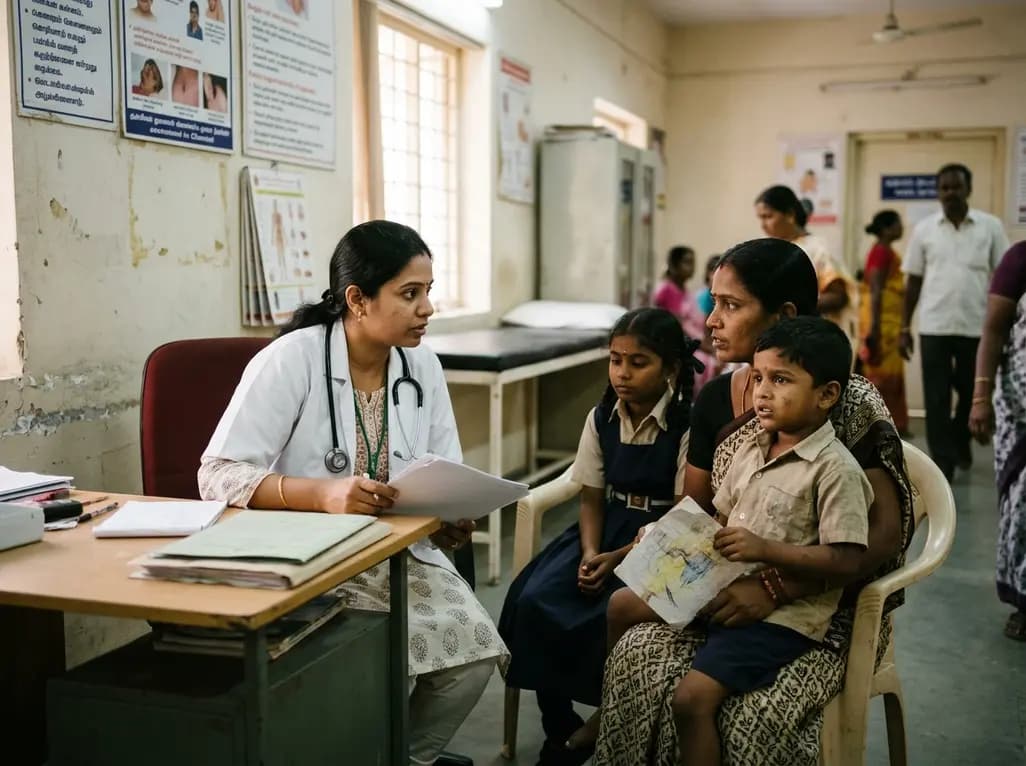
A population-based study of 20,928 children reveals that small vulnerable newborns face sex-divergent mental capital outcomes at ages 6-7: term SGA girls show higher behavioral difficulties and lower resilience, while preterm non-SGA boys experience increased behavioral problems.
Today
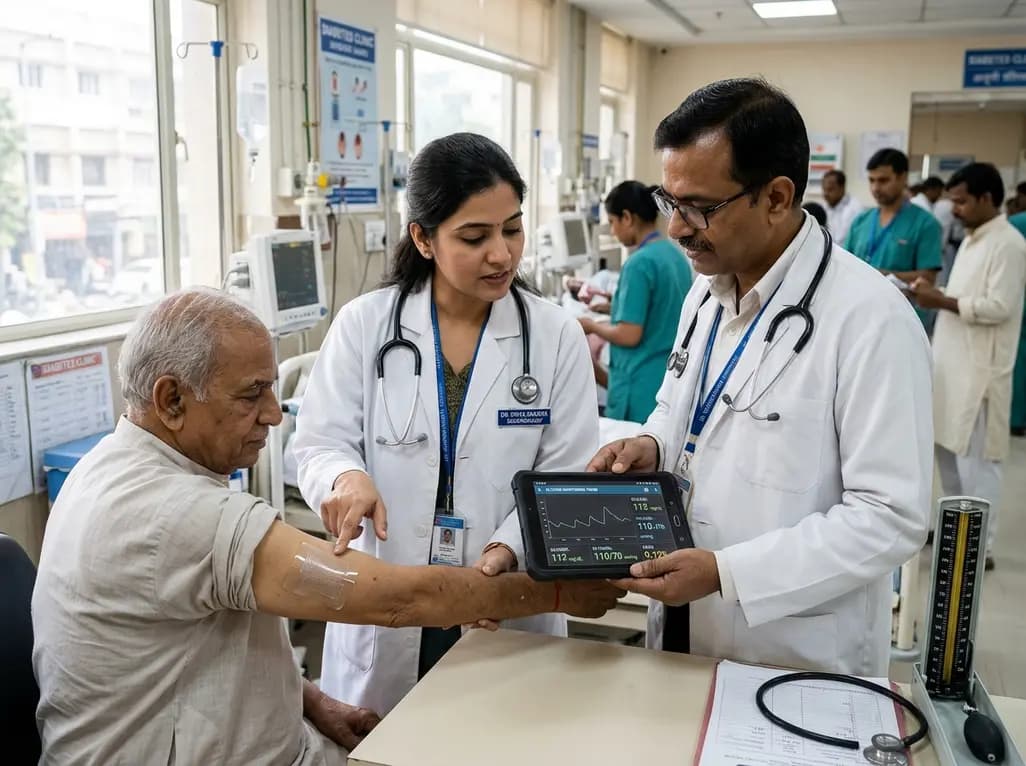
A breakthrough ultrathin multimodal sensor decouples physical hemodynamic monitoring from disposable electrochemical calibration, achieving long-term wearable glucose prediction with 81.36% accuracy and a 9.12% MARD. This offers a robust, drift-free solution for outpatient metabolic surveillance.
Today

A comparative review of tension band wiring and intramedullary screw fixation in thumb metacarpophalangeal arthrodesis, evaluating union rates, hardware complications, and clinical outcomes.
Today

Following regulatory scrutiny from FSSAI regarding promotional representations and lean muscle preservation claims, Dr. Reddy's Laboratories and Nestlé Health Science are currently reviewing the branding and marketing strategy for their joint nutritional supplement Celevida GLP+.
Today
