

Loading, please wait...
Loading, please wait...

Modern antiretroviral therapy has transformed human immunodeficiency virus infection from a fatal illness into a manageable chronic condition. However, prolonged survival exposes individuals to premature age-related morbidities, including neuro-sensory deterioration. Emerging clinical research emphasizes that hearing loss in HIV may represent an underrecognized manifestation of persistent immune activation and systemic vascular damage. Although virological suppression prevents opportunistic intracranial infections, chronic physiological perturbations frequently persist in peripheral sensory organs. Clinicians observe auditory dysfunction across various adult age groups, yet the precise trajectory remains subject to intense investigation. Historically, acute neurological infections and opportunistic pathogens caused profound sensorineural impairments. In contrast, contemporary cohorts demonstrate subtle, subclinical auditory deficits that gradually compound over several decades. Consequently, researchers have shifted attention toward identifying early sensory decline in successfully treated individuals. Sensory organs like the cochlea possess high metabolic demands, making them exceptionally vulnerable to microvascular alterations and chronic systemic stress. Therefore, evaluating auditory performance provides profound insights into central and peripheral neural integrity. Healthcare professionals must understand these sensory transformations to optimize comprehensive long-term care pathways. Recognizing auditory vulnerability allows teams to institute timely rehabilitation strategies before communication barriers compromise overall quality of life.
To address persistent knowledge gaps, investigators initiated the HELO study as an exposed-non-exposed cross-sectional evaluation. Specifically, the study enrolled one hundred antiretroviral-treated persons living with HIV who achieved prolonged treatment success. All exposed participants maintained documented viral suppression for at least five consecutive years and carried a diagnosed infection history exceeding ten years. Moreover, researchers compared these virally suppressed individuals against carefully matched uninfected control subjects to isolate HIV-specific auditory effects. The investigative team applied rigorous comprehensive audiological protocols, including pure-tone air and bone conduction audiometry across conventional and extended high frequencies. Furthermore, the protocol integrated speech recognition testing in quiet and competing noise environments to assess central auditory processing capacity. By excluding participants with confounding otological conditions, the study minimized alternative etiologies of auditory impairment. Additionally, investigators captured extensive data on nadir CD4 cell counts, treatment duration, drug exposures, and cardiovascular comorbidities. This robust comparative structure allowed the authors to discern whether chronic viral suppression completely normalizes hearing thresholds. Consequently, the HELO study establishes critical benchmarks regarding auditory preservation in people aging with successfully managed infection.
Auditory impairment in virally suppressed individuals stems from multifaceted biological pathways rather than direct viral cytotoxicity alone. Although antiretroviral therapy suppresses plasma viremia, low-level viral persistence continues within tissue sanctuaries, including macrophage reservoirs and central nervous system glia. As a result, chronic systemic inflammation releases pro-inflammatory cytokines such as interleukin-6 and tumor necrosis factor-alpha into circulation. These inflammatory mediators induce endothelial dysfunction, which impairs the delicate microvasculature supplying the stria vascularis. Furthermore, reduced cochlear perfusion impairs endocochlear potentials, leaving sensory hair cells vulnerable to metabolic exhaustion and apoptosis. Additionally, persistent vascular inflammation contributes to accelerated arterial stiffening. Consequently, impaired microcirculation within the internal auditory artery further exacerbates inner ear hypoxia. Historical exposure to early-generation nucleoside reverse transcriptase inhibitors may also induce long-lasting mitochondrial DNA mutations within neuro-sensory tissues. Such mitochondrial decay compromises cellular bioenergetics across spiral ganglion neurons, accelerating age-dependent sensory decline. Similarly, neuro-inflammation can impair auditory nerve conduction velocity and central sound discrimination circuits. Therefore, hearing deterioration reflects a complex convergence of chronic microvascular insult, residual immune activation, mitochondrial injury, and biological aging. Recognizing these interactive pathways helps clinicians appreciate that sensory decline mirrors systemic physiological aging across suppressed cohorts.
Audiometric analyses from cohorts of aging individuals demonstrate distinct patterns of sensory impairment that require nuanced clinical interpretation. Specifically, pure-tone audiometry typically reveals elevated hearing thresholds at extended high frequencies, indicating cochlear basal turn vulnerability. However, speech discrimination scores in background noise often deteriorate disproportionately compared to pure-tone thresholds. This clinical discrepancy strongly suggests concurrent central auditory processing deficits alongside peripheral receptor damage. Moreover, investigators must disentangle viral contributions from ubiquitous non-communicable comorbidities. Hypertension, dyslipidemia, diabetes mellitus, and chronic tobacco exposure frequently cluster among long-term treated cohorts, compounding cochlear microangiopathy. In addition, previous exposure to ototoxic medications, such as aminoglycosides used for tuberculosis coinfection, can create confounding baseline cochlear deficits. Consequently, clinicians must evaluate auditory findings alongside cardiovascular and metabolic health profiles. Additionally, routine otoscopic evaluations help rule out common middle ear pathologies before establishing permanent neuro-sensory diagnoses. When evaluating patients reporting communication difficulties, healthcare providers should avoid attributing deficits solely to chronological aging. Instead, clinicians should recognize that chronic viral suppression, vascular pathology, and lifestyle risk factors exert synergistic deleterious effects. Therefore, comprehensive diagnostic batteries remain essential to localize the anatomical site of auditory dysfunction accurately.
The clinical insights from the HELO study carry substantial relevance for healthcare practitioners managing HIV in India. Under the National AIDS Control Organisation guidelines, millions of patients currently receive free, life-saving antiretroviral therapy. Because treatment coverage has expanded dramatically, a substantial proportion of Indian patients now live into advanced adulthood with sustained virological control. However, our healthcare delivery models predominantly focus on viral load monitoring, opportunistic infection surveillance, and immunological recovery. Consequently, sensory impairments such as hearing loss frequently escape early detection during routine outpatient consultations. Furthermore, the high prevalence of type 2 diabetes, systemic hypertension, and untreated middle ear infections across India further amplifies audiological risk. Healthcare professionals in internal medicine and otorhinolaryngology must therefore establish interdisciplinary screening channels for aging patients. Specifically, primary physicians should incorporate simple screening questionnaires or whisper tests during biannual consultations. Additionally, clinicians should refer symptomatic patients for pure-tone audiometry and speech discrimination testing promptly. Early identification facilitates timely audiological rehabilitation, including digital hearing aid fitting and communication counseling. Moreover, integrating sensory health metrics into existing chronic care frameworks ensures holistic well-being across diverse healthcare tiers. Ultimately, prioritizing neuro-sensory health preserves personal autonomy, minimizes depression, and maintains socio-economic productivity among Indian patients.
Although sustained viral suppression eliminates high plasma viral replication, it does not completely normalize neuro-sensory hearing function. Chronic low-grade immune activation, residual vascular endothelial damage, and past immunological nadirs often persist despite undetectable viral loads. Consequently, aging individuals with well-controlled infection exhibit higher rates of high-frequency sensory impairment. Furthermore, they demonstrate impaired speech-in-noise perception compared to uninfected peers, necessitating vigilant long-term audiological monitoring.
Clinicians should utilize comprehensive pure-tone audiometry assessing both conventional and extended high frequencies above eight kilohertz. Additionally, speech-in-noise discrimination testing provides crucial assessment of central auditory processing, which standard pure-tone audiograms frequently miss. In routine primary care clinics, validated self-report screening questionnaires provide practical utility. Tools like the Hearing Handicap Inventory, combined with mobile tablet audiometry, offer accessible, cost-effective methods for early sensory triage.
Modern first-line regimens, including integrase strand transfer inhibitors like dolutegravir combined with contemporary tenofovir formulations, demonstrate minimal direct cochlear ototoxicity. Unlike older nucleoside analogues that caused significant mitochondrial DNA polymerase inhibition in sensory hair cells, contemporary antiretrovirals maintain safe otological profiles. Therefore, modern hearing decline reflects vascular aging, chronic inflammation, and metabolic comorbidities rather than direct drug toxicity.
Disclaimer: This content is for informational and educational purposes only... Refer to the latest local and national guidelines for clinical practice.
References

Read summarized clinical updates, watch expert medical content, and earn CME certifications right from your smartphone.
Open your smartphone camera to scan and install.





The HELO study evaluates hearing function in virologically suppressed persons living with HIV. Learn how chronic inflammation, vascular factors, and antiretroviral therapy impact auditory decline and why regular audiological monitoring is critical for aging patients.
Today

A population-based study of 20,928 children reveals that small vulnerable newborns face sex-divergent mental capital outcomes at ages 6-7: term SGA girls show higher behavioral difficulties and lower resilience, while preterm non-SGA boys experience increased behavioral problems.
Today

A breakthrough ultrathin multimodal sensor decouples physical hemodynamic monitoring from disposable electrochemical calibration, achieving long-term wearable glucose prediction with 81.36% accuracy and a 9.12% MARD. This offers a robust, drift-free solution for outpatient metabolic surveillance.
Today
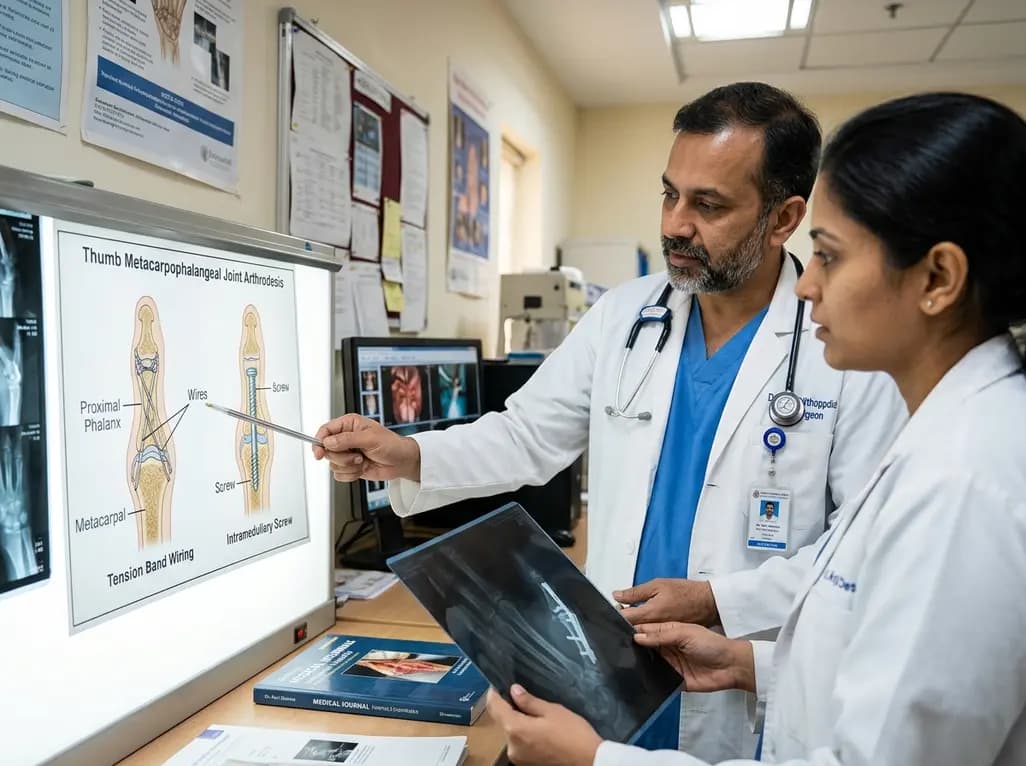
A comparative review of tension band wiring and intramedullary screw fixation in thumb metacarpophalangeal arthrodesis, evaluating union rates, hardware complications, and clinical outcomes.
Today

Following regulatory scrutiny from FSSAI regarding promotional representations and lean muscle preservation claims, Dr. Reddy's Laboratories and Nestlé Health Science are currently reviewing the branding and marketing strategy for their joint nutritional supplement Celevida GLP+.
Today
