.webp&w=384&q=75)

Loading, please wait...
Loading, please wait...

Revision hip arthroscopy outcomes provide essential data for surgeons managing recurrent hip pathologies. This procedure often addresses residual femoroacetabular impingement or labral issues. Recent research highlights that patients can achieve significant functional gains post-surgery. Furthermore, researchers evaluated these improvements using multiple clinical thresholds.
Specifically, they looked at the Substantial Clinical Benefit (SCB) and Minimal Clinical Important Difference (MCID). However, the study suggests that some thresholds measure clinical success more accurately than others. Consequently, understanding these variations helps clinicians set realistic patient expectations. Additionally, the study included sixty-eight patients with a minimum two-year follow-up. Most participants reported marked improvements in pain and sports-related functions. Therefore, revision surgery remains a viable option for those failing primary arthroscopy. Moreover, the International Hip Outcome Tool-12 (i-HOT-12) remains a robust metric for assessment. Despite the complexity of revision cases, the results are encouraging for the orthopedic community.
Patients undergoing revision procedures often have different baseline scores compared to primary cases. Because of this, using a variety of metrics like the Patient Acceptable Symptom State (PASS) ensures a comprehensive evaluation. By focusing on meaningful clinical improvement, surgeons can better tailor postoperative rehabilitation protocols. This approach ultimately enhances long-term joint preservation and patient satisfaction.
Surgeons use patient-reported outcome measures (PROMs) such as the mHHS and i-HOT-12. They look for specific changes that meet thresholds like the Minimal Clinical Important Difference (MCID) to confirm the surgery was effective.
While revision surgery shows significant improvement, studies often indicate that the absolute outcome scores might be lower than those of primary surgeries. However, the magnitude of improvement can still be very meaningful for the patient.
Disclaimer: This content is for informational and educational purposes only. It does not constitute medical advice or establish a doctor-patient relationship. Always seek the advice of a qualified healthcare provider regarding any medical condition. Refer to the latest local and national guidelines for clinical practice.
References
Maldonado DR et al. Revision Hip Arthroscopy Results in Meaningful Clinical Improvement, Better Measured by Some Thresholds Than Others. Arthroscopy. 2026 Jun 21. doi: 10.1002/arj.70316. PMID: 42323893.
Villarreal-Espinosa JB et al. Revision Hip Arthroscopy Yields Inferior Patient Reported Outcome Measures and Patient Acceptable Symptomatic State Along with Higher Total Hip Arthroplasty Conversion Compared to the Primary Setting at a Minimum 2-Year Follow-Up. Arthroscopy. 2025 Jul 24. doi: 10.1016/j.arthro.2025.07.014.
Kim et al. Long-term outcomes after hip arthroscopy for femoroacetabular impingement PASS, MCID, return to sport, and revision rates at a minimum five-year follow-up. SICOT-J. 2026. doi: 10.1051/sicotj/2026001.
"
Read summarized clinical updates, watch expert medical content, and earn CME certifications right from your smartphone.
Open your smartphone camera to scan and install.





A clinical study confirms that revision hip arthroscopy leads to significant improvement in patient-reported outcomes over two years. Researchers found that while all metrics improved, thresholds like Substantial Clinical Benefit (SCB) provide a more nuanced understanding of surgical success.
4 months ago

A landmark 12-year longitudinal study highlights significant reductions in opioid prescribing for nonspecific low back pain following clinical guidelines and prescription monitoring systems, emphasizing non-opioid multimodal pain care.
Today
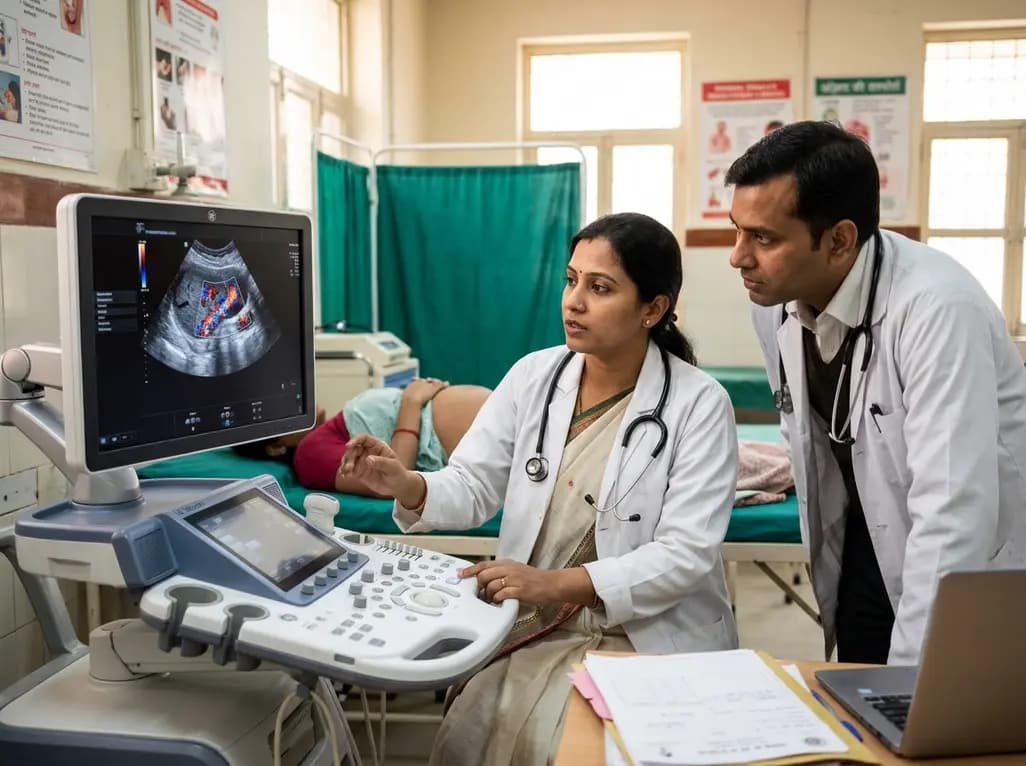
A study in Ultrasound in Obstetrics & Gynecology shows that quantitative vascularization of the anterior fornix/cervix with transvaginal ultrasound reliably identifies placenta accreta spectrum and predicts severe intraoperative hemorrhage, offering vital objective risk stratification.
Today
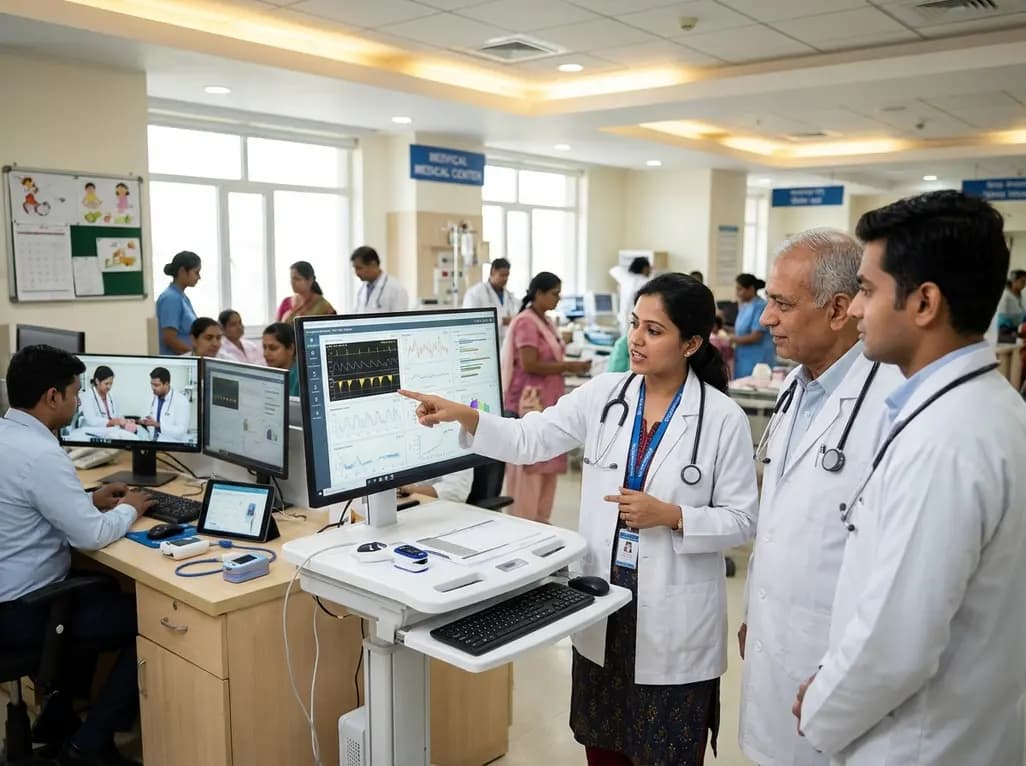
A landmark study details how an enterprise pediatric remote patient management model expanded from a single cardiology pilot to 16 diverse specialty programs by combining centralized digital operations with specialty clinical leadership.
Yesterday
A breakthrough study shows that 3D-planned corrective osteotomy successfully resolves distal radioulnar joint instability in pediatric diaphyseal forearm malunions. The precise osseous realignment eliminates chronic wrist pain and restores joint function without requiring secondary soft-tissue reconstruction.
Today

Protein O-GlcNAcylation couples cellular nutrient status to vital neuronal functions. This review explores how disrupted O-GlcNAc cycling drives both neurodevelopmental delays and neurodegenerative cascades, positioning metabolic post-translational modifications as therapeutic targets in clinical neurology.
Today
