.webp&w=384&q=75)

Loading, please wait...
Loading, please wait...

Renin measurement cryoactivation represents a significant pre-analytical challenge in modern clinical laboratories. Clinicians often rely on the Aldosterone-Renin Ratio (ARR) to screen for primary aldosteronism. However, inaccurate renin levels can cause false-negative interpretations. Prorenin transforms into active renin when plasma is exposed to low temperatures. Consequently, this process leads to falsely elevated results. Therefore, standardized laboratory protocols are essential for reliable patient diagnosis and hypertension management.
A recent survey of Dutch clinical laboratories revealed a wide variation in pre-analytical practices. Specifically, many facilities lack strict time limits for sample receipt. Additionally, storage at -20°C may not sufficiently prevent prorenin conversion. In fact, studies demonstrate that significant cryoactivation can occur even at standard freezer temperatures. To ensure accuracy, laboratories should transport samples at ambient temperature. Moreover, rapid freezing to -70°C or -80°C is highly recommended for long-term storage. Furthermore, clinicians must be aware of these potential pitfalls when interpreting ARR values.
Proper sample handling is vital for managing hypertensive patients effectively. Firstly, avoid cooling blood samples before centrifugation. Secondly, ensure the laboratory processes the plasma quickly to maintain stability. Finally, if you suspect an inaccurate result, repeat the test using optimal ambient conditions. By following these steps, you can significantly reduce the risk of diagnostic errors. Indeed, precision in the pre-analytical phase is just as important as the analytical phase itself.
It is the in vitro conversion of prorenin to active renin. This occurs when plasma is exposed to temperatures between -5°C and +4°C, leading to falsely high renin results.
Since renin levels appear falsely elevated due to temperature exposure, the calculated ratio (ARR) becomes falsely low. This can lead to a missed diagnosis of primary aldosteronism in hypertensive patients.
Recent research indicates that storage at -20°C is often insufficient to stop the conversion process. Rapid freezing to -70°C or below is far more effective for preserving sample integrity and ensuring accurate measurements.
Disclaimer: This content is for informational and educational purposes only. It does not constitute professional medical advice, diagnosis, or treatment. Always seek the advice of your physician or other qualified healthcare provider with any questions you may have regarding a medical condition. Refer to the latest local and national guidelines for clinical practice.
References
Ozcan O et al. A Survey of Clinical Laboratories in the Netherlands Regarding Pre-analytical Conditions of Renin Measurements to Prevent Cryoactivation. Ann Clin Biochem. 2026 Mar 03. doi: 10.1177/00045632261433341. PMID: 41773499.
Heijboer AC et al. The Clinical Impact of Sample Storage at -20 °C on Renin Reference Intervals and Aldosterone–Renin Ratio Calculations. J Clin Endocrinol Metab. 2024;109(1):e1472-e1475.
Sealey JE et al. Prorenin cryoactivation as a possible cause of normal renin levels in patients with primary aldosteronism. J Hypertens. 2005;23:459-460.

Read summarized clinical updates, watch expert medical content, and earn CME certifications right from your smartphone.
Open your smartphone camera to scan and install.





A survey of Dutch laboratories reveals significant variations in renin testing conditions, highlighting the risk of cryoactivation and diagnostic errors....
7 months ago
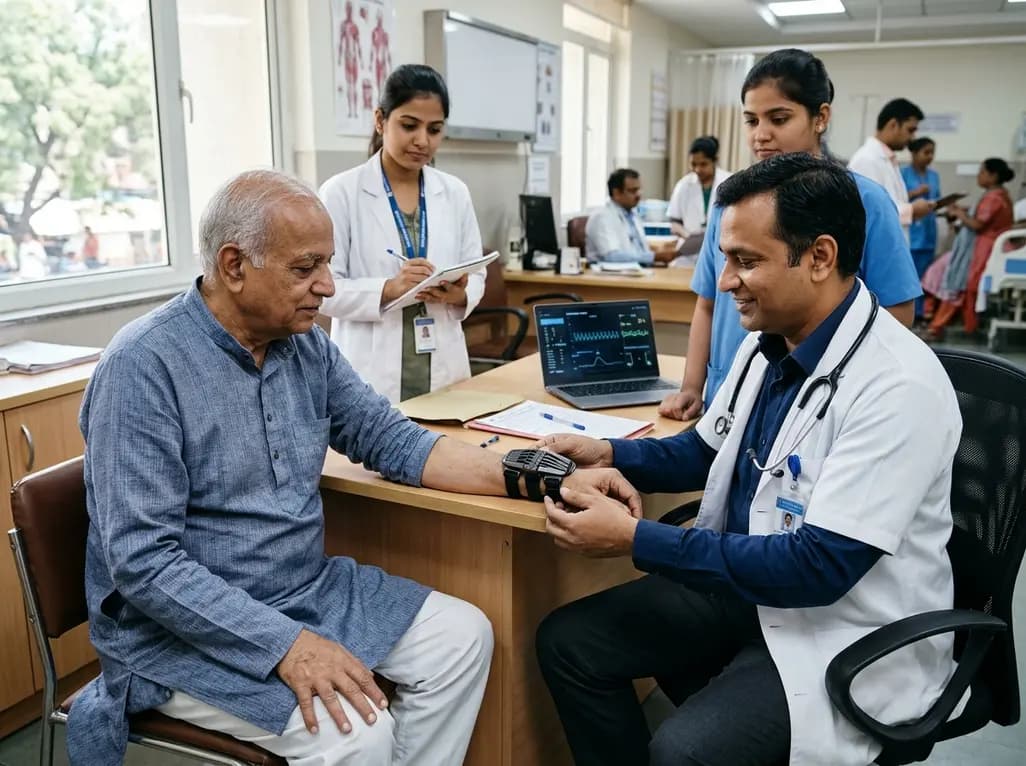
The TREM-AB open-label pilot study evaluated a wearable passive nonlinear vibration absorber for essential tremor. The Nonlinear Energy Sink bracelet reduced clinical Fahn-Tolosa-Marin tremor scores by 32.1% and electrophysiological tremor power by 49.2% with no adverse effects reported.
Today

A population-based study of 20,928 children reveals that small vulnerable newborns face sex-divergent mental capital outcomes at ages 6-7: term SGA girls show higher behavioral difficulties and lower resilience, while preterm non-SGA boys experience increased behavioral problems.
Today
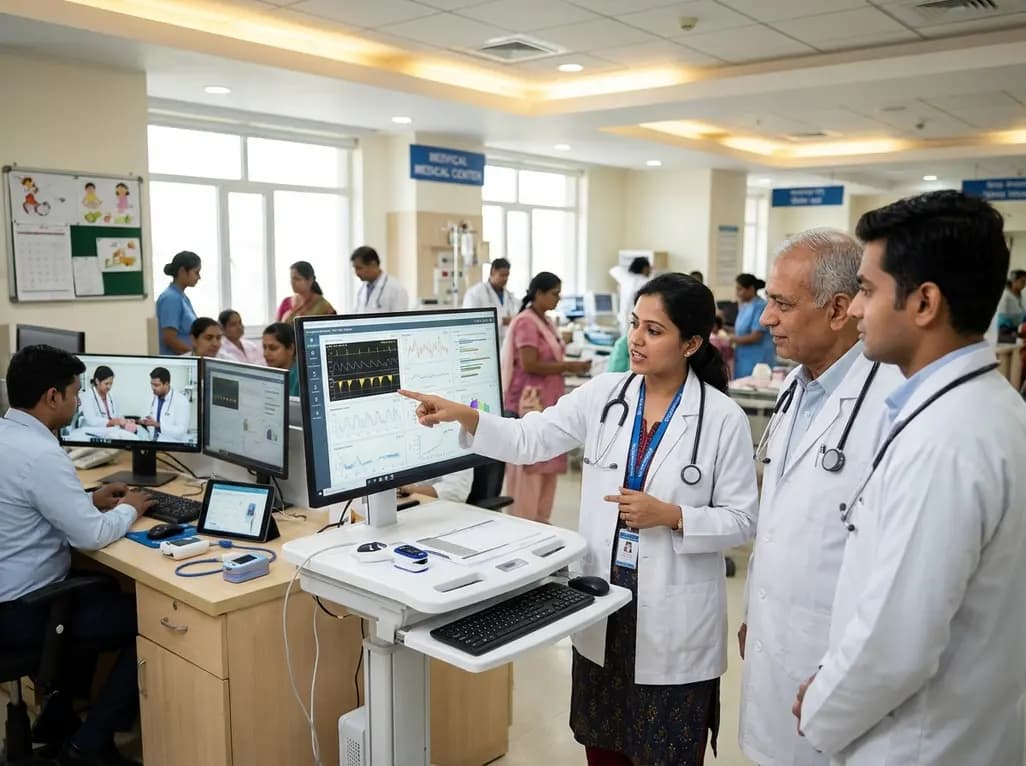
A landmark study details how an enterprise pediatric remote patient management model expanded from a single cardiology pilot to 16 diverse specialty programs by combining centralized digital operations with specialty clinical leadership.
Today

A comparative review of tension band wiring and intramedullary screw fixation in thumb metacarpophalangeal arthrodesis, evaluating union rates, hardware complications, and clinical outcomes.
Today

A breakthrough ultrathin multimodal sensor decouples physical hemodynamic monitoring from disposable electrochemical calibration, achieving long-term wearable glucose prediction with 81.36% accuracy and a 9.12% MARD. This offers a robust, drift-free solution for outpatient metabolic surveillance.
Today
