.webp&w=384&q=75)

Loading, please wait...
Loading, please wait...

Cadmium accumulation in staple crops presents a severe risk to global food safety. In regions like India, where rice is a primary dietary staple, the long-term ingestion of heavy metals can lead to chronic health conditions. Chronic exposure is specifically linked to renal dysfunction and bone demineralization. Consequently, researchers are exploring innovative biological solutions to mitigate Cadmium toxicity in rice and safeguard human health.
A recent study identifies a specialized root endophyte, Bacillus sp. RE35, as a powerful tool in the fight against contamination. This bacterium effectively colonizes the root apoplast, creating a niche that promotes extensive morphological changes. Furthermore, the strain produces high levels of Indole-3-Acetic Acid (IAA). This hormone triggers root remodeling through both salvage and de novo pathways. Notably, this structural change significantly increases the plant's ability to trap heavy metals before they reach the grains.
The primary defense mechanism involves a comprehensive cell wall remodeling program. Inoculation with RE35 activates specific plant receptor kinases, such as LRR-RLKs and LysM-RLKs. These receptors then upregulate genes responsible for synthesizing pectin, hemicellulose, and lignin. This process increased cell wall-bound cadmium by over 64% in experimental models. Consequently, the translocation of the metal to the shoots decreased by nearly 50%, effectively limiting Cadmium toxicity in rice at the source.
Beyond structural changes, RE35 actively modulates the host's genetic response to stress. It downregulates influx transporter genes like OsNRAMP5 and OsZIP5/9, which typically facilitate metal uptake. Simultaneously, it promotes the expression of OsHMA3, a gene essential for sequestering toxins within vacuoles. Therefore, this multi-level approach provides a robust framework for sustainable agriculture in contaminated environments.
For healthcare providers, understanding these agricultural advancements is crucial for preventative medicine. Reducing heavy metal entry into the food chain directly lowers the incidence of metal-induced nephropathies. While clinical management of toxicity remains vital, supporting sustainable remediation strategies offers a long-term solution to public health challenges.
Chronic ingestion of cadmium primarily affects the kidneys, leading to tubular dysfunction. It also interferes with calcium metabolism, potentially causing osteoporosis and increased fracture risk over time.
The endophyte triggers the rice plant to strengthen its root cell walls. By increasing the amount of pectin and lignin, the roots act as a filter, trapping cadmium and preventing its movement into the edible parts of the plant.
Many agricultural zones in India face soil contamination due to industrial runoff. Since rice is a high-consumption crop, implementing microbial solutions like RE35 can significantly reduce the population's daily intake of toxic heavy metals.
Disclaimer: This content is for informational and educational purposes only and does not constitute medical advice. Refer to the latest local and national guidelines for clinical practice.
References
1. Chen W et al. Endophyte Bacillus sp. RE35 Enhances Cd Trap in Rice Roots Via Root Cell Wall Remodelling During Colonisation. Plant Cell Environ. 2026 May 27. doi: 10.1111/pce.70640. PMID: 42204378.
2. Mohanty S et al. Heavy metal contamination in rice, pulses, and vegetables from CKDu-endemic areas in Cuttack district, India: a health risk assessment. Front Public Health. 2023. doi: 10.3389/fpubh.2023.1234567.
3. World Health Organization. Cadmium - Dietary exposure and health effects. WHO Food Additives Series: 64. 2022.

Read summarized clinical updates, watch expert medical content, and earn CME certifications right from your smartphone.
Open your smartphone camera to scan and install.





A study reveals how the root endophyte Bacillus sp. RE35 traps cadmium in rice roots, significantly reducing its accumulation in edible shoots and grains....
4 months ago
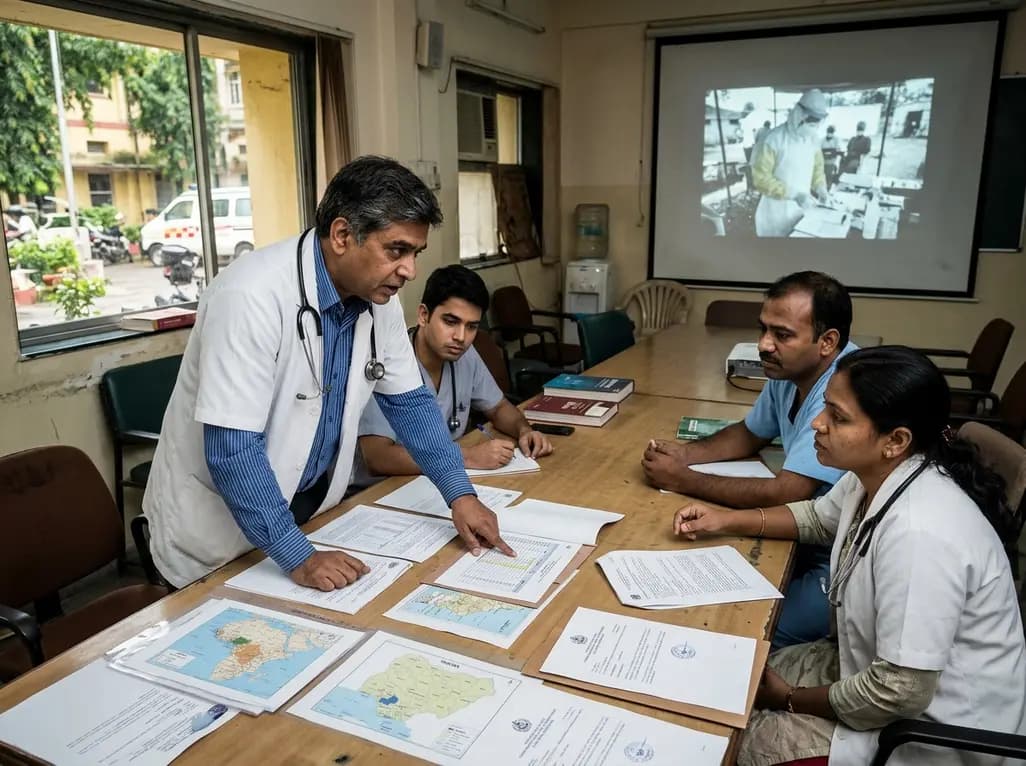
Following Nigeria's first recorded Ebola case linked to regional travel, the Africa CDC has convened an emergency ministerial summit. This alert underscores critical clinical priorities for healthcare professionals, including differentiating early viral infection from malaria, implementing barrier nursing, and triage.
Today

Leucine Rich Bio has introduced South Asia's first comprehensive vaginal microbiome test, BugSpeaks. By profiling microbial dysbiosis, pathogens, and antimicrobial resistance, this next-generation diagnostic platform provides clinicians with deeper insights into recurrent infections, fertility, and reproductive health.
Today

Review how tailored exercise programs benefit frail older patients with heart failure. Explore pathophysiological mechanisms, individualized training prescriptions, and strategies to overcome adherence barriers in clinical practice.
Today

This comparative study evaluates posterior labral tears with and without glenohumeral instability, highlighting distinct demographic patterns, MRI underestimation in stable shoulders, and successful arthroscopic repair outcomes.
Today

A clinical study demonstrates that early intervention with tocilizumab, either as monotherapy or bridged with corticosteroids, achieves significant proptosis reduction and resolves active inflammation in treatment-naive thyroid eye disease.
Today
