.webp&w=384&q=75)

Loading, please wait...
Loading, please wait...

Modern automotive trends like autonomous driving and zero-gravity seats are rapidly changing how we sit in vehicles. However, these innovations bring new challenges for safety, particularly regarding reclined occupant spinal posture. Traditional crash test models often fail to account for the unique biomechanical stresses placed on the lumbar spine when an occupant is not in an upright position. A recent study has demonstrated that adjusting these models to reflect subject-specific spinal geometry significantly enhances the accuracy of injury predictions.
Researchers used high-precision Total Human Model for Safety (THUMS) simulations to analyze various reclined positions. They found that models aligned by angular spinal posture performed better than those based on average vertebral locations. Specifically, this method yielded an impressive 47% improvement in predicting peak X-displacement. This accuracy is vital because it allows engineers to better understand how a person moves during a high-speed collision. Consequently, this leads to the development of more effective restraint systems for modern vehicle interiors.
The study also highlighted the correlation between thoracolumbar kinematic and kinetic responses. By focusing on reclined occupant spinal posture, the spine-specific models accurately identified potential injury sites in the lumbar and iliac regions. Furthermore, these models improved the prediction of Z-direction kinematics compared to generic versions. This data provides clinical value for orthopedic surgeons and emergency physicians who treat trauma from vehicular accidents. Understanding these mechanisms helps in identifying risks such as submarining, where the occupant slides under the lap belt during impact.
In a reclined position, the spine is subjected to different load vectors compared to an upright position. Proper modeling of this posture helps in predicting how the lumbar spine absorbs impact forces, which is essential for preventing serious fractures.
Subject-specific models account for individual variations in spinal curvature. By using angular alignment instead of generic averages, these models provide a 47% better prediction of occupant movement, allowing for more precise evaluations of injury risk at specific vertebral levels.
Disclaimer: This content is for informational and educational purposes only. It does not constitute professional medical advice, diagnosis, or treatment. Always seek the advice of your physician or other qualified healthcare provider with any questions you may have regarding a medical condition. Refer to the latest local and national guidelines for clinical practice.
References
Shen W et al. Spinal posture helps crash response evaluation of reclined occupant. Traffic Inj Prev. 2026 Apr 06. doi: 10.1080/15389588.2026.2643780. PMID: 41941826.
Richardson R et al. Thoracolumbar spine kinematics and injuries in frontal impacts with reclined occupants. Traffic Inj Prev. 2020;21(sup1):S118-S124. doi: 10.1080/15389588.2020.1818021.
Lin H et al. Effect of seatback recline on occupant model response in frontal crashes. Traffic Inj Prev. 2018;19(sup2):S169-S171. doi: 10.1080/15389588.2018.1524147.

Read summarized clinical updates, watch expert medical content, and earn CME certifications right from your smartphone.
Open your smartphone camera to scan and install.





THUMS models using specific spinal postures predict occupant kinematics 47% more accurately, offering insights into lumbar injury risks for reclined seating...
6 months ago
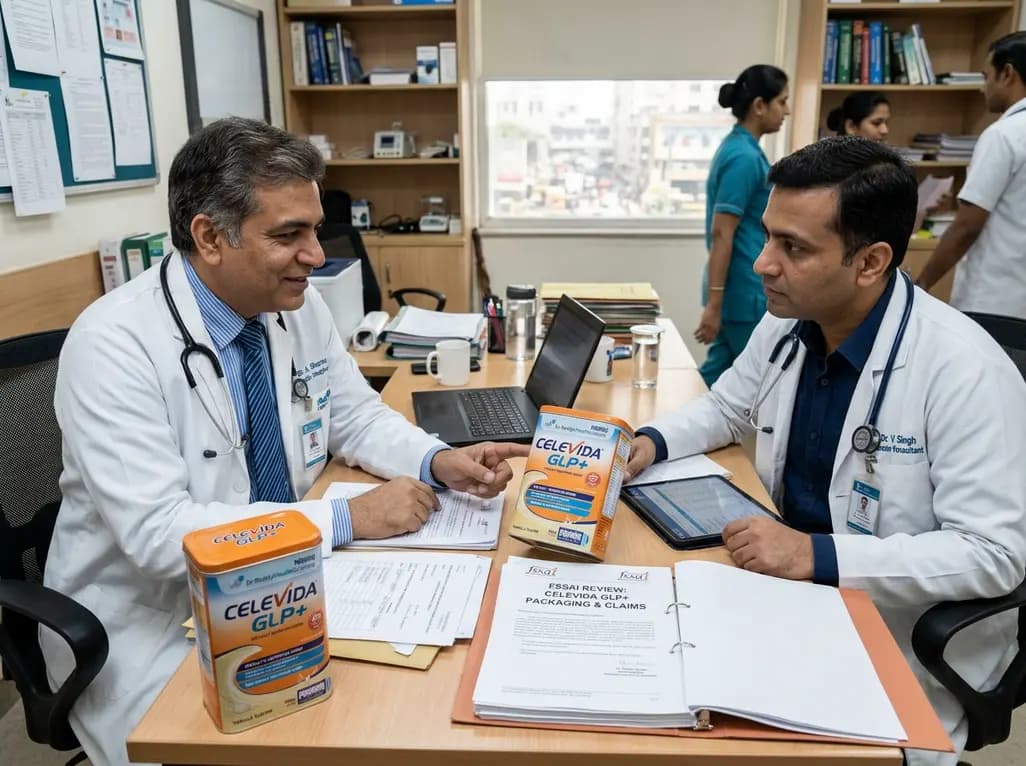
Following regulatory scrutiny from FSSAI regarding promotional representations and lean muscle preservation claims, Dr. Reddy's Laboratories and Nestlé Health Science are currently reviewing the branding and marketing strategy for their joint nutritional supplement Celevida GLP+.
Today
A comprehensive scoping review synthesises evidence linking prenatal maternal mental health to long-term offspring neurodevelopment, evaluating neuroendocrine, inflammatory, and epigenetic pathways while highlighting clinical screening and future research priorities.
Today

The Directorate General of Health Services directs Indian states to halt the hazardous reuse and reprocessing of single-use medical devices. Discover regulatory implications under the Drugs and Cosmetics Act, critical infection risks, legal liabilities, and operational changes required across clinical specialties.
Today
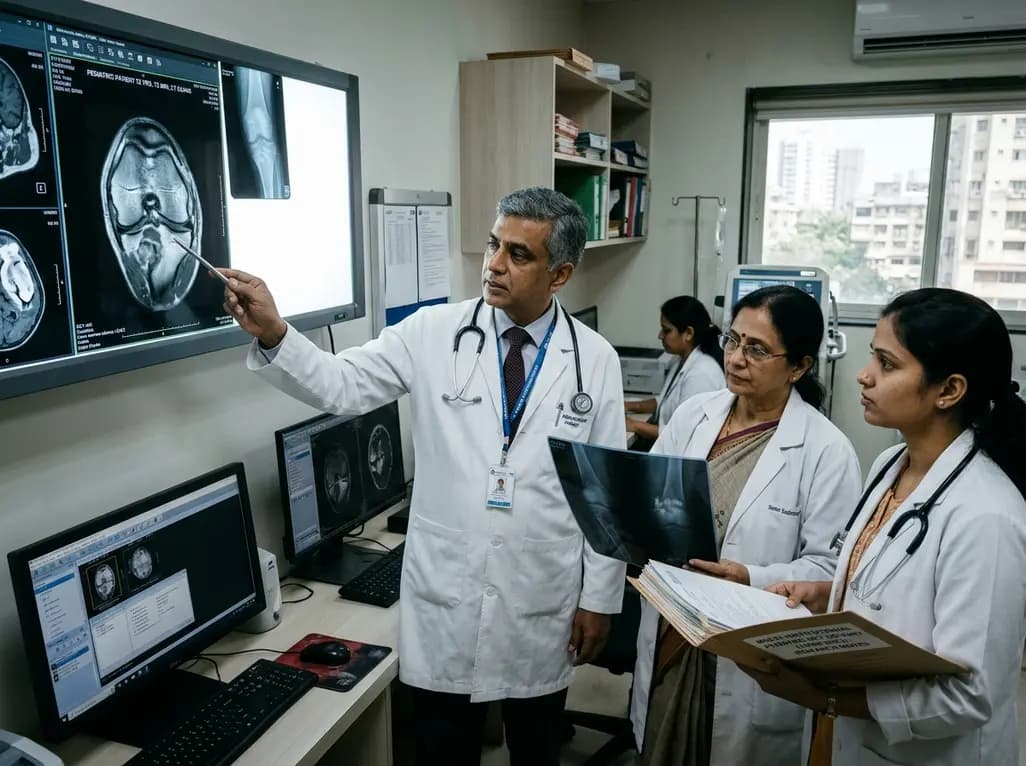
A 25-year multi-institutional cohort reveals high recurrence rates in pediatric giant cell tumor of bone, particularly in patients with open physes and bone marrow edema on preoperative MRI. Early surveillance and careful balance between growth plate preservation and tumor clearance are essential.
Today

India is advancing preventive healthcare by integrating genomics, artificial intelligence, and quantum technologies. With the SANGAM programme sequencing one million Indian genomes, clinicians can unlock personalized therapies, detect cardiometabolic risks early, and curb the burden of diabetes and heart disease.
Today
