.webp&w=384&q=75)

Loading, please wait...
Loading, please wait...
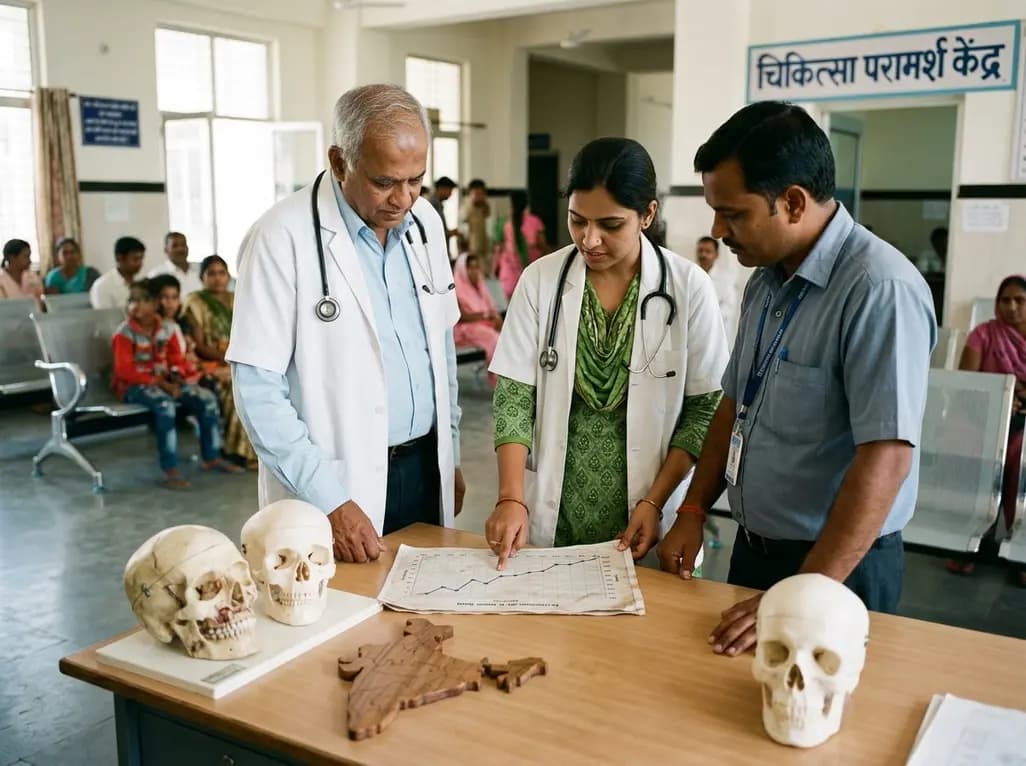
Surgical conditions represent a substantial yet neglected public health challenge across low- and middle-income nations. Untreated congenital anomalies like cleft lip and palate inflict profound physical disability, social stigma, and nutritional compromise on children. Consequently, the Lancet Commission on Global Surgery emphasized an urgent need for sustainable, decentralized surgical delivery systems. Delivering equitable craniomaxillofacial care requires innovative infrastructure that bridges rural populations and tertiary specialized centers. Historically, rural families faced catastrophic healthcare expenditure, immense travel distances, and severe specialist shortages whenever they sought reconstructive surgery. However, comprehensive community-integrated interventions demonstrate that health systems can successfully dismantle these systemic barriers. A recent twenty-five-year retrospective evaluation of the REACH initiative in India showcases how coordinated primary and tertiary partnerships transform surgical delivery. Specifically, by integrating local healthcare networks with specialized surgical institutes, the programme established a reliable continuum of reconstructive care. Moreover, this longitudinal experience proves that rural outreach does not compromise surgical safety or clinical outcomes. Clinicians and surgical leaders can now leverage these actionable principles to establish robust surgical safety nets in resource-constrained regions worldwide.
The REACH framework, which stands for Rural Effective, Affordable, Comprehensive Healthcare, relies on structured multi-tiered coordination. Originally established through collaborative efforts between SHARE India and the GSR Institute, the programme operated continuously from 2000 through 2025. Over this quarter-century period, the initiative expanded across approximately twenty-five districts and 1,010 rural villages. Consequently, the operational footprint encompasses an estimated catchment population of 3.9 million individuals. The organizational structure links village-level health workers directly to secondary supervisory nodes and regional advanced surgical centers. Therefore, patients suffering from complex craniomaxillofacial anomalies bypass the common delays that typically plague unorganized public referral pathways. In addition, the central surgical hub maintains international standards of operating theater safety, anesthesia care, and sterile processing. Dedicated clinical coordinators manage scheduled patient transfers, post-operative boarding, and subsequent rehabilitation sessions. Because the model anchors itself in established administrative jurisdictions, local government health bodies readily coordinate with the outreach teams. Thus, the organizational architecture achieves exceptional operational efficiency while preserving rigorous clinical governance across vast geographic expanses.
Workforce development forms the primary foundation of sustained surgical access in resource-limited rural environments. To achieve broad grassroots coverage, the programme trained approximately 4,800 community health volunteers across hundreds of village clusters. These frontline workers learned standardized case detection protocols to identify congenital facial clefts and complex craniofacial defects early in infancy. Furthermore, forty-eight dedicated health supervisors oversaw these community volunteers, providing continuous quality assurance and administrative support. A core cadre of twelve local doctors evaluated identified patients in peripheral clinics and established standardized clinical referral documentation. Consequently, timely surgical intervention replaced delayed presentation, allowing surgeons to perform primary lip and palate repairs during ideal developmental windows. In addition, task-sharing strategies empowered frontline workers to educate families on infant feeding techniques, speech therapy exercises, and wound hygiene. This extensive educational pipeline demystified facial reconstructive surgery and eradicated entrenched rural cultural stigmas surrounding congenital anomalies. As a result, families actively sought timely corrective care, creating a predictable and steady surgical volume that optimized hospital bed utilization.
Catastrophic health spending remains one of the greatest deterrents to surgical care in developing nations. Therefore, the REACH initiative pioneered an innovative hybrid financing model designed to safeguard impoverished households from economic ruin. Over the twenty-five-year operational study, surgeons completed approximately 34,000 surgical procedures, predominantly addressing cleft and craniomaxillofacial pathologies. Crucially, the institute delivered approximately sixty percent of these reconstructive surgeries completely free of charge to socioeconomically disadvantaged families. To maintain institutional financial solvency, the programme blended multiple distinct revenue streams into an equitable cross-subsidization matrix. Specifically, philanthropic grants, international cleft charities, governmental health schemes, and modest tiered fees from paying private patients funded operations. Furthermore, the model provided comprehensive ancillary services, including diagnostic workups, orthodontic appliances, nutritional supplements, and surgical revisions, without out-of-pocket patient exploitation. By minimizing indirect non-medical expenditures such as transportation and lost familial wages, the system protected household financial stability. Ultimately, this economic blueprint proves that specialized surgical centers can achieve sustained financial survival while offering extensive subsidized surgical care.
The remarkable longevity and scale of the REACH initiative yield crucial strategic lessons for modern surgical policymakers. First, the framework demonstrates that global surgery targets articulated by the Lancet Commission are practically achievable through local institution building. Rather than relying on transient foreign surgical missions, this domestic model built enduring infrastructure and trained indigenous surgical specialists. Consequently, long-term postoperative follow-up, secondary alveolar bone grafting, and orthognathic revisions occurred smoothly across patient lifespans. In addition, academic integration allowed the central institute to train generations of maxillofacial and reconstructive surgeons in advanced craniofacial techniques. Health ministries and surgical colleges in other developing countries can replicate this decentralized triage and centralized treatment matrix. Furthermore, incorporating digital communications and telemedicine will likely enhance future triage speed and remote postoperative wound monitoring across distant villages. As international surgical coalitions strive toward universal health coverage, this long-standing Indian experience provides an empirical roadmap. Ultimately, sustainable surgical progress demands deep community roots, accountable local leadership, and equitable health financing.
The model separates peripheral case identification from central surgical delivery. Specially trained community volunteers and local supervisory physicians screen patients in rural villages. However, surgeons conduct all reconstructive procedures within a centralized, state-of-the-art facility featuring modern anesthesia, sterile surgical theaters, and specialized pediatric nursing care. This centralized operational strategy guarantees strict adherence to international surgical protocols while eliminating the clinical risks traditionally associated with makeshift rural surgical camps.
The initiative employs an equitable cross-subsidization model that combines philanthropic support, international cleft charity grants, and governmental health insurance schemes. Furthermore, modest tiered fees from wealthier private patients contribute directly to institutional overhead. This diversified funding architecture allows the institute to deliver 60% of its craniomaxillofacial surgical procedures completely free of charge. Consequently, the organization maintains financial solvency without imposing catastrophic out-of-pocket medical expenses onto impoverished rural households.
Yes, healthcare systems can readily adapt this decentralized triage and centralized delivery framework to other surgical specialties, such as pediatric orthopedics, ophthalmology, and trauma reconstruction. By empowering local community health workers to perform standardized population screenings, health systems eliminate diagnostic delays across rural districts. Furthermore, pairing community networks with established regional hospitals optimizes referral pathways, builds domestic surgical capacity, and ensures continuous longitudinal postoperative care across low- and middle-income regions.
Disclaimer: This content is for informational and educational purposes only and should not be considered medical advice. Always consult a qualified healthcare professional regarding any medical condition or treatment. Refer to the latest local and national guidelines for clinical practice.
References
Raghavan P et al. 25-year review of REACH model for equitable craniomaxillofacial care in LMICs. Ann R Coll Surg Engl. 2026 Oct 15. doi: 10.1308/rcsann.2026.0093. PMID: 42878234.
Meara JG, Leather AJ, Hagander L, et al. Global Surgery 2030: evidence and solutions for achieving health, welfare, and economic development. Lancet. 2015;386(9993):569-624.
Reddy SG, Reddy RR, Bronkhorst EM, et al. Cleft surgery in India: Past, present and future and a model for global knowledge transfer. J Oral Biol Craniofac Res. 2016;6(Suppl 1):S4-S9.
Raykar NP, Ng-Kamstra JS, Bickler S, et al. New metrics for surgical systems: A path to universal health coverage. Lancet. 2017;389(10078):1501-1503.

Read summarized clinical updates, watch expert medical content, and earn CME certifications right from your smartphone.
Open your smartphone camera to scan and install.





A 25-year review of the REACH model in rural India demonstrates that community-integrated networks, decentralized triage, and hybrid financing can sustainably deliver high-quality, equitable craniomaxillofacial care to underserved populations, aligning with Lancet Commission global surgery recommendations.
Today

Healthcare resource cutbacks create severe organizational conditions that constrain moral agency, triggering moral distress across frontline clinicians and healthcare leaders. Addressing this crisis requires ethical leadership, relational solidarity, and transparent resource allocation frameworks.
Today

Maharashtra has initiated the appointment of two dedicated special public prosecutors in every district alongside a joint police-health SOP to fast-track PCPNDT and MTP cases. Medical imaging centers, radiologists, and obstetricians must strengthen statutory documentation and audit preparedness.
Today
A study in pediatric cardiology reveals that infants under two months require median enoxaparin doses of 2.13 mg/kg/dose, alongside more dose titrations and longer times to reach target anti-Xa levels compared to older children, underscoring the need for tailored dosing and aggressive monitoring.
Today
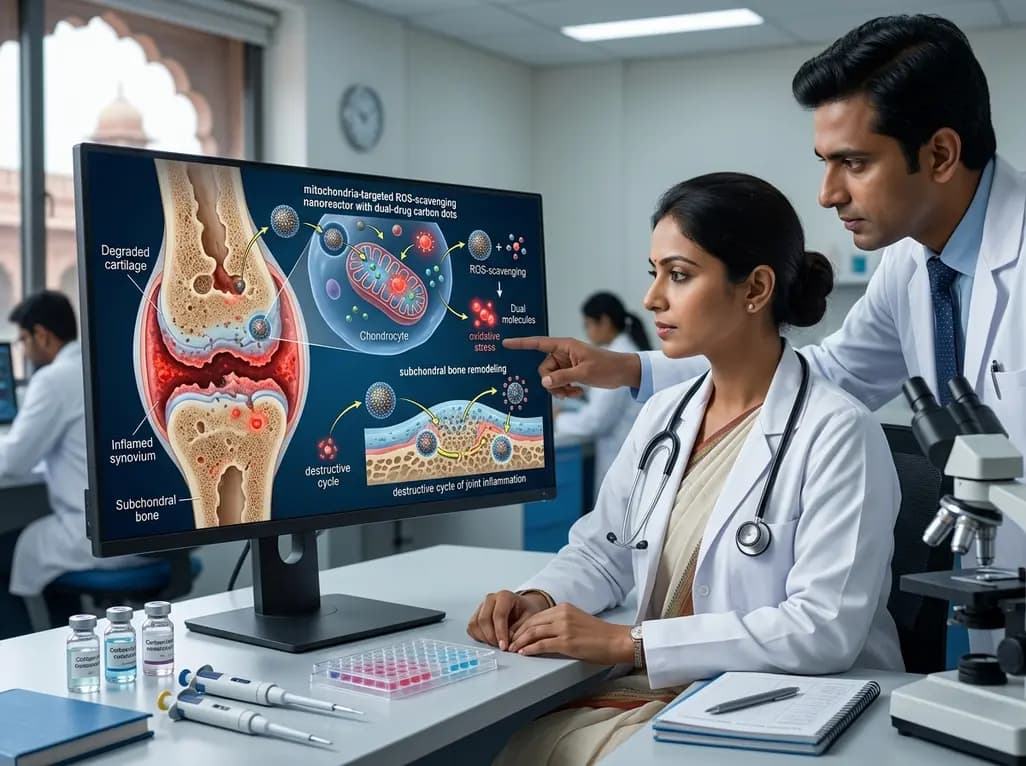
A novel mitochondria-targeted ROS-scavenging nanoreactor with dual-drug carbon dots provides a multi-mechanism strategy for osteoarthritis therapy. By neutralizing oxidative stress and remodeling subchondral bone, this platform breaks the destructive cycle of chronic joint inflammation and cartilage degeneration.
Today

An exploratory pilot study evaluates metoprolol pharmacokinetics across cisgender males, cisgender females, and transgender women on gender-affirming hormone therapy. Findings reveal distinct drug disposition trends, emphasizing the critical need for genotype-stratified research in transgender cardiovascular care.
Today
