.webp&w=384&q=75)

Loading, please wait...
Loading, please wait...

Healthcare administration in Maharashtra is currently witnessing major regulatory shifts to strengthen the implementation of diagnostic laws. The state task force recently announced stringent measures, intensifying PCPNDT Act enforcement across all thirty-six administrative districts. Headed by Neelam Gorhe, the state task force aims to streamline legal actions against illegal sex determination and sex-selective abortions. Consequently, registered imaging clinics, diagnostic laboratories, and maternity centers must evaluate their everyday documentation and procedural safeguards. This comprehensive review examines the new state policy, administrative protocols, and practical compliance imperatives for medical specialists.
Historically, many regulatory complaints under diagnostic legislations faced prolonged delays in trial courts. Legal complexities and shifting court representations often weakened the prosecution of irregular medical centers. To eliminate these bottlenecks, Maharashtra will appoint two exclusive special public prosecutors in every district. These designated legal officers will handle cases related to prenatal diagnostic misuse and illegal termination procedures.
Furthermore, this institutional reform guarantees continuity of judicial proceedings regardless of administrative officer transfers. In previous years, frequent transfers of inspecting civil surgeons created severe gaps during judicial follow-ups. Consequently, trials languished, and evidentiary momentum dissolved over time. The newly appointed prosecutors will maintain continuous custody of case files and legal arguments. They will systematically represent the state during every court hearing.
Additionally, this structural shift ensures that district magistrates present robust evidence before judicial courts. Task force officials highlighted that fast-track prosecution deters unregistered practitioners and rogue operators effectively. Therefore, clinicians must recognize that state authorities are eliminating procedural loopholes that previously slowed courtroom outcomes. Medical practitioners should expect rigorous trial monitoring and proactive court appearances from these public prosecutors during statutory inquiries.
A critical vulnerability in past regulatory crackdowns involved procedural defects during clinical inspections. Health authorities often carried out seizures without meeting strict criminal procedure standards, causing cases to collapse during trials. Consequently, the state health department and police authorities are drafting a joint standard operating procedure. This collaborative framework establishes uniform protocols for search actions, panchnamas, and evidence preservation during surprise visits. It ensures that every procedural step follows documented legal mandates strictly.
Moreover, the task force emphasized rigorous practical training drills for inspecting officers and police personnel. These operational drills focus on proper equipment sealing, chronological diary maintenance, and digital evidence custody. Officials are currently analyzing past judicial records of both convictions and acquittals to identify common investigational lapses. Therefore, the resulting operating framework will minimize technical errors during formal statutory inspections.
Furthermore, the new protocols mandate complete operational confidentiality before scheduled search operations. This preventive measure prevents information leaks that allow illicit diagnostic operators to evade lawful arrest. For licensed medical establishments, these protocols mean that regulatory visits will follow methodical, standardized evidentiary steps. Medical practitioners must maintain organized paper records and digital ultrasound machine logs to verify their absolute compliance during audits.
Cross-border movement of unauthorized diagnostic machinery represents a persistent enforcement hurdle for public health authorities. Unscrupulous operators frequently transport compact, unregistered ultrasound equipment across state borders to evade local district checks. In response, Maharashtra authorities are organizing joint inter-state coordination meetings with Karnataka and Goa administrators. Divisional commissioners and senior health teams will lead these collaborative regional operations.
Additionally, this inter-state alliance establishes shared intelligence channels and coordinated field investigations along vulnerable border talukas. Mobile squads will intercept suspicious logistical movement of portable imaging units across state checkpoints. When rogue networks shift pregnant patients between border clinics, inter-state authorities will conduct coordinated joint raids. Joint border task forces will actively dismantle cross-boundary referral networks. Consequently, unauthorized clinics will find it increasingly difficult to operate by merely exploiting border jurisdictional limits.
Similarly, legal diagnostic centers located near inter-state borders must maintain heightened vigilance regarding machine registrations and referrals. Every sonography machine, whether stationary or portable, requires explicit registration with the local Appropriate Authority. Medical directors must verify that machine movement never occurs outside designated, approved clinical rooms without prior written permission. By doing so, compliant practices protect themselves from inadvertently violating stringent transit and storage regulations.
Urban municipal corporations face intense scrutiny regarding their local monitoring efforts and public awareness campaigns. During recent administrative reviews, task force leaders expressed dissatisfaction with the enforcement performance of urban civic bodies. Consequently, authorities ordered the Kolhapur Municipal Corporation to submit a comprehensive audit report detailing center-wise inspections and ongoing litigation. Municipal leaders must develop an aggressive action plan within thirty days to tighten local surveillance. Civic authorities must also track every ultrasound installation meticulously.
Furthermore, state administrators are combining strict legal enforcement with proactive community health research. The task force instructed district officials to analyze talukas that demonstrate consistently healthy child sex ratios. By studying high-performing rural blocks, authorities hope to isolate successful community awareness models and positive intervention tactics. These proven community-driven strategies will guide regional health policies across underperforming administrative areas.
Meanwhile, municipal commissioners will convene regular joint coordination panels with gynecologists, police officers, and citizen organizations. These structured dialogues provide a productive platform to address field hurdles faced by inspection squads. Additionally, the meetings ensure that compliant medical practitioners can voice administrative challenges directly to municipal leadership. Open communication between regulatory officials and clinical stakeholders fosters transparent enforcement while reducing unnecessary friction for genuine medical centers.
Given the intensifying regulatory environment, healthcare facilities must implement systematic operational audits to ensure continuous statutory compliance. Foremost, clinicians must verify that all ultrasound machines, transducers, and clinical rooms possess valid registration certificates. Any change in medical personnel, sonography equipment, or clinical timings requires immediate written notification to the Appropriate Authority. Ignoring these routine updates constitutes a severe statutory violation under governing diagnostic laws.
Moreover, the maintenance of Form F records represents the most vital daily responsibility for obstetric imaging centers. Every prenatal examination requires complete, accurate completion of Form F before conducting the ultrasound procedure. Clinicians must record the precise clinical indication, patient identification details, and mandatory patient declarations without leaving blank sections. Incomplete forms or clerical mistakes frequently trigger immediate machine sealing and aggressive criminal prosecution.
Additionally, facilities must archive all physical patient records, referral slips, and digital image archives for the mandated two-year retention period. Diagnostic clinics should also maintain conspicuous bilingual warning displays prohibiting prenatal sex determination in their reception areas. These notices must remain legible in English and local regional languages. Regular internal audits by senior radiologists guarantee that staff adhere strictly to regulatory standards. Ultimately, meticulous record-keeping remains the strongest shield protecting legitimate medical practitioners from regulatory disruption.
Q1: Why is Maharashtra appointing special public prosecutors for PCPNDT cases?
Maharashtra is appointing two special public prosecutors in every district to fast-track criminal trials involving illegal sex determination. Previously, routine transfers of inspecting medical officers and shifting courtroom representations caused procedural delays and high acquittal rates. Dedicated prosecutors will maintain continuous case management, scrutinize trial evidence systematically, and ensure swift judicial convictions against statutory offenders without procedural lapses or trial abandonment.
Q2: How does the new joint SOP between police and health officials affect clinical inspections?
The joint standard operating procedure establishes structured guidelines for evidence collection, panchnamas, and equipment sealing during surprise inspections. By training police and health teams in chronological record preservation and operational confidentiality, the protocol eliminates technical defects that previously caused court cases to collapse. For medical centers, inspections will follow strict legal sequences, requiring verified patient documentation and machine registration records.
Q3: What critical documentation mistakes most frequently trigger PCPNDT prosecution for doctors?
The most frequent compliance error is incomplete or inaccurate maintenance of Form F before performing prenatal scans. Omitting clinical indications, leaving mandatory declarations blank, or failing to report changes in diagnostic machinery and radiologist timings create statutory liabilities. Because the law treats clerical deficiencies with severe penalties, clinics must maintain complete physical and digital records for at least two years.
Disclaimer: This content is for informational and educational purposes only. It does not constitute medical advice or replace professional judgment. Refer to the latest local and national guidelines for clinical practice.
References

Read summarized clinical updates, watch expert medical content, and earn CME certifications right from your smartphone.
Open your smartphone camera to scan and install.





Maharashtra has initiated the appointment of two dedicated special public prosecutors in every district alongside a joint police-health SOP to fast-track PCPNDT and MTP cases. Medical imaging centers, radiologists, and obstetricians must strengthen statutory documentation and audit preparedness.
Today

A landmark global analysis of over six million people reveals that pain does not increase steadily with aging. Instead, pain accelerates fastest before age 55, affects women disproportionately across anatomical sites, and imposes a much heavier burden on populations in developing countries.
Today
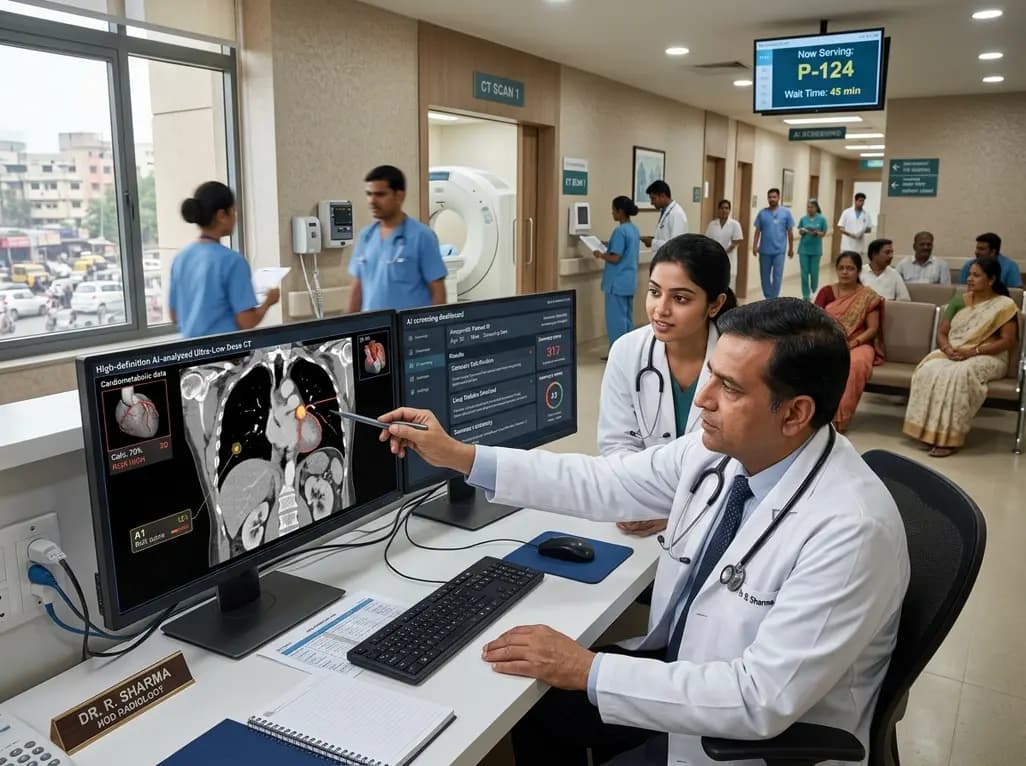
Discover how AI-assisted imaging and ultra-low-dose CT are transforming preventive health checkups in India. By identifying silent cardiometabolic and pulmonary risks early, structured clinical workflows and physician oversight deliver accurate, comprehensive health assessments within a two-hour window.
Today

A comprehensive umbrella review of 22 meta-analyses and 286,584 adults reveals that calcium supplementation modestly increases bone mineral density and reduces vertebral fractures, but does not decrease hip or wrist fracture risks.
Today
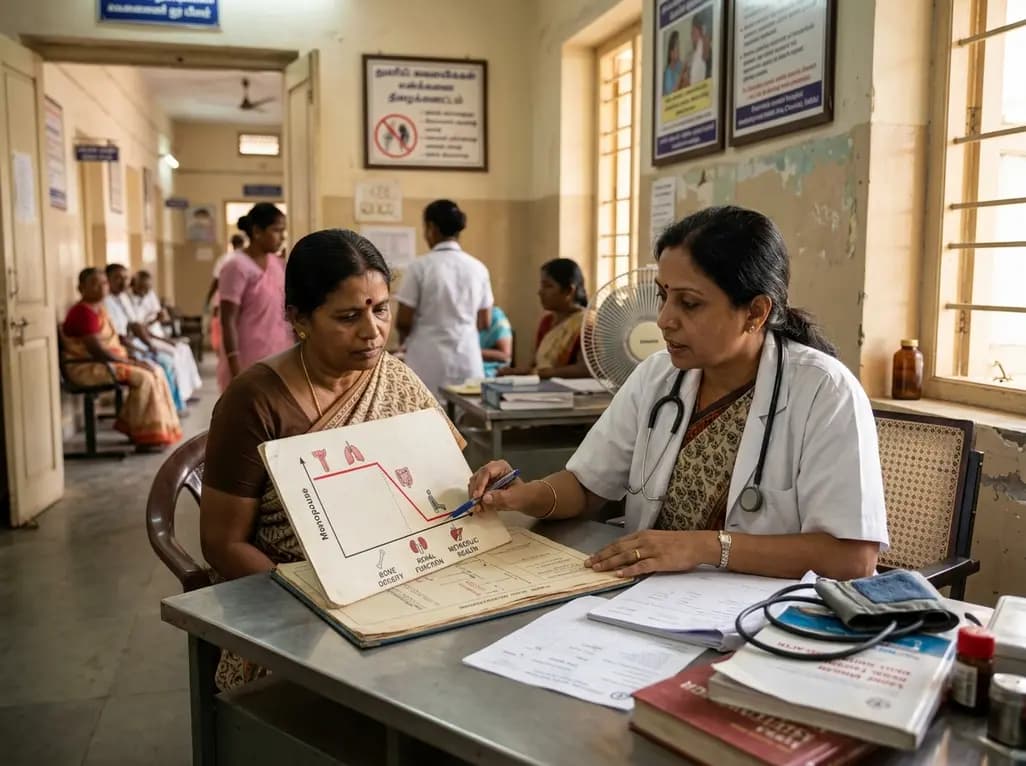
Recent research challenges the traditional view of menopause as a slow transition, demonstrating an abrupt physiological cliff across metabolic, renal, and bone markers. Understanding these rapid multi-organ shifts allows clinicians to optimize early screening, lifestyle guidance, and personalized hormone therapy.
Today
