

Loading, please wait...
Loading, please wait...

Modern therapeutic strategies for advanced prostate adenocarcinoma rely heavily on potent androgen receptor pathway inhibitors like enzalutamide. However, persistent selective pressure frequently forces malignant cells to abandon their canonical differentiation states. Consequently, prostate cancer lineage plasticity has emerged as a major barrier to long-term clinical efficacy. When tumors lose their dependency on androgen signaling, they often adopt aggressive neuroendocrine or stem-like identities that resist conventional therapies. Understanding the epigenetic switches that maintain differentiated luminal epithelial identity is therefore critical for treating castration-resistant disease. A groundbreaking study reveals how nuclear receptor dynamics dictate cellular fate, presenting new therapeutic opportunities for patients facing refractory disease.
Clinicians regularly encounter treatment resistance in patients receiving prolonged androgen deprivation therapy. Initially, tumors exhibit profound sensitivity to targeted anti-androgens because canonical luminal prostate cells strictly depend on androgen receptor signaling. Over time, malignant cells adapt through diverse mechanisms. Although secondary mutations and receptor splice variants explain many treatment failures, epigenomic reprogramming represents a far more formidable challenge. Specifically, prostate cancer lineage plasticity allows epithelial adenocarcinoma cells to shed luminal characteristics entirely. Tumors transition toward androgen receptor-indifferent states, frequently manifesting neuroendocrine features or primitive basal-like programs. This phenotypic shift renders standard androgen-directed therapies ineffective. Furthermore, chromatin landscapes undergo profound structural alterations during this transformation. Pioneer factors and chromatin remodelers reposition transcriptional complexes across the genome, silencing differentiation genes while activating oncogenic developmental networks. As a result, malignant clones proliferate autonomously without requiring hormonal stimulation. Preventing or reversing this epigenetic divergence represents an urgent priority in contemporary urologic oncology. Deciphering these precise chromatin remodeling pathways provides the foundation for restoring treatment responsiveness in refractory patients.
Recent mechanistic investigations highlight retinoic acid receptor gamma, known as RARγ, as an indispensable guardian of luminal epithelial differentiation. In enzalutamide-resistant models such as 22Rv1 cells, researchers restored functional RARγ expression to explore its epigenomic consequences. Notably, this restoration prompted the immediate assembly of a multi-protein transcriptional complex. RARγ physically recruits its key coactivator, transforming acidic coiled-coil-containing protein 1, alongside the ISWI family ATPase SMARCA5. SMARCA5 functions as an essential chromatin remodeler that mobilizes nucleosomes to maintain DNA accessibility. Together, this multi-subunit assembly establishes a specialized epigenetic engine within resistant tumor cells. In contrast to aggressive dedifferentiation factors, this newly formed complex actively stabilizes transcription factor recruitment at precise genomic loci. Furthermore, the molecular coordination between RARγ and SMARCA5 directly counters the loss of chromatin integrity seen during enzalutamide therapy. By re-establishing this regulatory axis, the complex prepares the epigenomic landscape for productive androgen receptor engagement. Consequently, tumor cells regain molecular stability rather than drifting into divergent, drug-tolerant lineages.
Chromatin organization dictates how efficiently lineage-specific transcription factors bind their target genes. Importantly, restoring RARγ reshapes the androgen receptor cistrome across resistant prostate cancer cells. Instead of allowing disorganized genomic binding, the RARγ-SMARCA5 axis expands and redistributes the androgen receptor toward active promoters and super-enhancers. Concurrently, these genomic regions exhibit pronounced enrichment of histone H3 lysine 27 acetylation, an established marker of active transcriptional activation. SMARCA5 also increases its occupancy at promoter-proximal sites that directly overlap with cell cycle-associated chromatin regions. Specifically, this promoter binding coincides with a unique G2/M-enriched androgen receptor cistrome. This precise spatial redistribution links chromatin remodeling directly to cell cycle progression. Moreover, this epigenetic reorganization ensures that androgen receptor binding concentrates at canonical luminal differentiation genes rather than non-specific loci. Through this coordinated chromatin opening, the cell restores transcriptional control over essential prostate differentiation markers. Thus, chromatin architecture shifts from a disorganized, resistant profile back to an organized, hormone-responsive state.
To maintain cellular specialization, regulatory networks must balance opposing transcriptional forces. In advanced prostate cancer, the transcription factor ONECUT2 frequently acts as a master regulator of neuroendocrine differentiation and lineage plasticity. Notably, RARγ acts as a direct molecular antagonist against ONECUT2. Chromatin analyses demonstrate that the RARγ-SMARCA5 axis systematically suppresses ONECUT2 target genes at both cistromic and transcriptomic levels. In both 22Rv1 and LNCaP C4-2 enzalutamide-resistant models, functional RARγ re-expression reliably steered the transcriptional program back toward luminal differentiation. Furthermore, targeting upstream inhibitory networks achieved identical therapeutic results. Delivering a microRNA-96 antagomir, which derepresses endogenous RARγ, perfectly mirrored the beneficial impact of direct receptor restoration. Consequently, tumor cells repressed alternative lineage genes while re-establishing canonical androgen-regulated pathways. Murine models of therapy resistance and lineage plasticity strongly confirm these molecular interactions. Similarly, human clinical cohorts show that genes repressed by RARγ correlate directly with aggressive, non-luminal phenotypes. Therefore, suppressing ONECUT2 activity via RARγ represents an effective biological strategy to prevent neuroendocrine divergence.
The discovery of the RARγ-SMARCA5 axis carries immediate clinical relevance for managing advanced prostate adenocarcinoma. Currently, therapeutic options remain severely limited once tumors escape androgen receptor pathway inhibition via lineage switching. However, targeted epigenetic intervention provides an innovative pathway to restore enzalutamide sensitivity. By reactivating luminal differentiation programs, clinicians could theoretically re-sensitize resistant tumors to standard anti-androgen regimens. For example, microRNA-96 antagomirs or selective nuclear receptor agonists might prevent patients from transitioning into lethal neuroendocrine variants. In addition, analyzing RARγ, SMARCA5, and ONECUT2 expression patterns could yield predictive biomarkers. These molecular signatures would identify patients at heightened risk of treatment-induced lineage plasticity before phenotypic escape occurs. Furthermore, combining standard androgen receptor inhibitors with epigenetic modulators could maintain durable disease control while delaying aggressive relapse. Ultimately, targeting the chromatin-remodeling machinery bridges the gap between basic transcriptional biology and medical oncology. Such precision approaches offer immense hope for improving survival outcomes in men battling metastatic castration-resistant prostate cancer.
Lineage plasticity allows prostate adenocarcinoma cells to survive potent androgen deprivation therapy by changing their cellular identity. Instead of remaining dependent on androgen receptor signaling, tumor cells downregulate luminal markers and adopt alternative basal or neuroendocrine states. Consequently, standard androgen receptor inhibitors like enzalutamide lose their therapeutic target. These newly transformed cells proliferate independently of hormonal signals, leading to aggressive disease progression and limited clinical treatment options.
SMARCA5 operates as an essential ISWI family chromatin remodeler within the multi-protein RARγ complex. Together with the coactivator TACC1, SMARCA5 mobilizes nucleosomes across promoter-proximal and enhancer regions. Importantly, this chromatin remodeling redistributes the androgen receptor cistrome toward active promoters enriched with H3K27ac marks during the G2/M cell cycle phase. Consequently, SMARCA5 stabilizes canonical luminal gene expression, preventing chromatin disorganization and suppressing phenotypic transitions toward alternative lineages.
MicroRNA-96 acts as an endogenous repressor of retinoic acid receptor gamma in advanced prostate tumors. By administering a synthetic miR-96 antagomir, researchers can effectively derepress and restore endogenous RARγ levels without requiring direct genetic modification. Consequently, restored RARγ re-establishes the SMARCA5 chromatin-remodeling axis, antagonizes the plasticity driver ONECUT2, and preserves luminal differentiation. This targeted molecular intervention restores sensitivity to anti-androgen therapy, offering an exciting translational avenue to combat enzalutamide resistance.
Disclaimer: This content is for informational and educational purposes only... Refer to the latest local and national guidelines for clinical practice.
References

Read summarized clinical updates, watch expert medical content, and earn CME certifications right from your smartphone.
Open your smartphone camera to scan and install.





A study in Nucleic Acids Research reveals that a RARγ-SMARCA5 chromatin-remodeling axis maintains AR luminal identity and blocks lineage plasticity in enzalutamide-resistant prostate cancer, antagonizing ONECUT2 and presenting new therapeutic opportunities.
Today
Emerging translational research reveals that cigarette smoke drives COPD via TALDO1 upregulation, triggering aberrant kynurenine accumulation and mitochondrial damage in airway epithelial cells. Pharmacological inhibition of IDO with Epacadostat restores lung function, pointing toward novel metabolic therapies.
Today
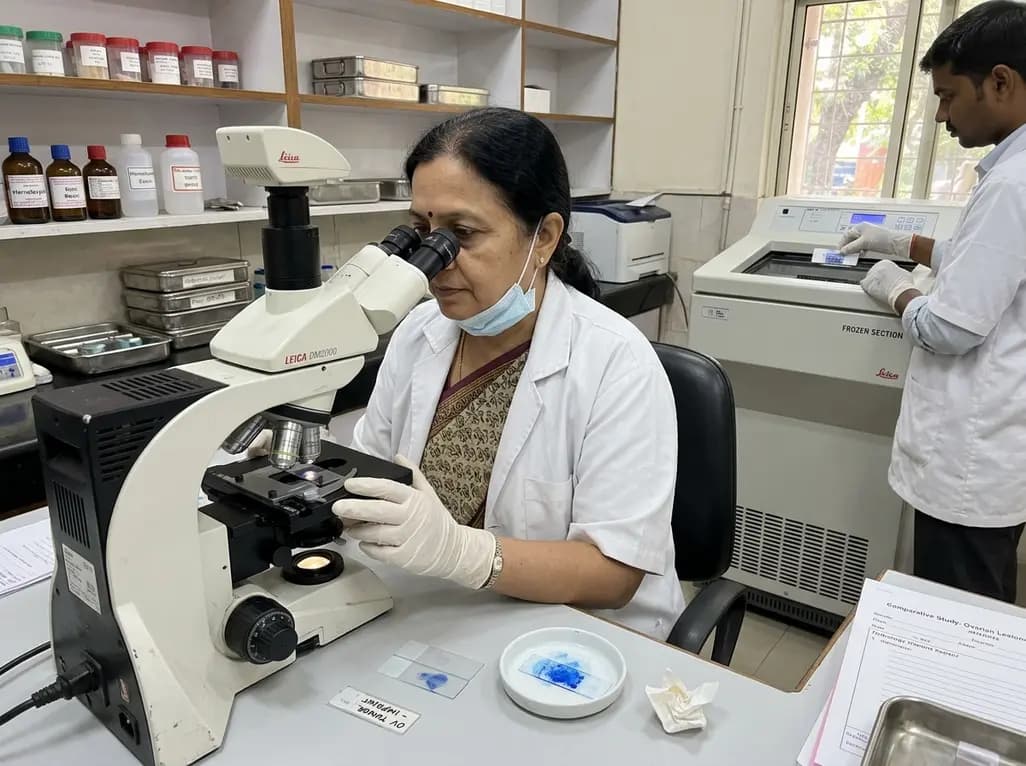
A new comparative study demonstrates that intraoperative imprint cytology achieves 96.6% diagnostic accuracy in ovarian tumours, outperforming frozen section in sensitivity for borderline lesions and offering an accessible, rapid alternative for resource-constrained surgical centres.
Today
Even older heart failure patients with high SPPB scores (≥10) exhibit high 1-year mortality and readmission rates. Adding sarcopenia assessments—grip strength, chair stand test, and calf circumference—reveals critical residual risks, enabling targeted post-discharge interventions.
Today
A validated 10-item survey measures preoperative expectations for posterior spinal fusion in adolescent idiopathic scoliosis. While parents and teens agree on avoiding future surgery, their priorities diverge on appearance and sports, underscoring the critical need for separate preoperative evaluations.
Today

A systematic review evaluates psychological interventions for smoking cessation in diabetes, showing short-term success but highlighting challenges in long-term abstinence.
Yesterday
