.webp&w=384&q=75)

Loading, please wait...
Loading, please wait...

Holmes tremor (HT) is a rare and complex movement disorder that typically develops weeks or even years after a significant neurological event, such as a stroke or traumatic brain injury. This condition presents a unique challenge for clinicians because it involves a combination of rest, postural, and intentional tremors. Furthermore, clinical experts frequently find that radiofrequency thalamotomy Holmes tremor management becomes essential when traditional pharmacological treatments fail to provide adequate relief. Because the tremor is often high-amplitude and low-frequency, it severely limits a patient's ability to perform basic daily activities.
Research suggests that HT results from disruptions in the dopaminergic nigrostriatal system or the dentato-rubro-thalamic tract. Consequently, surgical procedures often target specific nuclei within the thalamus to interrupt these faulty circuits. While deep brain stimulation is a well-documented treatment, evidence regarding the long-term efficacy of radiofrequency ablation has remained relatively limited until recently. However, for many patients in resource-constrained environments, this ablative technique offers a highly effective and more accessible alternative to hardware-intensive therapies.
A recent illustrative case involved an 18-year-old male who developed a disabling right-hand tremor following a severe traumatic brain injury. Neuroimaging revealed bilateral cerebellar damage and diffuse axonal injury in the left thalamus. Although the medical team attempted various drug therapies, the tremor remained refractory. Therefore, surgeons opted for a ventral intermediate nucleus (Vim) thalamotomy using radiofrequency lesioning. Following the procedure, the patient experienced marked enhancement in his motor control. Most importantly, he maintained these improvements for 18 months, which allowed him to regain independence in various daily tasks.
This successful outcome reinforces the idea that radiofrequency thalamotomy is still a highly relevant treatment for movement disorders. Moreover, the targeted ablation of the Vim nucleus can provide durable results even in complex posttraumatic cases. Physicians should consider this approach early when a patient shows resistance to medication. Additionally, the predictable nature of modern stereotactic lesioning ensures that the procedure remains safe and effective for young patients recovering from brain trauma.
Holmes tremor typically results from lesions in the midbrain, thalamus, or cerebellum. These injuries often occur due to traumatic brain injury, ischemic stroke, or the growth of brain tumors that disrupt motor control pathways.
Many cases of Holmes tremor are drug-resistant. Radiofrequency thalamotomy provides a surgical alternative by creating a precise lesion in the brain to block the abnormal electrical signals causing the tremor.
While results can vary, clinical cases have shown that tremor improvement can be sustained for years. In the highlighted case, the patient demonstrated stable functional gains for over 18 months post-surgery.
Disclaimer: This content is for informational and educational purposes only. It is not intended as a substitute for professional medical advice, diagnosis, or treatment. Always seek the advice of your physician or other qualified health provider with any questions you may have regarding a medical condition. Refer to the latest local and national guidelines for clinical practice.
References
Hirai K et al. Effective radiofrequency thalamotomy for posttraumatic Holmes tremor: illustrative case. J Neurosurg Case Lessons. 2026 May 18. doi: undefined. PMID: 42150206.
Gajos A et al. Holmes tremor - a review of the literature. Postepy Neurochirurgii. 2017;24(1):21-27.
Raina GB et al. Thalamotomy for Holmes' Tremor: A Review of Efficacy and Safety. Movement Disorders Clinical Practice. 2016;3(5):439-446.

Read summarized clinical updates, watch expert medical content, and earn CME certifications right from your smartphone.
Open your smartphone camera to scan and install.





An 18-year-old patient achieved sustained relief from posttraumatic Holmes tremor after undergoing a radiofrequency Vim thalamotomy when medications failed....
5 months ago
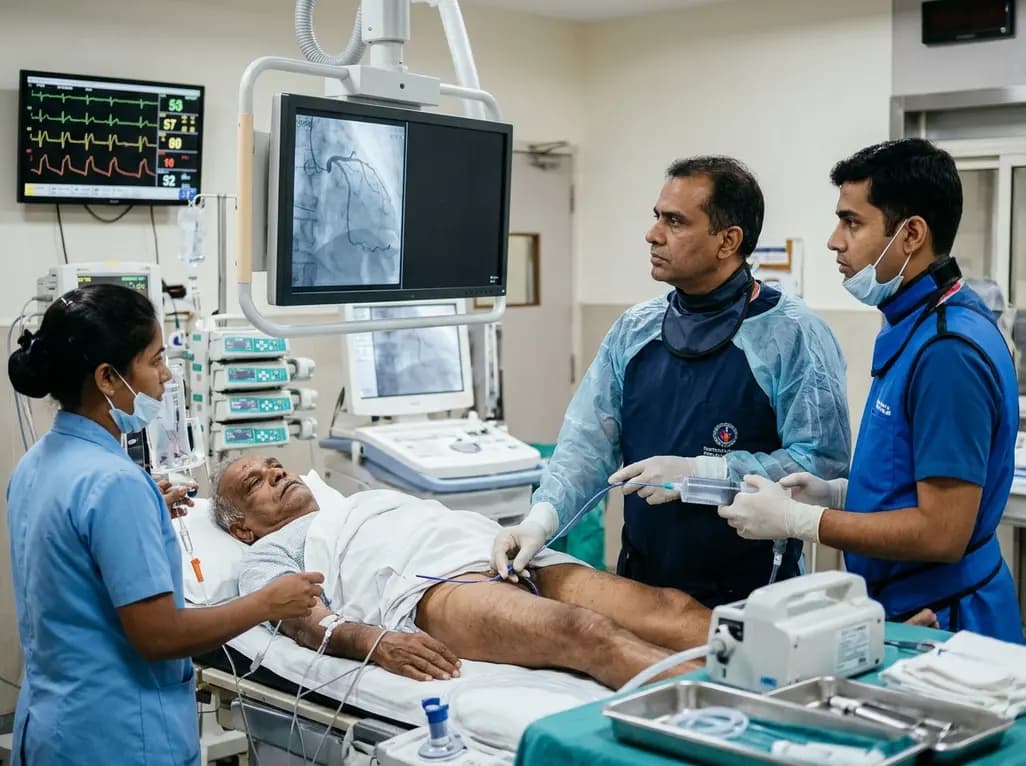
An elderly man with partially repaired Tetralogy of Fallot presented with STEMI caused by coronary embolism rather than atherosclerosis. Successful treatment with sustained mechanical aspiration thrombectomy underscores the vital need for high clinical vigilance in adult congenital heart disease.
Today

Demanding exhaustive hormonal profiling can inadvertently discourage clinical studies involving females. Methodological standards must align with the specific scientific question to expand, not restrict, equitable evidence for women.
Today

A recent study demonstrates that spinal oxygen sensors do not require mitochondrial electron transport to trigger sympathetic excitation during acute hypoxia, revealing new insights into how mitochondrial oxidative stress modulates autonomic tone in cardiovascular and neurological diseases.
Today

A comparative review of tension band wiring and intramedullary screw fixation in thumb metacarpophalangeal arthrodesis, evaluating union rates, hardware complications, and clinical outcomes.
Today

Following regulatory scrutiny from FSSAI regarding promotional representations and lean muscle preservation claims, Dr. Reddy's Laboratories and Nestlé Health Science are currently reviewing the branding and marketing strategy for their joint nutritional supplement Celevida GLP+.
Today
