.webp&w=384&q=75)

Loading, please wait...
Loading, please wait...

Nuclear medicine and industrial processes often generate hazardous waste. Consequently, the need for efficient radioactive iodine capture systems has never been more urgent. Researchers recently developed a series of self-assembled palladium-based (Pd(II)) tetrahedral cages to address this challenge. These four cages, designated C1-C4, incorporate specialized binding motifs like naphthalene and tetrazine to maximize efficiency.
Notably, these materials achieve exceptional uptake rates in both vapor and aqueous environments. While many traditional materials struggle with kinetics, these coordination cages reach capacities of up to 3.78 g/g at 75°C. Furthermore, they significantly outperform state-of-the-art metal-organic frameworks (MOFs) in speed. This rapid sequestration makes them ideal for emergency leak scenarios in medical or industrial settings.
The study highlights how cage C4 achieves a record elution volume of 9.2 L/g in specific solutions. This capability allows for the reduction of iodine concentrations from parts per million (ppm) down to parts per billion (ppb). Therefore, these cages provide a viable method for purifying real-world water samples contaminated by medical waste. Additionally, the materials show strong affinity for methyl iodide vapor, which is often harder to sequester than elemental iodine.
Computational models indicate that the high performance stems from cooperative π-iodine interactions and nucleophilic binding. Because the synthesis is scalable and the materials are recyclable, they represent a sustainable solution for environmental protection. Thus, these coordination cages establish a new benchmark for dynamic vapor-phase remediation.
These cages utilize specific nucleophilic heteroatom binding and cooperative π-iodine interactions. These mechanisms allow for faster kinetics and higher saturation capacities compared to many existing porous materials.
Yes, the cages effectively reduce iodine levels from ppm to ppb in water. This makes them highly suitable for treating liquid waste from radiology and nuclear medicine departments before disposal.
The research demonstrates that these Pd(II) cages are structurally robust and recyclable. They maintain their high sequestration performance over multiple cycles, ensuring long-term cost-effectiveness.
Disclaimer: This content is for informational and educational purposes only. It does not constitute medical or regulatory advice. Refer to the latest local and national guidelines for clinical practice.
References

Read summarized clinical updates, watch expert medical content, and earn CME certifications right from your smartphone.
Open your smartphone camera to scan and install.





New Pd(II) coordination cages (C1-C4) set a record for radioactive iodine capture from air and water, outperforming MOFs with rapid and reversible kinetics....
5 months ago
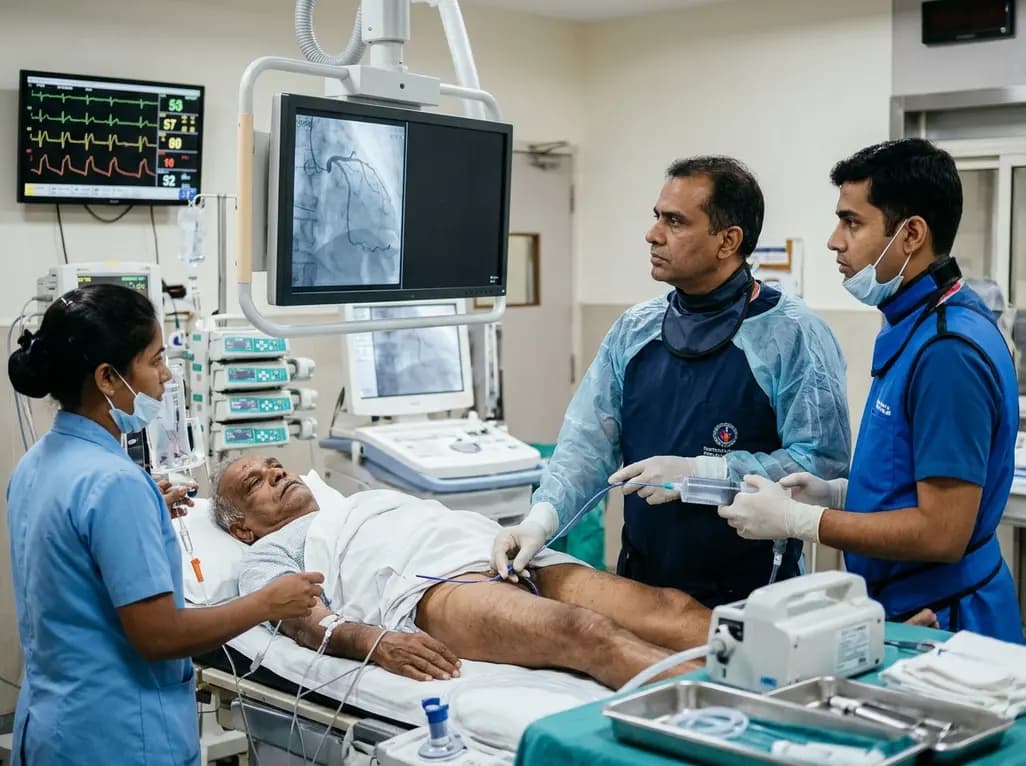
An elderly man with partially repaired Tetralogy of Fallot presented with STEMI caused by coronary embolism rather than atherosclerosis. Successful treatment with sustained mechanical aspiration thrombectomy underscores the vital need for high clinical vigilance in adult congenital heart disease.
Today

Demanding exhaustive hormonal profiling can inadvertently discourage clinical studies involving females. Methodological standards must align with the specific scientific question to expand, not restrict, equitable evidence for women.
Today

A recent study demonstrates that spinal oxygen sensors do not require mitochondrial electron transport to trigger sympathetic excitation during acute hypoxia, revealing new insights into how mitochondrial oxidative stress modulates autonomic tone in cardiovascular and neurological diseases.
Today

A comparative review of tension band wiring and intramedullary screw fixation in thumb metacarpophalangeal arthrodesis, evaluating union rates, hardware complications, and clinical outcomes.
Today

Following regulatory scrutiny from FSSAI regarding promotional representations and lean muscle preservation claims, Dr. Reddy's Laboratories and Nestlé Health Science are currently reviewing the branding and marketing strategy for their joint nutritional supplement Celevida GLP+.
Today
