

Loading, please wait...
Loading, please wait...

Clinicians managing treatment-resistant pediatric epilepsy constantly face complex therapeutic dilemmas. While regulatory approvals for purified cannabidiol in pediatric epilepsy originally focused on Lennox-Gastaut syndrome, Dravet syndrome, and tuberous sclerosis complex, intractable seizures frequently occur outside these narrow categories. In tertiary pediatric neurology clinics, many children present with severe developmental encephalopathies that fail multiple standard anti-seizure medications. Consequently, pediatric neurologists often consider off-label adjunctive therapies to reduce seizure frequency and protect developmental trajectories. Pharmaceutical formulations of plant-derived, highly purified cannabidiol provide standardized dosing without the psychoactive contaminants found in artisanal cannabis extracts. However, real-world comparative evidence evaluating therapeutic outcomes outside established regulatory labels has remained sparse. A landmark investigation from Children's Hospital Los Angeles now delivers essential clinical clarity. This retrospective cohort study directly evaluated whether children with non-labeled intractable epilepsies achieve clinical benefits comparable to those with approved indications. The resulting data confirm that clinical responsiveness does not depend solely on an official syndrome diagnosis. Therefore, these valuable findings offer meaningful reassurance to clinicians managing heterogeneous drug-resistant cases. Furthermore, this research highlights the expanding therapeutic utility of purified cannabinoids across diverse pediatric neurological conditions.
The retrospective investigation examined pediatric records from January 2020 to January 2022 at a comprehensive Level 4 epilepsy center. Initially, investigators screened 223 children who received a prescription for purified cannabidiol during this two-year review window. After excluding patients with missing follow-up data, incomplete diagnostics, or uninitiated treatments, 144 patients met all inclusion criteria. Among this final cohort, 81 children, representing 56 percent of participants, had received formal diagnoses within FDA-approved categories. Specifically, these labeled indications included Lennox-Gastaut syndrome, Dravet syndrome, and tuberous sclerosis complex. In contrast, 63 children, comprising 44 percent of the cohort, presented with various off-label pharmacoresistant epileptic conditions. The median age at treatment initiation was 10.0 years across the entire study population. In addition, patients presented with substantial baseline pharmacoresistance, taking a median of 3.0 concurrent anti-seizure medications. Clinicians noted that baseline non-pharmacological therapies showed no significant differences between the two cohorts. For instance, both groups demonstrated similar rates of concurrent vagus nerve stimulation and ketogenic diet implementation. However, the FDA-labeled cohort showed a significantly higher prevalence of tonic seizures at baseline compared to the off-label group. Specifically, 63 percent of patients in the labeled group experienced tonic seizures, whereas only 29 percent exhibited tonic events in the off-label cohort.
The central clinical inquiry examined whether off-label patients derived the same degree of seizure reduction as those with labeled conditions. Notably, the study team defined a clinical responder as any patient achieving at least a 50 percent reduction in seizure frequency. Upon analyzing patient outcomes, researchers observed nearly identical responder rates between the two cohorts. Within the FDA-approved group, 53 of 81 children met this stringent efficacy threshold, translating to a 65 percent responder rate. Similarly, 40 of 63 children in the non-labeled group attained a 50 percent or greater reduction, achieving a 63 percent responder rate. Statistical testing confirmed no significant difference between the groups, demonstrating an equivalent p-value of 0.9. Consequently, these results indicate that purified cannabidiol exhibits robust anti-seizure activity across diverse epileptic etiologies. Off-label cases in the study included structural brain anomalies, post-infectious epilepsies, and unspecified epileptic encephalopathies. Previously, physicians lacked high-level clinical evidence when considering cannabinoid therapy for such complex presentations. Therefore, finding an equivalent 63 percent response rate in this diverse group provides essential guidance for clinical decision-making. Moreover, these findings demonstrate that therapeutic benefit depends more on neuronal excitability modulation than diagnostic classification alone.
Tolerability represents another crucial consideration when evaluating adjunctive therapies in medically fragile pediatric patients. Overall, purified cannabidiol displayed a predictable adverse event profile consistent with prior controlled trial data. The most common adverse effects involved gastrointestinal symptoms, including nausea, diarrhea, and decreased appetite, occurring in 19 percent of patients. In addition, clinicians documented behavioral agitation in 7.6 percent of subjects and mild weight loss in 6.3 percent. Sleep disturbances emerged infrequently, with insomnia reported in 4.9 percent of the cohort. Importantly, investigators noted excessive drooling and oral secretions in 2.8 percent of children. Notably, every patient who developed severe secretions received concurrent clobazam therapy. This finding underscores an essential pharmacokinetic drug interaction that clinicians must navigate carefully. Cannabidiol potently inhibits cytochrome P450 2C19 enzymes, which metabolize N-desmethylclobazam, the active metabolite of clobazam. Consequently, plasma concentrations of this active metabolite can surge up to five-fold during co-therapy, provoking profound somnolence, hypotonia, and sialorrhea. Therefore, proactive dosage reductions of clobazam often eliminate these side effects while maintaining seizure suppression. Furthermore, clinicians must monitor hepatic transaminases regularly, particularly when co-administering sodium valproate, to identify early hepatocellular stress.
Beyond achieving direct seizure control, purified cannabidiol facilitated substantial rationalization of polytherapy regimens. Patients in this investigation carried a heavy baseline pharmacological burden, with a median of three concurrent anti-seizure medications. Encouragingly, physicians successfully weaned a median of 1.0 concurrent anti-seizure medication in both labeled and off-label cohorts. Furthermore, the rate of medication reduction showed no significant difference between the two groups. In clinical practice, deprescribing sedating medications represents an enormous therapeutic benefit for children with developmental delay. Reducing sedating drug loads alleviates cognitive blunting, improves motor coordination, and enhances daytime alertness. For Indian pediatricians and neurologists, these findings hold substantial real-world clinical relevance. Many children presenting with severe refractory epilepsy after perinatal brain injury or central nervous system infections lack definitive syndromic diagnoses. Consequently, rigid label restrictions often impede timely access to evidence-backed therapies. Demonstrating comparable efficacy in off-label cohorts provides strong support for using purified cannabidiol in broad refractory cases. However, clinicians must counsel families against purchasing unstandardized artisanal cannabis oils with unpredictable cannabinoid ratios. By integrating pharmaceutical-grade cannabidiol into carefully monitored regimens, practitioners can achieve meaningful seizure control while simultaneously reducing cumulative drug toxicity.
In real-world cohorts, purified cannabidiol demonstrated a 63 percent responder rate among children with non-labeled treatment-resistant epilepsies. This efficacy closely mirrored the 65 percent responder rate observed in FDA-approved indications. Consequently, pediatric patients with diverse refractory epilepsies can achieve significant seizure reductions of at least 50 percent regardless of syndromic diagnosis.
Cannabidiol potently inhibits cytochrome P450 2C19 enzymes, which catabolize N-desmethylclobazam, the primary active metabolite of clobazam. As a result, co-administration can cause up to a five-fold elevation in metabolite levels. This accumulation frequently precipitates profound sedation, ataxia, and excessive oral drooling, requiring proactive clobazam dosage reduction during treatment initiation.
Clinicians must obtain baseline liver transaminases and total bilirubin before initiating therapy, particularly if patients take concurrent sodium valproate. Transaminases should undergo periodic monitoring at one, three, and six months. Furthermore, neurologists should evaluate baseline seizure diaries, track cognitive sedation, and document concurrent anti-seizure medication levels to prevent additive toxicities.
Disclaimer: This content is for informational and educational purposes only. It is not intended to provide specific medical advice, diagnosis, or treatment. Healthcare professionals should make clinical decisions based on their independent medical judgment and individual patient circumstances. Refer to the latest local and national guidelines for clinical practice.
References

Read summarized clinical updates, watch expert medical content, and earn CME certifications right from your smartphone.
Open your smartphone camera to scan and install.





A real-world pediatric study shows purified cannabidiol achieves a 63% responder rate in off-label drug-resistant epilepsies, matching outcomes in Dravet and Lennox-Gastaut syndromes while enabling concurrent antiseizure medication weaning.
Today

Ambient digital scribes promise effortless medical documentation, but a critical sociotechnical commentary reveals that AI alters rather than eliminates charting work. Discover how shifting cognitive burdens, oversight risks, and workflow redesign impact clinical safety and healthcare practice.
Today

A new comparative study demonstrates that intraoperative imprint cytology achieves 96.6% diagnostic accuracy in ovarian tumours, outperforming frozen section in sensitivity for borderline lesions and offering an accessible, rapid alternative for resource-constrained surgical centres.
Today

Thoracic aortic aneurysm lacks etiologic medical therapy. A new study reveals that targeting specific αV integrins with Cilengitide attenuates TGF-β and mechanotransduction pathways, effectively limiting pro-fibrotic remodeling and aortic bulb dilation in both syndromic and sporadic disease models.
Today
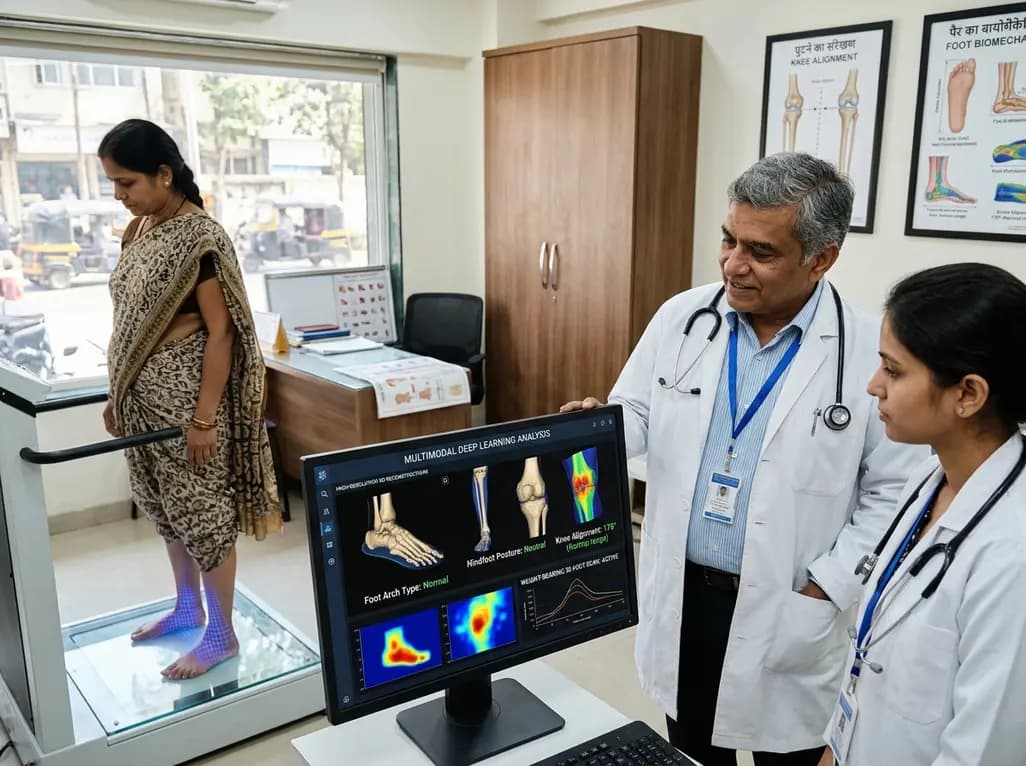
A multimodal deep learning framework utilizing weight-bearing 3D foot scans accurately screens lower-limb alignment, including arch type, hindfoot posture, and knee alignment, offering an accessible, radiation-free alternative to radiography for early biomechanical triage.
Today

A real-world retrospective study demonstrates that combining intravitreal ranibizumab with focal/grid macular laser significantly improves visual acuity and central macular thickness compared to laser monotherapy in patients with center-involved diabetic macular edema.
Today
