.webp&w=384&q=75)

Loading, please wait...
Loading, please wait...
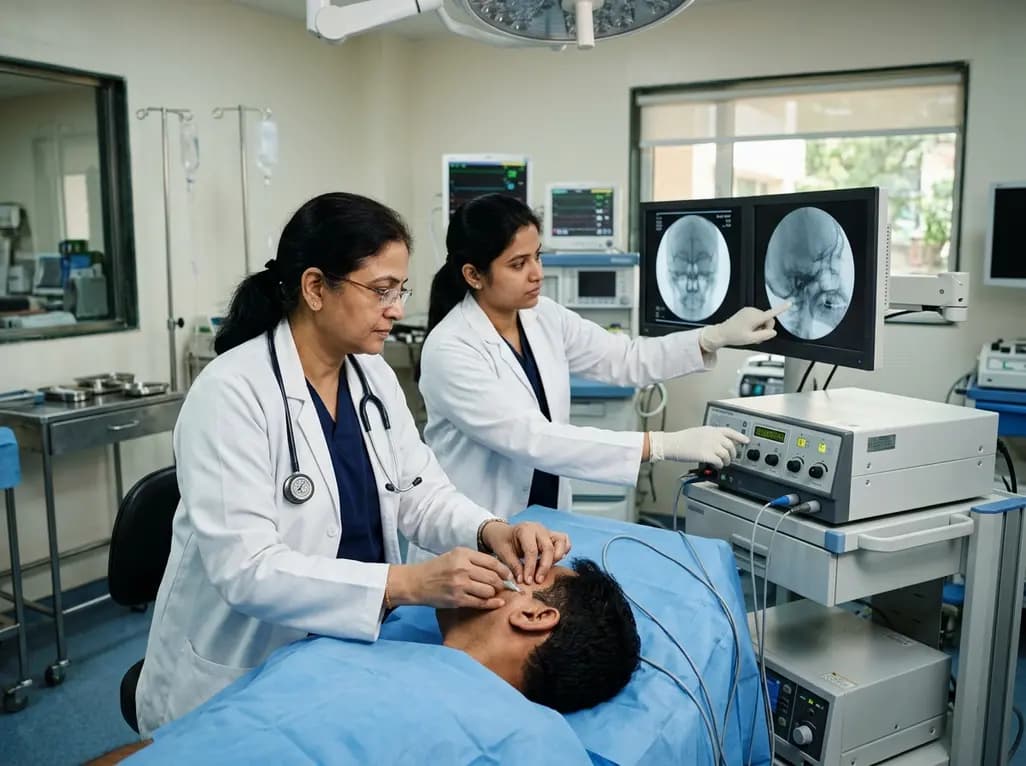
Managing intractable primary trigeminal neuralgia remains one of the most demanding challenges in interventional pain medicine. Although pharmacotherapy serves as the first line of defense, many patients experience debilitating side effects or drug resistance over time. Consequently, clinicians frequently explore percutaneous interventions targeting the Gasserian ganglion to provide sustained pain relief while preserving facial sensation.
Conventional continuous radiofrequency thermocoagulation effectively interrupts nociceptive signaling by applying high thermal energy, often exceeding 75°C. However, these elevated temperatures frequently induce extensive histological damage to nerve fibers. As a result, patients commonly experience distressing complications, including severe facial numbness, corneal hypoesthesia, and masticatory muscle weakness. Some individuals even develop anesthesia dolorosa, a refractory neuropathic condition that proves harder to manage than the original neuralgia.
Conversely, pulsed radiofrequency delivers short bursts of high-voltage electrical fields that modulate neuronal activity without causing widespread thermal destruction. Because the tissue temperature stays below 42°C, pulsed radiofrequency protects structural integrity and reduces sensory complications. Nevertheless, monotherapy with pulsed radiofrequency often yields lower long-term response rates and higher recurrence frequencies. Clinicians therefore sought an intermediate strategy that merges neuromodulatory benefits with selective, mild thermal lesions to improve durable relief.
To address this clinical dilemma, Zhao and colleagues conducted a rigorous randomized controlled trial at Beijing Tiantan Hospital. The study enrolled 146 adult patients with confirmed primary trigeminal neuralgia refractory to conservative medical therapies. The investigators randomly allocated participants in an equal ratio to receive either pulsed radiofrequency alone or a combined intervention.
Specifically, both cohorts received high-voltage pulsed radiofrequency applied at 70 volts and 42°C for 600 seconds. In the combination arm, operators immediately followed this phase with low-temperature continuous radiofrequency delivered at 60°C for 270 seconds. By capping continuous thermal coagulation at 60°C, the authors aimed to selectively impair unmyelinated and thinly myelinated nociceptive fibers while sparing larger sensory modalities. The team accurately verified needle positioning within the Gasserian ganglion using computed tomography guidance and sensory-motor electrostimulation. The primary outcome measured overall treatment response at 12 months post-procedure.
The trial findings revealed marked therapeutic advantages for patients assigned to the combined regimen. At the 12-month primary endpoint, 83.6% of patients in the combination group maintained positive therapeutic responses, compared to only 67.1% in the pulsed monotherapy group. This demonstrated a statistically significant absolute risk difference of 16.5%.
Furthermore, secondary analyses showed that the combination protocol achieved superior pain reduction across multiple temporal benchmarks. Patients receiving combined radiofrequency reported significantly higher responder rates as early as day one and week one after surgery. This trend persisted through two weeks, one month, two months, three months, and six months of follow-up. Moreover, numeric rating scale scores for facial pain decreased more substantially in the combination group. Patients in this arm also required substantially fewer breakthrough anticonvulsants, confirming that low-temperature continuous thermocoagulation reinforces the neurodestructive threshold necessary to prevent early ectopic impulse regeneration.
In addition to superior analgesic durability, safety outcomes represent an essential consideration when evaluating percutaneous gangliolysis. Interestingly, the addition of continuous thermal heating at 60°C did not elevate catastrophic neurovascular complications or permanent functional deficits. The investigators documented no cases of keratitis, persistent corneal anesthesia, or anesthesia dolorosa in either study cohort.
Although mild transient facial numbness occurred slightly more often after thermal exposure, symptoms resolved progressively without requiring medical intervention. Similarly, masticatory muscle weakness occurred rarely and showed spontaneous resolution during clinical follow-up. Transient postoperative reactions such as localized facial hematoma, lightheadedness, and mild nausea resolved rapidly with supportive care. Consequently, keeping the continuous radiofrequency temperature strictly at 60°C successfully preserved the structural safety margins characteristic of pulsed neuromodulation while overcoming its traditional lack of therapeutic longevity.
These robust randomized findings provide compelling clinical evidence for neurosurgeons and pain physicians treating refractory facial pain. For decades, practitioners faced an uncomfortable trade-off between the durability of high-temperature ablation and the safety of non-destructive neuromodulation. The combination protocol resolves this clinical dichotomy by offering a balanced, reproducible alternative.
Moreover, modern interventional suites equipped with high-precision imaging can easily implement this two-step technique without requiring novel proprietary hardware. Clinicians should nevertheless adhere strictly to accurate electrophysiological mapping to isolate the affected trigeminal division. Future studies must evaluate whether varying continuous heating durations or adjusting voltages further optimizes outcomes in atypical facial pain presentations. Ultimately, combining high-voltage pulsed energy with gentle 60°C thermal lesioning establishes a modern standard for minimally invasive ganglion interventions.
Adding low-temperature continuous radiofrequency delivers gentle thermal lesioning that selectively disrupts pain transmission fibers. This complementary effect significantly prolongs analgesic duration, boosting 12-month response rates to 83.6% without increasing serious nerve complications or inducing permanent sensory deficits in treated individuals.
Standard continuous radiofrequency uses temperatures exceeding 75°C, which often destroys surrounding myelinated axons and causes corneal anesthesia or severe numbness. Limiting temperature to 60°C selectively targets nociceptive pathways while shielding deeper nerve structures from irreversible destruction and maintaining protective sensory reflexes.
Patients diagnosed with confirmed primary trigeminal neuralgia who experience inadequate pain relief or intolerable side effects from first-line anticonvulsants represent ideal candidates. The approach also benefits individuals who cannot undergo invasive microvascular decompression craniotomy due to advanced age or serious comorbidities.
Disclaimer: This content is for informational and educational purposes only. It is not intended to provide medical advice or to be used as a substitute for professional medical assessment, diagnosis, treatment, or clinical judgment. Patients should consult with a qualified healthcare professional regarding their health condition or medical questions. Refer to the latest local and national guidelines for clinical practice.
References
Zhao C et al. The efficacy of combining pulsed radiofrequency with low-temperature continuous radiofrequency for the treatment of primary trigeminal neuralgia: a randomized controlled trial. J Neurosurg. 2025 Jul 01. doi: 10.3171/2024.10.JNS241274. PMID: 40053922.
Ren H, Zhao C, Wang X, Shen Y, Meng L, Luo F. The Efficacy and Safety of the Application of Pulsed Radiofrequency, Combined With Low-Temperature Continuous Radiofrequency, to the Gasserian Ganglion for the Treatment of Primary Trigeminal Neuralgia: Study Protocol for a Prospective, Open-Label, Parallel, Randomized Controlled Trial. Pain Physician. 2021;24(1):89-97.
Cruccu G, Finnerup NB, Jensen TS, Scholz J, Sindou M, Svensson P, Nurmikko T, Zakrzewska JM. Trigeminal neuralgia: New classification and diagnostic grading for practice and research. Neurology. 2016;87(2):220-228.

Read summarized clinical updates, watch expert medical content, and earn CME certifications right from your smartphone.
Open your smartphone camera to scan and install.





A randomized controlled trial demonstrates that combining high-voltage pulsed radiofrequency with low-temperature continuous radiofrequency achieves superior 12-month pain relief compared to pulsed radiofrequency alone in patients with primary trigeminal neuralgia.
last month

Explore vital recurrent stroke predictors in lacunar stroke patients managed with intensive blood pressure lowering. This analysis examines trial findings from SPS3 to uncover residual vascular risks, metabolic factors, and targeted secondary prevention strategies for high-risk neurological patients.
Today

Odisha has established India's first state-level clinical protocol specifically tailored for pregnant women with sickle cell disease. Developed with NHM and UNICEF, the framework provides structured antenatal screening, crisis mitigation, standardized referral pathways, and specialized interdisciplinary care.
Today

The Directorate General of Health Services directs Indian states to halt the hazardous reuse and reprocessing of single-use medical devices. Discover regulatory implications under the Drugs and Cosmetics Act, critical infection risks, legal liabilities, and operational changes required across clinical specialties.
Today
A randomized controlled trial demonstrates that an eight-week dual-task training intervention significantly improves static and dynamic postural control over standard balance exercises in individuals with chronic ankle instability, addressing critical neurocognitive deficits during athletic and daily activities.
Today

India is advancing preventive healthcare by integrating genomics, artificial intelligence, and quantum technologies. With the SANGAM programme sequencing one million Indian genomes, clinicians can unlock personalized therapies, detect cardiometabolic risks early, and curb the burden of diabetes and heart disease.
Today
