.webp&w=384&q=75)

Loading, please wait...
Loading, please wait...
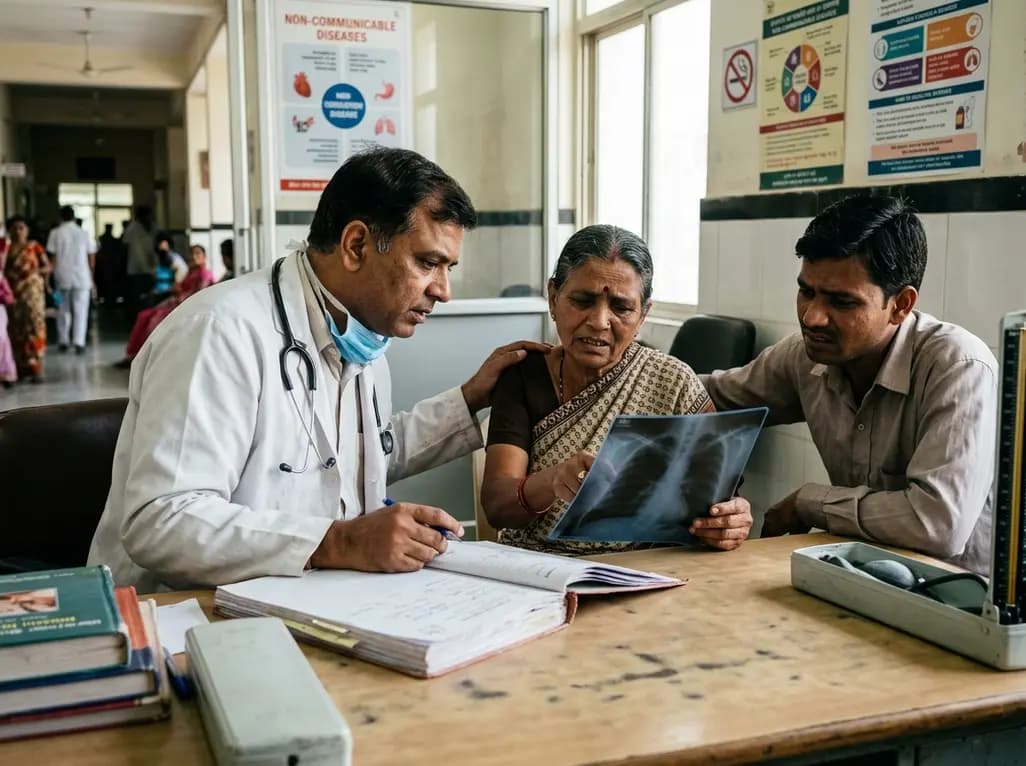
A disturbing epidemiological shift has emerged in South Asia as passive smoking deaths continue to climb at an unprecedented pace. Recent data from a comprehensive study published in The Lancet Public Health reveals that second-hand smoke claimed 325,600 lives across India in 2023 alone. Consequently, this alarming figure represents an increase of nearly 50% compared to 1990 estimates. Although public health initiatives have reduced individual smoking rates, population growth has expanded the pool of exposed non-smokers. Therefore, clinicians must understand the systemic ramifications of involuntary tobacco exposure to protect vulnerable patient cohorts.
India currently ranks second globally in total second-hand smoke exposure, trailing only China. Specifically, over 444 million individuals in India actively breathe contaminated ambient air due to nearby tobacco combustion. In 1990, roughly 375 million individuals encountered involuntary tobacco fumes nationwide. Hence, absolute exposure expanded by 18.4% over three decades despite positive lifestyle campaigns. Meanwhile, the age-standardised exposure prevalence actually declined from 43.2% to 30.6% over this observation period. Nevertheless, massive demographic expansion completely eclipsed these statistical gains.
Furthermore, the overall health burden reflects dramatic morbidity alongside lethal outcomes. Second-hand smoke accounted for an astounding 9.28 million disability-adjusted life-years across the nation in 2023. These lost healthy years stem directly from premature mortality and chronic disability. On a global scale, involuntary exposure touched 2.71 billion citizens in 2023, causing 1.66 million fatalities. Remarkably, China, India, and Indonesia represent nearly half of the entire exposed global demographic. Consequently, Indian healthcare providers encounter these systemic consequences daily in emergency bays and outpatient clinics.
The steep surge in passive smoking deaths illustrates how domestic and workplace air contamination drives non-communicable diseases. In 1990, annual fatalities connected to second-hand smoke stood at approximately 217,700 across India. However, by 2023, annual attributable mortality jumped past 325,600 individuals. Gender distribution patterns also reveal an equitable distribution of severe harm across society. Fatalities among Indian women rose from 113,400 in 1990 to 156,900 in 2023. Similarly, male mortality climbed from 104,300 to 168,700 over the identical timeframe.
Because involuntary inhalation delivers unfiltered sidestream smoke, exposed bystanders absorb disproportionately concentrated toxins. Sidestream smoke burns at lower temperatures than inhaled mainstream smoke. Consequently, it releases higher per-unit concentrations of volatile organic compounds, carbon monoxide, and polycyclic aromatic hydrocarbons. These toxins enter non-smokers without passing through a cigarette filter. As a result, non-smokers frequently develop vascular injury, endothelial inflammation, and genetic alterations comparable to light active smokers. Thus, clinicians should never overlook domestic tobacco habits during basic diagnostic workups.
The Lancet study establishes strong causal links between second-hand smoke and diverse severe medical conditions. Foremost among these outcomes are ischemic heart disease, acute stroke, and chronic obstructive pulmonary disease. Furthermore, the analysis implicates passive exposure in new cases of type 2 diabetes and adult-onset asthma. Involuntary smoke inhalation triggers immediate endothelial dysfunction, plateaus microvascular perfusion, and promotes arterial thrombus formation. Therefore, brief daily exposure can quickly precipitate acute myocardial infarction in borderline cardiac patients.
Additionally, carcinogenic elements such as benzene and tobacco-specific nitrosamines cause irreversible cellular damage. Consequently, exposed non-smokers face significantly elevated risks for lung carcinoma and invasive breast cancer. Inhaled reactive oxygen species deplete endogenous antioxidant reserves and trigger persistent systemic inflammation. Over prolonged intervals, this chronic inflammatory state accelerates vascular stiffness and promotes peripheral insulin resistance. Thus, second-hand smoke operates as a multi-system pathological driver rather than an isolated respiratory nuisance. Physicians must recognize that ambient inhalation impairs recovery from routine surgical and medical interventions.
Domestic tobacco use places young children and homemakers at extreme clinical risk throughout India. Because socio-cultural dynamics often keep women indoors, their exposure remains sustained and unavoidable. Similarly, children possess immature metabolic pathways and developing respiratory architecture, making them extraordinarily susceptible to airborne toxins. Globally, more than 767 million children aged under 14 endured routine tobacco exposure in 2023. In India, pediatric pulmonary infections remain the single largest disease burden caused by domestic tobacco emissions.
Furthermore, early involuntary exposure impairs alveolar development and permanently diminishes total lung capacity. Infants exposed to residual third-hand smoke on domestic surfaces experience frequent bouts of bronchiolitis, otitis media, and intractable wheezing. Additionally, prenatal exposure via maternal passive smoking correlates with fetal growth restriction and preterm labor. As pulmonary specialists consistently emphasize, smoking within indoor domiciles creates toxic environments that standard room ventilation cannot remedy. Therefore, pediatricians and general practitioners must counsel caregivers aggressively regarding home smoking bans.
Indian physicians must adopt proactive screening strategies to combat this mounting environmental challenge. During routine outpatient evaluations, clinicians should systematically query non-smoking patients about family members who smoke indoors. Moreover, hospital discharge protocols should routinely assess environmental tobacco dangers for vulnerable patients recovery from cardiovascular procedures. When managing unstable asthma or persistent pediatric bronchitis, environmental control must share equal priority with pharmacological optimization. Otherwise, repeated domestic exposure will continually undermine inhaled therapies and oral medications.
Simultaneously, healthcare providers must champion broader community awareness and rigorous legislative enforcement. Medical professionals should advise smoking individuals to relocate all tobacco consumption completely outdoors. However, complete tobacco cessation remains the only absolute safeguard against domestic contamination. Primary care clinicians can prescribe nicotine replacement therapy and evidence-based pharmacotherapy to household smokers. Ultimately, combating passive inhalation requires concerted clinical intervention coupled with robust public health policies across rural and urban landscapes.
Q1: Why has the absolute number of people exposed to second-hand smoke increased despite lower exposure rates?
Although India successfully reduced its age-standardised exposure prevalence from 43.2% to 30.6%, overall population growth outpaced these gains. Consequently, the absolute number of exposed citizens rose from 375 million to 444 million between 1990 and 2023. Therefore, higher absolute numbers generate greater overall morbidity and healthcare utilization nationwide.
Q2: What are the primary medical conditions driven by second-hand smoke exposure according to the Lancet study?
The study links passive inhalation to ischemic heart disease, stroke, lung cancer, and chronic obstructive pulmonary disease. Furthermore, significant associations exist with breast cancer, adult-onset asthma, and type 2 diabetes. Among young pediatric patients, severe lower respiratory tract infections represent the predominant clinical burden requiring urgent medical care.
Q3: Can standard room ventilation or open windows eliminate the cardiovascular dangers of indoor second-hand smoke?
No safe threshold exists for inhaling second-hand tobacco smoke, and ordinary residential air cleaning cannot remove toxic volatile gases. Toxic fine particulates remain suspended in ambient air and settle onto indoor fabrics for weeks. Therefore, complete cessation or smoking strictly outdoors represents the only effective way to protect family members.
Disclaimer: This content is for informational and educational purposes only. It does not constitute medical advice or replace professional judgment. Refer to the latest local and national guidelines for clinical practice.
References

Read summarized clinical updates, watch expert medical content, and earn CME certifications right from your smartphone.
Open your smartphone camera to scan and install.





A landmark Lancet Public Health study highlights a 50% surge in Indian second-hand smoke fatalities since 1990. Clinicians face growing challenges as tobacco smoke takes a heavy toll on cardiovascular and respiratory health, demanding prompt intervention and widespread awareness.
last month

Review how tailored exercise programs benefit frail older patients with heart failure. Explore pathophysiological mechanisms, individualized training prescriptions, and strategies to overcome adherence barriers in clinical practice.
Today

Recent clinical studies reveal maternal autoantibodies targeting IL-1RA as potential triggers for preterm labor, opening avenues for targeted cytokine therapies. Concurrently, new perioperative findings show inhaled cannabis increases propofol requirements during upper endoscopy compared to oral edible consumption.
Today

In high-risk pulmonary embolism complicated by severe anemia and active uterine bleeding, systemic thrombolysis is contraindicated. Large-bore aspiration thrombectomy provides rapid hemodynamic rescue without fibrinolysis, supported by inferior vena cava filter placement and multidisciplinary critical care.
Today

This comparative study evaluates posterior labral tears with and without glenohumeral instability, highlighting distinct demographic patterns, MRI underestimation in stable shoulders, and successful arthroscopic repair outcomes.
Today

A clinical study demonstrates that early intervention with tocilizumab, either as monotherapy or bridged with corticosteroids, achieves significant proptosis reduction and resolves active inflammation in treatment-naive thyroid eye disease.
Today
