.webp&w=384&q=75)

Loading, please wait...
Loading, please wait...
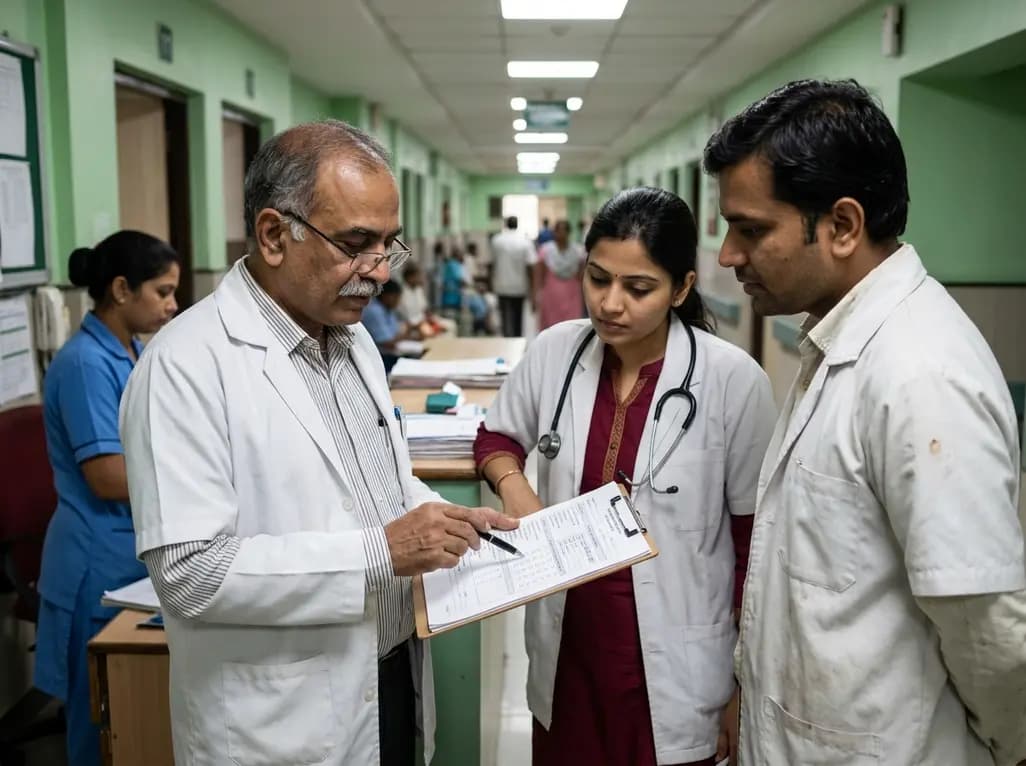
Healthcare systems globally face an unprecedented crisis regarding staff retention and mental well-being. Consequently, medical administrators are increasingly turning to standardized tools like the Psychosocial Work Environment Questionnaire to identify and mitigate workplace stressors. A robust work environment is not merely a matter of employee comfort; rather, it is a fundamental requirement for patient safety and clinical excellence. In Sweden, where healthcare demands continue to escalate, researchers recently undertook the task of validating the Danish Psychosocial Questionnaire (DPQ). This instrument provides a comprehensive framework for evaluating the multi-dimensional aspects of the medical workplace. By understanding the intricacies of job demands, social support, and organizational culture, healthcare leaders can implement targeted interventions. The Swedish validation study represents a significant step forward in ensuring that such tools are culturally and contextually appropriate for diverse medical settings. Furthermore, this research offers a blueprint for other nations, including India, to adapt similar rigorous methodologies for their own unique healthcare landscapes.
To understand the utility of the DPQ, one must first appreciate the theoretical pillars upon which it stands. The Psychosocial Work Environment Questionnaire integrates several established models of occupational stress, including the Job Demand-Control-Support (JDCS) model. This specific framework posits that the most stressful work environments are those characterized by high demands and low control. In a healthcare context, this translates to heavy patient loads coupled with a lack of autonomy in clinical decision-making. Moreover, the DPQ expands upon these basics by incorporating dimensions such as social capital, leadership quality, and organizational justice. These factors are critical because they determine the emotional climate of a hospital ward. When employees perceive their supervisors as fair and supportive, they are better equipped to handle the inherent stressors of medical practice. Additionally, the tool examines the clarity of roles and the frequency of workplace conflicts. Consequently, the DPQ offers a holistic view rather than a fragmented snapshot of the professional environment. By utilizing such a comprehensive instrument, organizations can move beyond anecdotal evidence and rely on empirical data to drive systemic improvements.
The recent validation study in northern Sweden involved a massive cohort of 1,299 employees across four distinct public healthcare departments. To ensure scientific rigor, the researchers translated the DPQ from Danish to Swedish while maintaining the integrity of the original constructs. Participants were randomly assigned into two separate groups to facilitate a longitudinal comparison between two time points. Specifically, one group received the full Psychosocial Work Environment Questionnaire at both intervals, whereas the other group tested a shorter single-item version during the second phase. This methodological choice was crucial for assessing whether shorter surveys could provide the same depth of insight as comprehensive ones. Furthermore, the researchers utilized confirmatory factor analysis (CFA) to verify the instrument's multifactorial structure. This statistical approach allowed them to confirm that the various subscales, such as work-life balance and emotional demands, were indeed measuring distinct phenomena. Additionally, the study achieved a response rate of 48% at the initial stage, which provides a solid foundation for the subsequent reliability analyses. These rigorous steps ensure that the validated tool can withstand the complexities of real-world clinical environments.
Upon completing the statistical analysis, the researchers found that the Swedish version of the DPQ exhibited excellent reliability. Specifically, all subscales yielded omega values exceeding the 0.70 threshold, which indicates strong internal consistency. This finding suggests that the Psychosocial Work Environment Questionnaire is a dependable tool for tracking various workplace metrics over time. For instance, the dimensions of job satisfaction and professional recognition showed high levels of consistency across the diverse participant group. However, the analysis also revealed high intercorrelations between certain subscales, such as role clarity and leadership support. This overlap suggests that these constructs are deeply intertwined within the healthcare hierarchy. Furthermore, the CFA results confirmed that the instrument effectively captures the intended multifactor structure without significant data distortion. Consequently, hospital administrators can trust that high scores in a specific domain truly reflect a positive work environment in that area. Moreover, the stability of these results across different departments indicates that the tool is versatile enough for use in surgery, emergency medicine, and general practice alike. Therefore, the validated DPQ stands as a gold-standard assessment for psychosocial health.
One of the most critical findings of the Swedish study was the relative failure of the single-item version of the DPQ. While administrators often prefer short surveys to increase response rates, the data showed significant differences in correlation coefficients between the single-item and full versions. Specifically, the single-item question failed to capture the nuanced realities of complex constructs like organizational justice or emotional labor. Furthermore, the reduced sensitivity of the shorter version could lead to a false sense of security among management. If a single question oversimplifies a deep-seated issue, the resulting intervention may be ineffective or even counterproductive. In contrast, the full Psychosocial Work Environment Questionnaire provides the granularity required to pinpoint specific problems within a department. Consequently, the researchers concluded that for practical and scientific use, the comprehensive version is far superior. Additionally, healthcare workers often feel more heard when they can express their concerns across multiple dimensions of their professional life. Shortcutting this process may inadvertently signal to staff that their well-being is not a priority. Thus, the extra time required for a full assessment is a worthwhile investment for any medical institution.
The findings from the Swedish DPQ validation are highly relevant for the Indian healthcare landscape, where workforce burnout is reaching critical levels. Currently, many Indian hospitals lack standardized methods for monitoring the psychosocial health of their doctors and nurses. By adopting a tool like the Psychosocial Work Environment Questionnaire, Indian administrators could identify systemic stressors before they lead to strikes or widespread attrition. Specifically, factors such as high quantitative demands and lack of social support are frequently cited by Indian medical professionals as primary sources of distress. Furthermore, the DPQ could help bridge the gap between junior residents and senior consultants by fostering a culture of transparency and mutual respect. Implementing such a tool would require a commitment to organizational change and a willingness to act on the data gathered. Moreover, the success of the Swedish model suggests that translating and culturally adapting these questionnaires is an essential first step. Consequently, Indian researchers should prioritize the validation of these instruments within local tertiary care centers. By doing so, they can provide a data-driven path toward a healthier, more sustainable medical workforce that ultimately delivers better patient care.
A multi-item questionnaire like the DPQ provides significantly more granularity and accuracy. Healthcare work environments are inherently complex, involving diverse emotional and organizational demands. A single-item survey often misses these nuances, leading to an incomplete or misleading assessment of the workplace climate. Furthermore, the Swedish study demonstrated that single-item metrics do not correlate strongly with comprehensive data, making them unreliable for designing effective workplace interventions or tracking long-term psychological trends among medical staff.
While burnout inventories focus on the individual symptoms of exhaustion and depersonalization, the DPQ focuses on the organizational and environmental causes. Specifically, it assesses the structural factors such as job control, leadership quality, and work organization that eventually lead to burnout. Consequently, the DPQ is more of a preventive tool that identifies environmental risks. By using both tools together, administrators can understand both the current state of staff well-being and the specific organizational factors that need urgent correction.
The Swedish validation provides a robust framework, but direct application in other countries requires cultural and linguistic adaptation. Different healthcare systems have unique hierarchical structures and social norms that influence how psychosocial factors are perceived. Therefore, it is essential for researchers to perform their own validation studies, similar to the one conducted in Sweden, to ensure the tool's reliability in a local context. Once validated, however, the DPQ serves as a powerful universal framework for improving medical work environments globally.
Disclaimer: This content is for informational and educational purposes only. It does not constitute professional medical, organizational, or legal advice. The psychosocial tools mentioned should be implemented by trained professionals within a comprehensive institutional framework. Refer to the latest local and national guidelines for clinical practice.
References
Agrell A et al. Validation of the Danish Psychosocial Questionnaire (DPQ) in a Swedish healthcare context. BMC Health Serv Res. 2026 Jul 13. doi: 10.1186/s12913-026-15083-z. PMID: 42443884.
Ganta A & Patlolla VRP. Exploring post-pandemic burnout and mental health among healthcare workers in India: a narrative review on prevalence, risk factors and impact. Int J Community Med Public Health. 2026;13(3):1042-1051.
Parmar PA. Prevalence of burnout and associated factors among healthcare workers in India: A systematic review and meta-analysis. Industrial Psychiatry Journal. 2026 Jun 18. doi: 10.4103/ipj.ipj_123_25.
"
Read summarized clinical updates, watch expert medical content, and earn CME certifications right from your smartphone.
Open your smartphone camera to scan and install.





A recent study validates the Danish Psychosocial Questionnaire (DPQ) for Swedish healthcare. The findings confirm its reliability for assessing complex work environments but warn against using single-item shortcuts. This research offers valuable insights for addressing healthcare burnout in India and beyond.
3 months ago

Review how tailored exercise programs benefit frail older patients with heart failure. Explore pathophysiological mechanisms, individualized training prescriptions, and strategies to overcome adherence barriers in clinical practice.
Today

Leucine Rich Bio has introduced South Asia's first comprehensive vaginal microbiome test, BugSpeaks. By profiling microbial dysbiosis, pathogens, and antimicrobial resistance, this next-generation diagnostic platform provides clinicians with deeper insights into recurrent infections, fertility, and reproductive health.
Today

In high-risk pulmonary embolism complicated by severe anemia and active uterine bleeding, systemic thrombolysis is contraindicated. Large-bore aspiration thrombectomy provides rapid hemodynamic rescue without fibrinolysis, supported by inferior vena cava filter placement and multidisciplinary critical care.
Today

This comparative study evaluates posterior labral tears with and without glenohumeral instability, highlighting distinct demographic patterns, MRI underestimation in stable shoulders, and successful arthroscopic repair outcomes.
Today

A clinical study demonstrates that early intervention with tocilizumab, either as monotherapy or bridged with corticosteroids, achieves significant proptosis reduction and resolves active inflammation in treatment-naive thyroid eye disease.
Today
