.webp&w=384&q=75)

Loading, please wait...
Loading, please wait...

Managing local prostate cancer recurrence after definitive radiotherapy remains a major therapeutic challenge in clinical uro-oncology. Historically, salvage radical prostatectomy or systemic androgen deprivation therapy represented the main options, yet both carry considerable morbidity or quality-of-life impairments. Consequently, modern radiation oncology has rapidly embraced ablative salvage techniques. The landmark SPARE systematic review and meta-analysis evaluates the clinical utility of prostate re-irradiation with SABR. By analyzing multi-institutional evidence, this comprehensive study provides critical clarity on disease control benchmarks and organ-at-risk safety profiles for clinicians managing radio-recurrent prostate carcinoma.
Primary radiation therapy successfully cures many localized prostate tumors; however, up to thirty percent of high-risk patients eventually experience biochemical relapse. When restaging with modern molecular imaging confirms isolated intraprostatic recurrence, local salvage therapy offers a genuine chance of secondary cure. Furthermore, delivering localized ablative therapy can postpone or eliminate the requirement for indefinite androgen deprivation therapy and its associated metabolic burdens.
Nevertheless, re-irradiating pelvic tissue demands extreme precision. The previously irradiated rectum, bladder neck, and external urethral sphincter possess reduced tolerance to cumulative radiation doses. Stereotactic ablative radiotherapy delivers steep dose gradients with sub-millimeter positioning accuracy. Therefore, clinicians utilize extreme hypofractionation to eradicate clonogenic cancer cells while sparing surrounding normal tissues. Consequently, SABR has emerged as an attractive, non-invasive alternative to salvage prostatectomy, cryoablation, or brachytherapy.
The SPARE study investigators executed a rigorous systematic review compliant with PRISMA guidelines to synthesize all available worldwide evidence. Specifically, the researchers queried premier biomedical databases for cohorts investigating stereotactic body radiation therapy for isolated prostate re-irradiation. They extracted critical oncologic endpoints alongside standardized adverse event profiles.
To evaluate outcomes robustly, investigators utilized random-effects models incorporating the Freeman-Tukey double arcsine transformation. They pooled biochemical recurrence-free survival, local relapse-free survival, and metastasis-free survival at two years post-treatment. Additionally, the team quantified acute and late gastrointestinal and genitourinary toxicities graded by standard terminology criteria. In total, the researchers synthesized thirty treatment cohorts across twenty-nine published studies, encompassing a robust aggregate population of 1,099 patients.
The pooled oncologic results demonstrate compelling local disease control following salvage stereotactic ablation. Specifically, the meta-analysis reported a pooled 2-year local relapse-free survival of 89.9% (95% CI, 80.6–96.5%). This robust local tumor eradication translates into sustained systemic disease containment for most treated individuals.
Moreover, the pooled 2-year metastasis-free survival reached 84.6% (95% CI, 77.3–90.7%), indicating that durable local eradication prevents rapid metastatic dissemination. The pooled 2-year biochemical recurrence-free survival was 62.5% (95% CI, 54.1–70.6%). Although statistical heterogeneity was substantial across cohorts, these efficacy rates demonstrate that salvage stereotactic re-treatment provides intermediate disease control comparable to salvage brachytherapy and surgical prostatectomy.
Safety considerations remain paramount when re-irradiating pelvic organs that have already received definitive radiation doses. Encouragingly, the SPARE meta-analysis revealed exceptionally low rates of high-grade toxicities across modern stereotactic series. Acute severe side effects occurred very rarely in pooled analyses.
Specifically, the pooled rate of acute grade 3 to 4 gastrointestinal toxicity was only 0.7% (95% CI, 0.3–1.4%; I² = 0%). Similarly, the pooled rate of acute grade 3 to 4 genitourinary toxicity was 1.1% (95% CI, 0.6–1.9%; I² = 0%). Furthermore, late severe toxicities remained favorable over extended follow-up. Pooled late grade 3 to 4 gastrointestinal toxicity occurred in 1.0% of patients (95% CI, 0.5–1.7%), while late grade 3 to 4 genitourinary toxicity occurred in 3.3% (95% CI, 2.0–5.0%). Consequently, these findings confirm that stereotactic re-irradiation produces significantly less severe morbidity than salvage radical surgery.
Achieving optimal clinical outcomes with salvage SABR requires disciplined patient selection and state-of-the-art technological infrastructure. First, clinicians must thoroughly exclude regional nodal disease and distant visceral or osseous metastases using advanced molecular imaging, such as PSMA-PET/CT. Second, clinicians should confirm true intraprostatic recurrence through multiparametric MRI and targeted salvage biopsy.
Additionally, modern treatment delivery benefits immensely from image-guided radiation therapy, fiducial markers, and real-time motion tracking. Many centers now utilize magnetic resonance-guided linear accelerators (MR-Linacs) or hydrogel rectal spacers to maximize spatial separation between the prostate and anterior rectal wall. Furthermore, clinicians must carefully consider the interval between initial radiotherapy and salvage treatment, as longer disease-free intervals often predict superior biochemical control.
Although the SPARE meta-analysis demonstrates favorable safety and efficacy, the authors note significant heterogeneity and very low overall certainty of evidence across retrospective series. Therefore, the radiation oncology community must prioritize enrolling salvage candidates into prospective multi-center registries and randomized clinical trials.
Future trials will establish optimal total doses, fraction numbers, and elective nodal volumes. Moreover, researchers are investigating the synergistic role of concurrent androgen receptor pathway inhibitors to further prolong metastasis-free survival. Ultimately, standardizing patient selection algorithms will solidify stereotactic re-irradiation within national and international urologic oncology practice guidelines.
Stereotactic prostate re-irradiation provides robust local tumor ablation for isolated radiorecurrent prostate cancer. The SPARE meta-analysis demonstrated an outstanding 89.9% 2-year local relapse-free survival and an 84.6% 2-year metastasis-free survival. Consequently, this non-invasive salvage approach effectively eradicates persistent intraprostatic disease clones, defers systemic androgen deprivation therapy, and maintains patient quality of life without requiring radical pelvic surgery.
Severe toxicities remain exceptionally low when clinicians use modern stereotactic planning techniques. According to the SPARE pooled meta-analysis, acute grade 3 or higher gastrointestinal and genitourinary toxicities occurred in only 0.7% and 1.1% of patients, respectively. Late grade 3 or higher toxicities occurred in 1.0% for gastrointestinal and 3.3% for genitourinary systems, demonstrating superior safety compared to historical surgical salvage series.
Clinicians must thoroughly restage patients using advanced functional and molecular imaging modalities before considering re-irradiation. Modern guidelines recommend PSMA-PET/CT combined with pelvic multiparametric MRI to definitively verify that recurrence remains confined strictly to the prostate gland. Additionally, clinicians should perform targeted histological biopsy confirmation to rule out radiation atypia and accurately assess histologic grade prior to treatment delivery.
Disclaimer: This content is for informational and educational purposes only and does not constitute medical advice. Readers must consult qualified healthcare professionals before making clinical decisions. The opinions expressed reflect standard clinical research syntheses and do not substitute for formal specialist consultation. Refer to the latest local and national guidelines for clinical practice.
References
Gouveia AG et al. Stereotactic Prostate Cancer Ablative Re-Irradiation: A Systematic Review and Meta-Analysis (SPARE). Prostate. 2026 Aug 23. doi: 10.1002/pros.70233. PMID: 42633701.
Morgan TM, Boorjian SA, Buyyounouski MK, et al. Salvage Therapy for Prostate Cancer: AUA/ASTRO/SUO Guideline. J Urol. 2024;211(4):517-527.
Miszczyk M, Rajwa P, Guckenberger M, et al. Local Salvage Therapies for Radiorecurrent Prostate Cancer: A Systematic Review and Meta-Analysis. JAMA Oncol. 2026;12(5):e260421.

Read summarized clinical updates, watch expert medical content, and earn CME certifications right from your smartphone.
Open your smartphone camera to scan and install.





The SPARE systematic review and meta-analysis of 1,099 patients reveals that prostate re-irradiation with SABR delivers 89.9% 2-year local control with remarkably low severe gastrointestinal and genitourinary toxicities, establishing salvage stereotactic radiotherapy as a promising local ablative strategy.
last month

Left bundle branch pacing is an emerging physiological resynchronization strategy for heart failure. While observational data and some trials show benefits over biventricular pacing, divergent trial outcomes highlight the importance of confirmed conduction capture and specialized operator technique.
Today

Postoperative adhesions cause severe complications, including bowel obstruction and infertility. This review highlights functional biomaterials, evaluating polysaccharide films and hydrogels while addressing retention, tissue conformability, and translational hurdles in clinical surgery.
Today
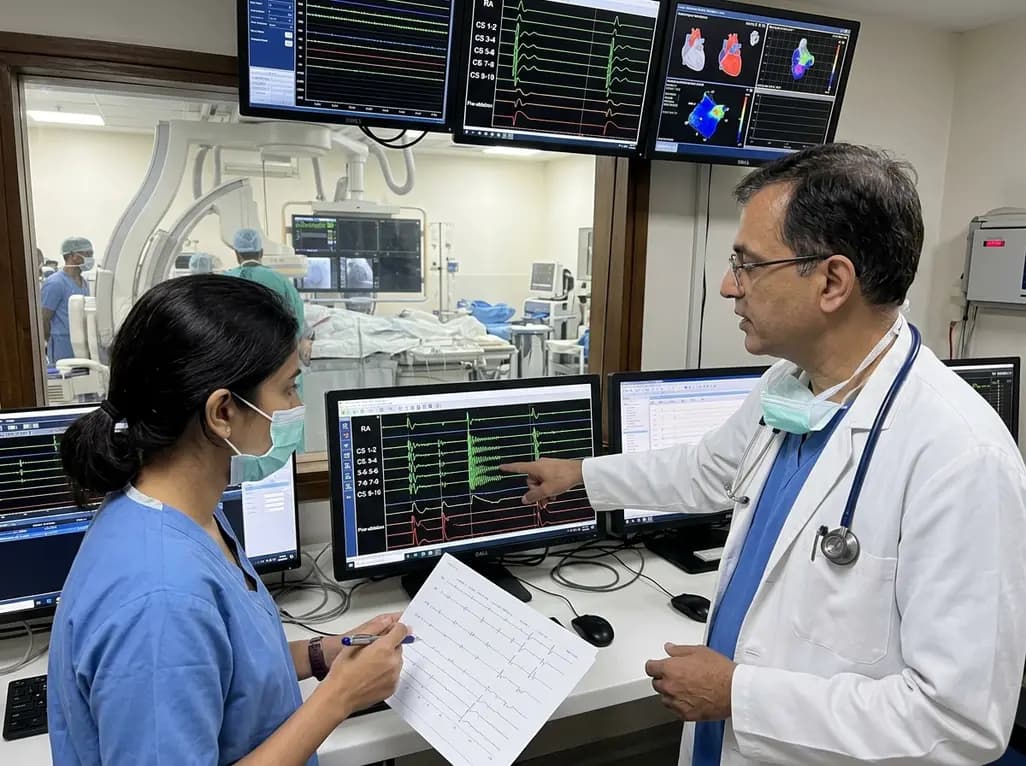
Radiofrequency catheter ablation of the cavotricuspid isthmus successfully terminates typical atrial flutter. This article reviews the mechanisms driving coronary sinus electrogram changes, wavefront activation pathways, and clinical criteria to verify bidirectional block during electrophysiology studies.
Today
New biomechanical research reveals that foot-strike angle significantly influences knee energy absorption during cutting tasks in female soccer players. Understanding these kinematic patterns offers clinicians valuable pathways for targeted ACL injury prevention and athletic retraining.
Today

A cross-sectional study demonstrates that increased BMI in adolescents significantly enhances mandibular length and alters salivary adipokines like adiponectin and resistin, providing novel insights into craniofacial growth and orthodontic planning.
Today
