.webp&w=384&q=75)

Loading, please wait...
Loading, please wait...

Global private equity firms have injected more than ten billion dollars into corporate healthcare chains over recent years. Consequently, this unprecedented influx of institutional capital has altered clinical governance and inflated private hospital costs across the country. Healthcare systems now balance rapid commercial consolidation against patient accessibility. While private capital finances modern infrastructure, it triggers friction between administrators, insurers, and regulators.
International investment funds have rapidly acquired significant stakes in prominent domestic healthcare providers. For instance, global entities such as Blackstone, KKR, and Temasek have actively consolidated fragmented regional facilities into large corporate networks. These investors primarily target high-margin tertiary specialties such as advanced surgical oncology, interventional cardiology, and complex organ transplants. Therefore, operational goals have shifted from traditional community-focused care to maximizing average revenue per occupied bed.
Furthermore, financial sponsors seek predictable returns through aggressive inorganic expansion and accelerated corporate scaling. Consequently, independent nursing homes and midsize centers face increasing pressure to merge with well-funded conglomerates. In addition, administrative executives increasingly evaluate hospital efficiency through return on capital metrics rather than traditional community health benchmarks. As a result, commercial objectives begin to influence institutional clinical decisions and resource allocation. This commercial transition frequently escalates procedural prices and administrative overhead for patients seeking essential care. Ultimately, the rapid corporatization of regional care delivery creates noticeable disparities across urban healthcare ecosystems.
Lawmakers have expressed profound unease regarding unchecked corporate acquisitions within domestic clinical spaces. Specifically, a parliamentary committee recently highlighted how global capital disproportionately purchases established, affordable facilities rather than building new rural infrastructure. As a result, midtier hospitals that once served middle-class families now adopt high corporate pricing structures. The committee therefore recommended establishing a dedicated healthcare regulator to monitor institutional billing and protect vulnerable households.
Additionally, lawmakers proposed strict price ceilings on essential procedures and hospital room tariffs. For example, legislators suggested benchmarking basic inpatient room rates against regional hospitality standards. Consequently, hospital administrators argue that severe price controls could undermine financial viability and deter necessary capital investment. Furthermore, leading international asset managers warn that statutory price restrictions could derail modern infrastructure growth. Nevertheless, parliamentary panels maintain that unchecked commercialization prices millions of citizens out of basic medical treatment. Accordingly, the debate over statutory tariff oversight has intensified across state and national legislative bodies.
Tensions between health insurance providers and corporate healthcare networks have intensified dramatically over recent billing practices. Health insurers contend that corporate facilities frequently recommend expensive, specialized interventions when standard alternatives offer comparable clinical efficacy. For example, robotic surgical platforms often incur substantial surcharges that conventional laparoscopic procedures do not warrant. Consequently, insurers increasingly scrutinize hospital claims and reject reimbursements for cutting-edge technological add-ons.
In contrast, clinical directors argue that modern technological investments enhance patient safety and minimize postoperative complications. Furthermore, medical executives emphasize that advanced robotic instruments and high-grade implants reduce recovery intervals and infection rates. However, when third-party payers deny reimbursement for these expensive modalities, patients encounter unexpected out-of-pocket expenses at discharge. In response, regulatory authorities have introduced standardized authorization guidelines and universal cashless settlement mechanisms. Nonetheless, systemic discord persists because insurers and hospitals disagree on clinical necessity and appropriate valuation. Ultimately, patients remain trapped between corporate financial targets and stringent insurer coverage restrictions.
India's healthcare financing framework faces severe strain as annual medical inflation hovers around thirteen percent. Consequently, rising treatment charges disproportionately burden the demographic segment widely known as the missing middle. These self-employed or non-salaried individuals do not qualify for state-subsidized schemes yet lack expansive corporate coverage. Therefore, unexpected hospital admissions frequently deplete family savings and trigger catastrophic domestic financial stress.
Moreover, private hospital tariffs often exceed public institution rates by five to ten times. Specifically, high expenditure spikes occur during complex cancer therapies, neonatal intensive care, and cardiac interventions. Because public tertiary facilities remain severely overcrowded, middle-income patients inevitably seek treatment within corporatized private institutions. However, standard health insurance policies often impose rigid sub-limits on room rents and surgical consumables. As a result, policyholders must cover substantial uncovered treatment expenses through personal borrowings. Thus, expanding private infrastructure without adequate public safety nets exacerbates social health inequalities across metropolitan populations.
Physicians operating within corporatized medical centers face challenging dilemmas between clinical independence and organizational targets. Traditionally, doctors exercised complete autonomy over procedural choices and diagnostic recommendations. Today, however, institutional metrics and revenue per bed benchmarks place subtle pressure on clinical teams. Consequently, clinicians must consciously prioritize evidence-based protocols over institutional financial expectations.
Furthermore, clinical leaders must actively participate in hospital policymaking to preserve patient advocacy and ethical transparency. Hospitals can achieve sustainable growth by adopting standardized clinical pathways and published fee schedules. In addition, structured collaboration between medical societies and insurance providers can establish clear reimbursement guidelines for complex surgeries. Such clinical consensus eliminates arbitrary billing disputes while ensuring fair compensation for hospital operational costs. Ultimately, long-term healthcare sustainability requires aligning institutional capital with patient welfare. Healthcare providers must ensure that financial objectives never compromise clinical integrity or essential healthcare access.
Q1: Why are private equity firms heavily investing in Indian hospital networks?
Private equity firms target Indian healthcare due to an acute bed deficit and growing consumer demand for specialized tertiary treatments. India possesses only 1.3 beds per 1,000 citizens, which creates substantial long-term growth opportunities. Furthermore, rising chronic illnesses such as oncology and cardiovascular disorders ensure reliable inpatient revenue. Consequently, global investors acquire fragmented regional hospital networks to achieve operational scale, improve operational efficiencies, and secure strong financial returns upon corporate exit.
Q2: How does hospital corporatization influence out-of-pocket costs for insured patients?
Corporatized hospital chains frequently utilize advanced technologies, specialized implants, and proprietary robotic devices that carry substantial surcharges. However, health insurers often refuse to reimburse these add-on costs because standard conservative interventions yield comparable clinical outcomes. Consequently, insured patients receive partial claim approvals at hospital discharge and must finance remaining shortfalls from personal savings. Therefore, out-of-pocket medical expenditure increases significantly even when patients maintain active commercial insurance policies.
Q3: What reforms has the Indian parliamentary committee recommended for private healthcare pricing?
The parliamentary committee recommended establishing an independent regulatory authority to supervise hospital charges and enforce price caps on critical medical interventions. Additionally, lawmakers proposed benchmarking private inpatient room tariffs against regional hospitality accommodations to eliminate arbitrary billing. Furthermore, the committee advised reviewing foreign direct investment rules to prevent global funds from aggressively acquiring affordable midsize hospitals, thereby preserving accessible community medical care for low-income citizens.
Disclaimer: This content is for informational and educational purposes only. It does not constitute medical advice or replace professional judgment. Refer to the latest local and national guidelines for clinical practice.
References

Read summarized clinical updates, watch expert medical content, and earn CME certifications right from your smartphone.
Open your smartphone camera to scan and install.





Global private equity firms have poured billions into Indian hospital networks, driving consolidation in tertiary care. However, the resulting double-digit medical inflation has ignited fierce disputes between insurers and healthcare providers, prompting parliamentary demands for stricter pricing regulations.
Today
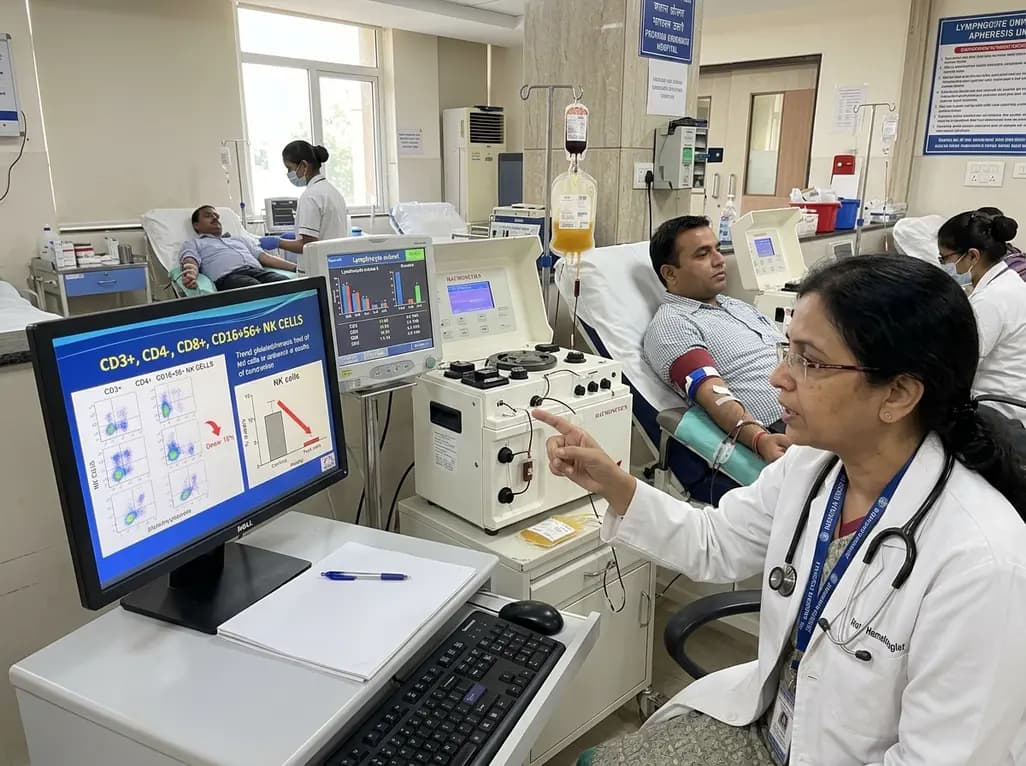
A landmark study assesses how frequent plateletpheresis alters peripheral immune profiles. Regular donors demonstrate notable reductions in circulating natural killer cells, emphasizing the critical need for routine lymphocyte subset surveillance in long-term blood donor safety programs.
Today
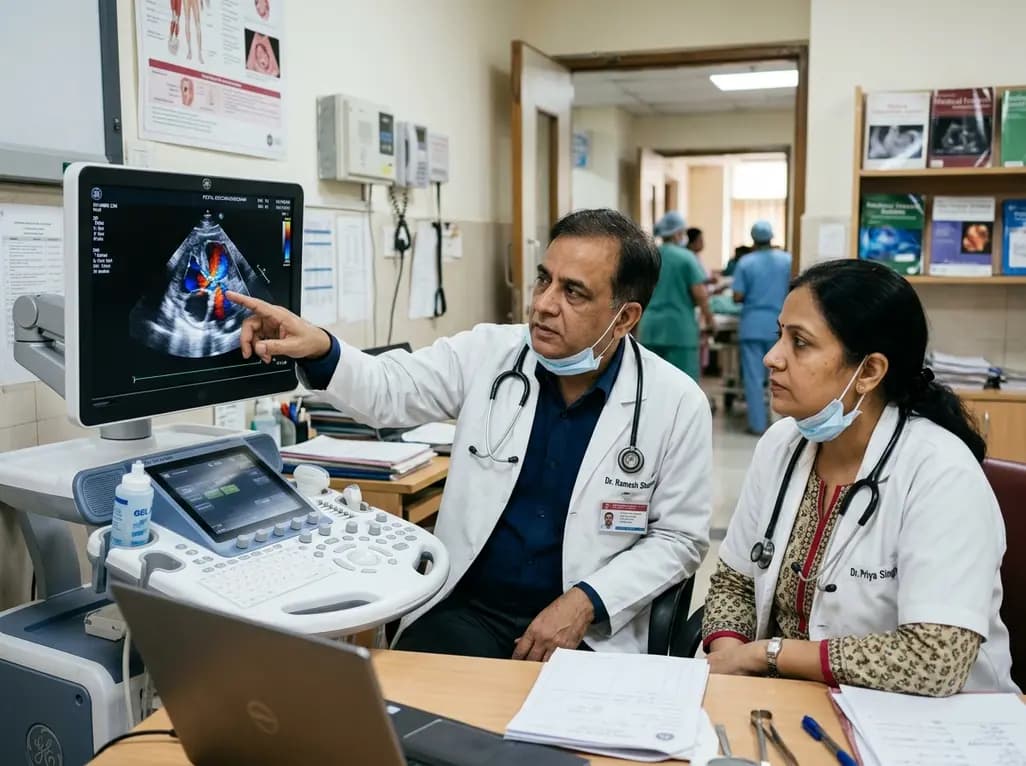
Fetal foramen ovale restriction typically emerges in the third trimester with right heart enlargement. Evidence demonstrates it does not independently mandate cesarean delivery, and over 93% of postnatal cardiac findings resolve spontaneously within one year, supporting conservative obstetric management.
Today
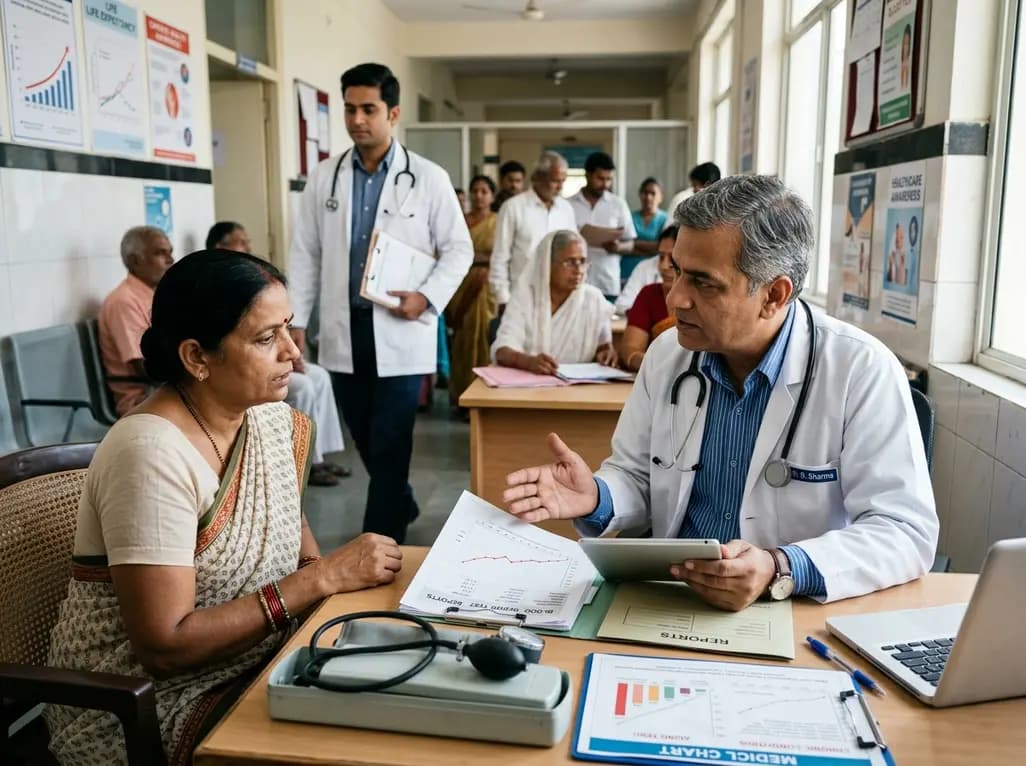
The latest WHO Global Health Estimates highlight India's life expectancy reaching 71 years alongside a healthy lifespan of 60.6 years. While longevity rebounds post-pandemic, non-communicable conditions now account for three-quarters of top mortalities, underscoring urgent clinical shifts in routine primary care.
Today

New biomechanical research reveals that foot-strike angle significantly influences knee energy absorption during cutting tasks in female soccer players. Understanding these kinematic patterns offers clinicians valuable pathways for targeted ACL injury prevention and athletic retraining.
Today

A comprehensive review analyzes periconceptional GLP-1 receptor agonist exposure, revealing reassuring data on congenital anomalies and adverse perinatal outcomes while emphasizing the need for cautious patient counseling.
Today
