.webp&w=384&q=75)

Loading, please wait...
Loading, please wait...

Healthcare systems worldwide are shifting toward multi-payer models to enhance efficiency and patient outcomes. Recent research highlights how private health insurance uptake serves as a critical driver for healthcare utilization in the Gulf Cooperation Council (GCC) countries. These nations, much like India, manage a blend of governmental coverage and private insurance. Understanding the determinants of this uptake provides valuable insights for Indian clinicians and policymakers navigating the expansion of private insurance and government schemes like Ayushman Bharat.
A systematic review mapping data to Andersen’s Behavioral Model of Health Services Use identified three primary categories of determinants. Predisposing factors such as being male, married, and highly educated significantly increase the likelihood of insurance enrollment. Furthermore, enabling factors like high income and stable employment play a decisive role. In contrast, need factors—specifically the presence of chronic noncommunicable diseases—strongly correlate with a higher demand for private coverage. Consequently, individuals with long-term health needs often prioritize private insurance to secure better access to specialized services.
In India, the private health insurance uptake follows similar socioeconomic patterns. Data from the National Sample Survey and recent studies suggest that wealth quintiles and educational attainment remain the strongest predictors of enrollment. However, India faces a unique challenge known as the \"missing middle,\" where nearly 400 million people are too affluent for public subsidies but cannot yet afford private premiums. Moreover, while GCC countries have implemented mandatory insurance for expatriates, India is still transitioning through voluntary and employer-sponsored models. Both regions demonstrate that insurance significantly boosts the use of routine check-ups and preventive services.
The association between insurance and service utilization is profound. Insured individuals are more likely to seek prescribed medicines and preventive care compared to those relying solely on governmental safety nets. This increased utilization often leads to earlier diagnosis and better management of chronic conditions. For doctors in India, this trend underlines the importance of discussing insurance status with patients to ensure treatment adherence and long-term wellness planning. Additionally, evidence suggests that perceived service quality remains a major motivator for patients choosing private providers over public alternatives.
Predisposing factors include sociodemographic characteristics such as age, sex, marital status, and education level. In both GCC and Indian contexts, higher education levels consistently correlate with a better understanding of insurance benefits and higher enrollment rates.
Studies show a strong positive association between private health insurance and the utilization of preventive services. Insured patients are more likely to undergo routine check-ups and utilize prescribed medications, which improves overall health outcomes and reduces emergency hospitalizations.
The "missing middle" refers to a large segment of the Indian population that lacks health insurance because they are not eligible for government-funded pro-poor schemes and find private insurance premiums expensive. Addressing this gap is essential for achieving universal health coverage.
Disclaimer: This content is for informational and educational purposes only. It does not constitute medical or financial advice. Refer to the latest local and national guidelines for clinical practice.
References
1. Althabaiti KS et al. Determinants of private health insurance uptake and its association with healthcare utilization in Gulf Cooperation Council countries: a systematic review. Glob Health Action. 2026 Dec undefined. doi: 10.1080/16549716.2026.2647528. PMID: 41879796.
2. Biradar J, Joshi D. Determinants of Health Insurance in India: Evidence from 75th National Sample Survey. ResearchGate. 2024.
3. Ghosh S, et al. Wealth Status and Health Insurance Enrollment in India: An Empirical Analysis. MDPI. 2023.
"
Read summarized clinical updates, watch expert medical content, and earn CME certifications right from your smartphone.
Open your smartphone camera to scan and install.





A systematic review analyzes factors influencing private health insurance uptake in GCC countries, offering insights relevant to India's evolving health sys...
6 months ago
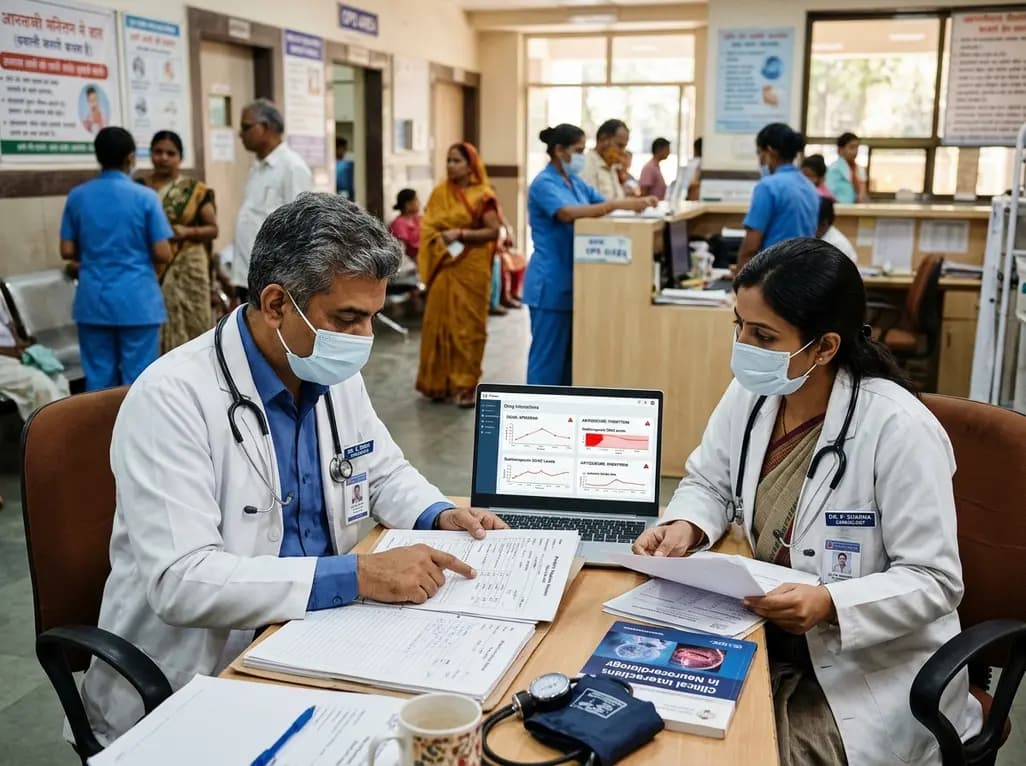
Co-administering antiseizure medications and DOACs frequently causes pharmacokinetic interactions, subtherapeutic drug levels, and thromboembolic failures. This review highlights enzyme induction risks, unpredictable outcomes with levetiracetam, and the vital role of therapeutic drug monitoring.
Today
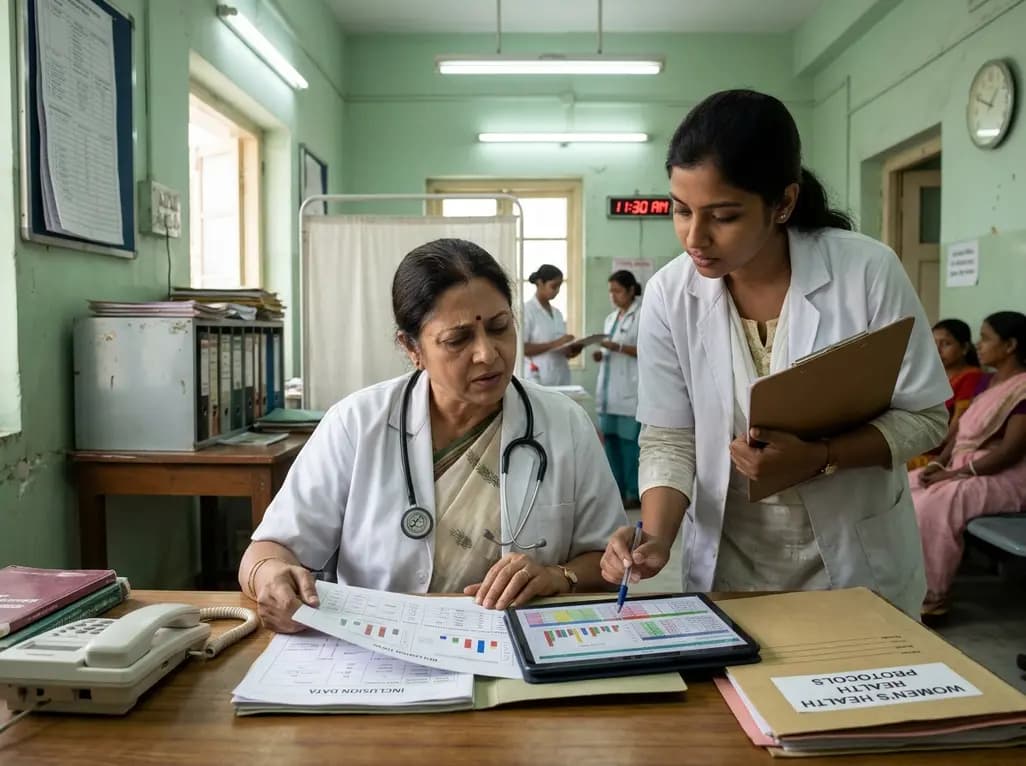
Demanding exhaustive hormonal profiling can inadvertently discourage clinical studies involving females. Methodological standards must align with the specific scientific question to expand, not restrict, equitable evidence for women.
Today
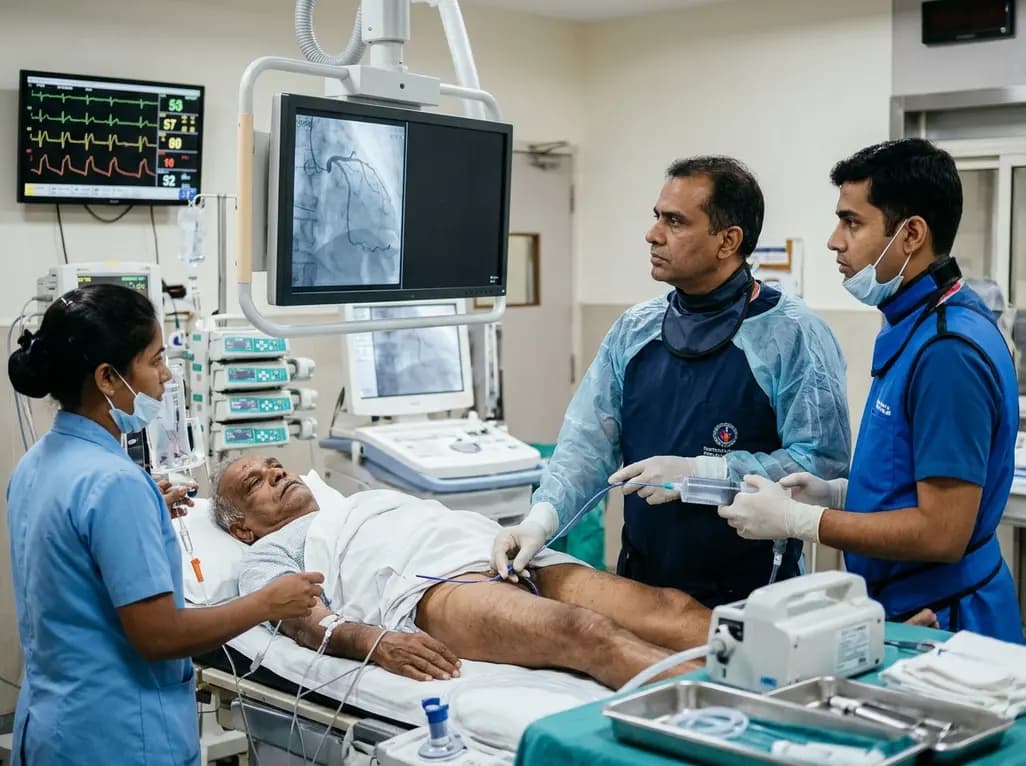
An elderly man with partially repaired Tetralogy of Fallot presented with STEMI caused by coronary embolism rather than atherosclerosis. Successful treatment with sustained mechanical aspiration thrombectomy underscores the vital need for high clinical vigilance in adult congenital heart disease.
Today

A comparative review of tension band wiring and intramedullary screw fixation in thumb metacarpophalangeal arthrodesis, evaluating union rates, hardware complications, and clinical outcomes.
Today

Following regulatory scrutiny from FSSAI regarding promotional representations and lean muscle preservation claims, Dr. Reddy's Laboratories and Nestlé Health Science are currently reviewing the branding and marketing strategy for their joint nutritional supplement Celevida GLP+.
Today
