.webp&w=384&q=75)

Loading, please wait...
Loading, please wait...
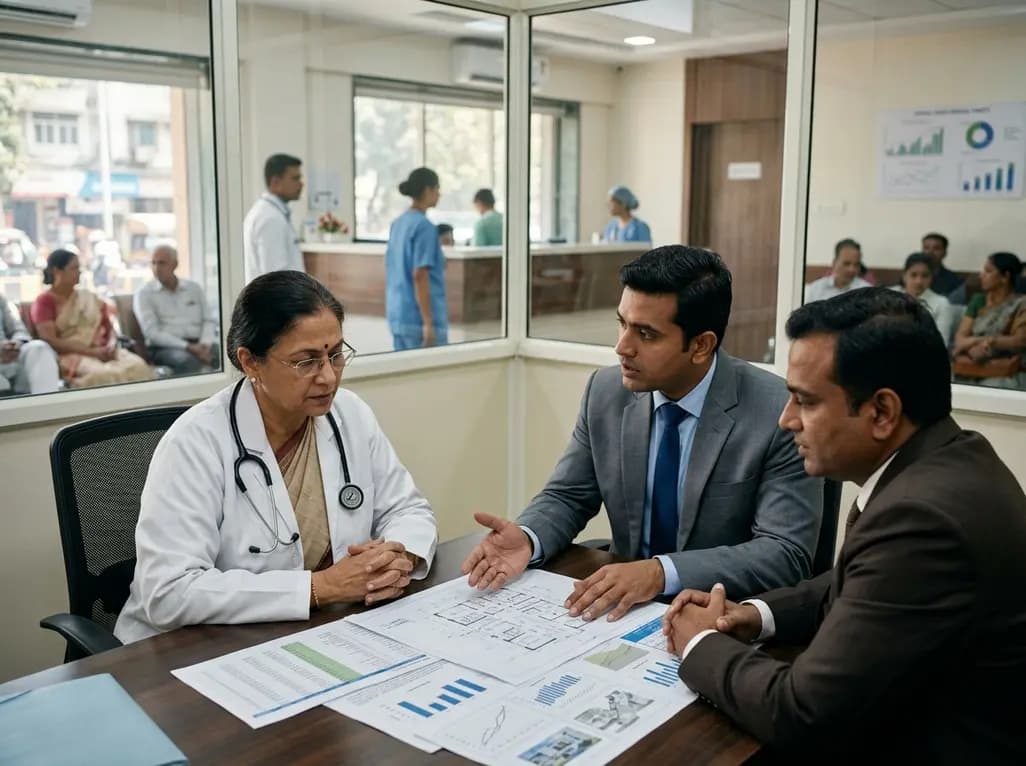
The rapid expansion of private equity in healthcare is reshaping India's clinical delivery landscape. Massive financial investments accelerate institutional growth, yet they also create intense debates regarding treatment affordability and clinical priorities. Healthcare providers frequently face tensions between shareholder expectations and ethical patient obligations. Consequently, understanding these evolving financial dynamics is vital for clinicians and administrators nationwide.
Over the past decade, institutional investment has entered Indian tertiary hospitals at an unprecedented pace. Private equity funds provide vital capital that helps hospitals build modern infrastructure and acquire cutting-edge diagnostic equipment. Furthermore, these financial resources allow healthcare groups to expand into underserved tier-two and tier-three cities. As a result, regional populations gain quicker access to specialized treatments that previously required long travel. However, this influx of capital alters traditional administrative structures. Corporate boards often introduce rigorous financial metrics to track departmental productivity and clinical turnover. Consequently, many physicians observe a distinct shift toward corporate efficiency and operational consolidation. While capital infusion modernizes facilities, it can inadvertently marginalize smaller, doctor-owned nursing homes that cannot match corporate marketing budgets. Additionally, institutional investors frequently prioritize rapid returns across three-to-five-year investment cycles. This compressed timeframe can place continuous pressure on administrative teams to optimize bed occupancy and diagnostic utilization. Therefore, clinical leaders must balance operational expansion with the core duty of delivering compassionate care. Ultimately, the health ecosystem requires balanced growth that preserves institutional independence while expanding overall capacity.
Patient affordability remains a paramount challenge across India, where out-of-pocket medical expenditure remains exceptionally high. When institutional capital assumes control of hospitals, pricing models frequently adjust upward to sustain operating margins. Consequently, high procedure costs can place a heavy burden on uninsured or underinsured families. Furthermore, expensive tertiary interventions often create substantial financial toxicity for middle-class households. At the same time, clinicians face potential challenges regarding their daily diagnostic decisions. For instance, standardized corporate protocols may encourage specific revenue-generating investigations or surgical pathways. Nevertheless, doctors must retain clinical autonomy to advocate strictly for evidence-based patient management. Ethical practitioners insist that medical necessity, rather than corporate profit targets, must dictate every therapeutic choice. Moreover, transparent billing mechanisms and standardized treatment guidelines help alleviate patient distrust during major admissions. When hospital networks establish clear financial counseling for families, treatment adherence visibly improves. In addition, regulatory bodies are closely evaluating whether corporate consolidation limits market competition in key urban centers. Therefore, maintaining clinician independence remains essential for safeguarding patient affordability and preserving public confidence in private hospitals.
Capital infusion plays an indispensable role in introducing transformative medical technologies across Indian healthcare institutions. For example, robotic-assisted surgical platforms and advanced imaging suites require substantial initial investments that standalone clinics rarely afford. Thanks to capital backing, tertiary centers can acquire these precise surgical tools and train surgical teams. Consequently, patients experience shorter hospital stays, minimal blood loss, and faster postoperative functional recovery. However, high technology acquisition costs directly influence overall procedural pricing for patients. Therefore, administrators must devise sustainable financing models to avoid passing excessive capital expenditures onto families. Many institutions address this dilemma by maximizing equipment utilization rates through structured multidisciplinary operating schedules. Furthermore, domestic manufacturing partnerships and collaborative leasing arrangements help decrease per-procedure consumable costs over time. In addition, thorough clinical auditing ensures that advanced robotic systems are deployed only when concrete patient benefits exist. When surgeons select appropriate indications, robotic platforms enhance clinical outcomes without imposing unnecessary financial stress. Meanwhile, medical training programs must continuously train young surgeons to operate these complex digital systems safely and efficiently. Ultimately, technology adoption must prioritize measurable clinical value rather than pure marketing prestige.
Hospital sustainability depends heavily on operational efficiency and structured patient retention rather than inflating per-patient charges. Indeed, high patient turnover and unexpected readmissions generate hidden financial leakages across tertiary care centers. By standardizing inpatient pathways, hospitals can optimize bed turnaround and lower acute care overheads. Moreover, structured post-discharge follow-ups foster patient loyalty and significantly reduce avoidable complications. Within this operational framework, clinical nutrition represents a powerful yet underutilized strategy for reducing care costs. Specifically, malnourished hospitalized patients frequently suffer from prolonged recovery times, higher infection rates, and extended intensive care stays. When clinical teams institute early nutrition screening, critical care outcomes improve markedly. Furthermore, specialized dietary interventions accelerate wound healing and diminish pharmaceutical dependencies in surgical wards. As a result, comprehensive nutritional support generates quantifiable cost savings for both hospitals and paying families. Additionally, multidisciplinary nutrition rounds ensure that every critically ill patient receives tailored caloric and macronutrient support daily. Therefore, forward-looking healthcare administrators increasingly treat nutrition departments as value-generating clinical assets rather than simple dietary services. Consequently, integrating proactive metabolic care into standard clinical workflows yields both superior clinical outcomes and measurable economic benefits.
Digital innovations and artificial intelligence are rapidly emerging as vital catalysts for expanding healthcare reach across India. Specifically, AI-driven diagnostic tools assist radiologists and pathologists by triaging scans and detecting subtle abnormalities quickly. Furthermore, automated clinical decision-support algorithms help primary care providers in rural health centers identify critical emergencies. As a result, digital tools bridge geographic disparities and reduce diagnostic turnaround times across high-volume facilities. Simultaneously, the rapid expansion of medical education represents another crucial pillar for national health equity. Although India has witnessed a significant increase in medical colleges, challenges regarding training affordability and educational quality persist. Additionally, clinical trainees often face exorbitant tuition fees in private institutions, creating heavy debt burdens for future doctors. Consequently, academic institutions must focus on strengthening clinical faculty, upgrading teaching hospital infrastructure, and promoting community-oriented training. When medical education remains accessible and grounded in social medicine, graduating physicians naturally embrace people-centric models of care. Therefore, regulatory authorities must actively monitor educational standards to prevent the commercial dilution of clinical training. Ultimately, integrating artificial intelligence with equitable medical training will build a resilient healthcare workforce capable of meeting India's diverse public health demands.
Q1: How does private equity in healthcare influence treatment costs in India?
Private equity investments provide essential capital to modernize hospital infrastructure, install advanced technology, and expand tertiary services. However, institutional investors typically seek robust returns on capital, which can lead to higher hospital room tariffs, increased diagnostic pricing, and aggressive procedure targets. Consequently, hospitals must adopt transparent pricing structures and cost-effective clinical pathways to protect patient affordability while expanding their clinical capabilities.
Q2: Can clinical nutrition genuinely reduce the cost of acute inpatient care?
Yes, systematic clinical nutrition interventions significantly reduce overall acute care costs. Hospitalized patients suffering from malnutrition often face extended intensive care stays, higher surgical site infection rates, and delayed wound recovery. By establishing early nutritional screening and targeted dietary therapies, clinical teams shorten recovery timelines and reduce antibiotic consumption. Consequently, this clinical approach lowers total hospitalization expenses for families and reduces institutional overheads.
Q3: What role does artificial intelligence play in improving healthcare accessibility?
Artificial intelligence acts as an operational catalyst by scaling clinical reach to underserved populations. Specifically, AI-assisted diagnostic tools streamline radiology and pathology evaluations, enabling rapid triage during high-volume shifts. Furthermore, automated decision-support platforms empower clinicians in peripheral clinics to diagnose complex conditions early. As a result, artificial intelligence reduces diagnostic turnaround times, lowers clinical errors, and optimizes resource distribution without inflating procedural expenses.
Disclaimer: This content is for informational and educational purposes only. It does not constitute medical advice or replace professional judgment. Refer to the latest local and national guidelines for clinical practice.
References

Read summarized clinical updates, watch expert medical content, and earn CME certifications right from your smartphone.
Open your smartphone camera to scan and install.





The rise of private equity in healthcare is reshaping India's medical landscape. Healthcare leaders are actively examining the delicate balance between rapid capital infusion, patient affordability, clinical autonomy, and sustainable hospital operational models to safeguard equitable access.
last month

Novel diimide and hydrazone scaffolds, particularly compound #C4, synergistically reactivate latent HIV-1 when combined with JQ1 or PKC activators. Demonstrating donor-matched proviral transcription ex vivo and non-canonical signaling, these findings advance shock and kill strategies toward reservoir eradication.
Today

A comparative cohort study evaluates vNOTES vs TLH hysterectomy for benign conditions, demonstrating shorter operative duration, faster return to daily activities, and equivalent female sexual function scores without increased dyspareunia.
Today

Review how tailored exercise programs benefit frail older patients with heart failure. Explore pathophysiological mechanisms, individualized training prescriptions, and strategies to overcome adherence barriers in clinical practice.
Yesterday

This comparative study evaluates posterior labral tears with and without glenohumeral instability, highlighting distinct demographic patterns, MRI underestimation in stable shoulders, and successful arthroscopic repair outcomes.
Yesterday

A clinical study demonstrates that early intervention with tocilizumab, either as monotherapy or bridged with corticosteroids, achieves significant proptosis reduction and resolves active inflammation in treatment-naive thyroid eye disease.
Today
