.webp&w=384&q=75)

Loading, please wait...
Loading, please wait...
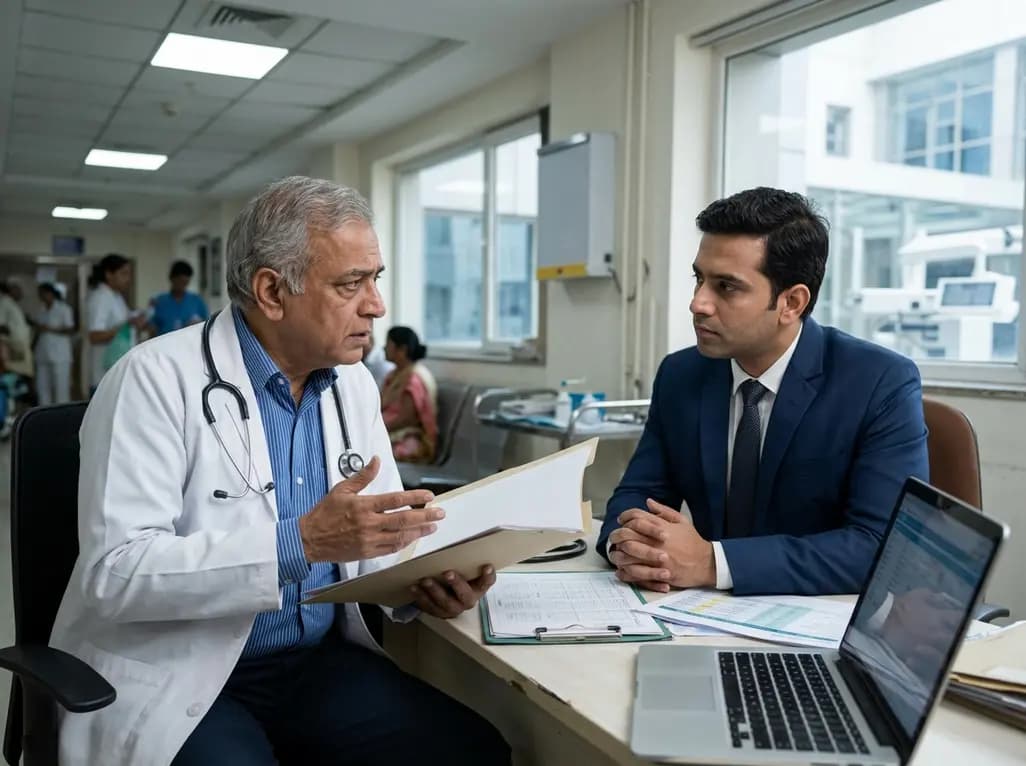
The rapid influx of capital has transformed the delivery of clinical medicine across modern India. Today, the expansion of private equity in healthcare is reshaping multi-specialty hospitals, diagnostics, and surgical infrastructure. While institutional investment drives modernization, it also introduces pressing challenges regarding patient affordability and equitable access. Healthcare leaders recently examined these systemic friction points at ETHealthworld's 6th Healthcare Leaders Summit. Clinicians and administrators now face the difficult task of balancing financial viability with compassionate, patient-centered care.
Institutional investment has injected billions of dollars into Indian hospital chains over recent years. Consequently, large multi-specialty platforms have expanded modern infrastructure into tier-2 and tier-3 cities. This influx enables facilities to acquire advanced imaging suites, modular operation theaters, and cutting-edge intensive care equipment. Furthermore, hospital administrators have adopted rigorous corporate governance standards. These measures streamline supply chain operations, enhance digital procurement, and establish standardized clinical pathways across regional networks.
However, capital deployment creates significant fiduciary expectations. Private equity investors routinely target clear multi-year financial returns. As a result, hospital administrators face sustained pressure to expand EBITDA margins and maximize occupancy. While corporate backing rescues distressed standalone hospitals, it alters the operational tempo of hospital administration. Clinicians often observe a clear transition from physician-led community care toward centralized, metrics-driven institutional governance.
Rising operational overhead directly affects out-of-pocket healthcare expenses for families across India. Out-of-pocket spending still accounts for a substantial proportion of national health expenditure. When large hospital conglomerates acquire regional providers, service tariffs and room charges frequently increase. Consequently, routine diagnostic testing, procedural packages, and specialist consultations become less affordable for uninsured citizens.
Moreover, aggressive financial performance targets can inadvertently influence clinical behavior. Clinicians may experience institutional pressure to favor high-margin surgical interventions over conservative therapies. Furthermore, average lengths of stay and intensive care utilization come under close administrative scrutiny. Medical ethicists emphasize that financial performance metrics must never dictate bedside diagnostic and therapeutic decisions. In addition, health economists urge policymakers to expand social insurance coverage to shield low-income households from predatory tertiary care costs.
Technological advancement remains a prominent justification for private equity backing in tertiary care. Institutional capital enables hospitals to invest in robotic-assisted surgical systems and precision oncology platforms. Consequently, surgical teams can perform complex minimally invasive procedures with greater precision and reduced intraoperative blood loss. Furthermore, patients frequently experience shorter recovery times and fewer wound infections.
Nevertheless, hospitals must offset the expensive capital acquisition costs of advanced surgical consoles. Hospital administrators must carefully manage robotic surgical volume to ensure reasonable payback periods. Therefore, clinical leadership must institute rigorous credentialing and clear patient selection criteria. Clinicians must recommend robotic interventions only when verifiable clinical evidence demonstrates superior outcomes over traditional laparoscopic methods. When hospitals deploy technology judiciously, surgical innovations enhance therapeutic outcomes without burdening patients with unnecessary procedural expenses.
Hospital economics also intersect closely with fundamental clinical disciplines like clinical nutrition. Medical nutrition therapy often remains an underutilized tool in acute inpatient management. However, proactive nutritional optimization significantly reduces intensive care complications and accelerates post-surgical wound healing. Therefore, prioritizing specialized dietetics delivers measurable clinical and financial dividends.
Furthermore, malnourished inpatients experience higher rates of hospital-acquired infections and prolonged ventilation times. These secondary complications substantially escalate the final hospital bill. Conversely, structured enteral and parenteral protocols shorten overall lengths of stay and decrease thirty-day readmission rates. Consequently, forward-thinking hospital administrators are integrating dedicated clinical nutritionists into critical care rounds. By standardizing early nutritional assessments, hospitals can optimize clinical outcomes while systematically curbing inpatient treatment costs.
Digital health solutions and artificial intelligence offer scalable tools to enhance diagnostic accuracy across distributed hospital networks. For example, AI-driven radiology algorithms assist oncologists and radiologists by flagging subtle lesions in computed tomography scans. Consequently, rural and peripheral diagnostic hubs can triage complex cases rapidly to centralized tertiary specialists.
In addition, automated triage platforms help clinicians streamline emergency department throughput. These digital tools improve operational efficiency, lower diagnostic turnaround times, and eliminate unnecessary administrative delays. However, hospital directors must implement rigorous data privacy protections and ethical algorithm oversight. Technology must serve as an empathetic clinical assistant rather than a commercial mechanism for unvetted patient churn. Ultimately, digital health tools must democratize access to expert care rather than merely widen operational profit margins.
The consolidation of healthcare assets demands continuous ethical vigilance from medical professionals. Doctors must retain complete clinical autonomy when selecting medications, ordering laboratory investigations, and admitting patients. While corporate efficiency supports facility growth, the primary fiduciary duty of a physician belongs solely to the patient. Therefore, institutional medical boards must actively resist administrative policies that prioritize profitability over evidence-based guidelines.
Furthermore, medical education in India requires substantial reform to maintain ethical, affordable practice standards. As post-graduate medical seats expand into private institutions, rising tuition fees threaten to push young physicians toward aggressive billing practices. Consequently, regulatory bodies must ensure accessible, affordable medical training. In conclusion, healthcare leadership must balance fiscal responsibility with social accountability, ensuring that modern clinical medicine remains accessible, ethical, and compassionate for all strata of society.
Q1: How does private equity investment influence overall treatment costs for hospital patients?
Private equity investment introduces advanced technologies and modernized infrastructure into hospitals, but it also imposes strict expectations for financial return. Consequently, acquired hospital chains frequently increase room rates, diagnostic tariffs, and procedural package pricing. This commercialization elevates out-of-pocket healthcare expenses for uninsured and underinsured patients across India.
Q2: How can clinicians maintain their clinical autonomy in private equity-owned hospitals?
Clinicians can safeguard their professional autonomy by adhering strictly to national and international evidence-based clinical practice guidelines. Furthermore, doctors should actively participate in hospital medical executive committees, institutional ethics panels, and clinical audit boards. This involvement prevents commercial performance indicators from undermining sound clinical decision-making.
Q3: What role does medical nutrition therapy play in reducing acute care hospital expenses?
Standardized clinical nutrition therapy directly reduces inpatient complications such as sepsis, pressure ulcers, and delayed surgical wound healing. By preventing critical complications, structured medical nutrition protocols shorten intensive care stays and minimize thirty-day readmissions. Consequently, early nutritional interventions lower total hospitalization costs for families and health systems.
Disclaimer: This content is for informational and educational purposes only. It does not constitute medical advice or replace professional judgment. Refer to the latest local and national guidelines for clinical practice.
References

Read summarized clinical updates, watch expert medical content, and earn CME certifications right from your smartphone.
Open your smartphone camera to scan and install.





As private equity reshapes Indian hospitals, clinical leaders and health administrators face a critical challenge: balancing technological modernization and operational scale with patient affordability and bedside clinical autonomy.
last month
Explore vital recurrent stroke predictors in lacunar stroke patients managed with intensive blood pressure lowering. This analysis examines trial findings from SPS3 to uncover residual vascular risks, metabolic factors, and targeted secondary prevention strategies for high-risk neurological patients.
Today

Odisha has established India's first state-level clinical protocol specifically tailored for pregnant women with sickle cell disease. Developed with NHM and UNICEF, the framework provides structured antenatal screening, crisis mitigation, standardized referral pathways, and specialized interdisciplinary care.
Today

The Directorate General of Health Services directs Indian states to halt the hazardous reuse and reprocessing of single-use medical devices. Discover regulatory implications under the Drugs and Cosmetics Act, critical infection risks, legal liabilities, and operational changes required across clinical specialties.
Today

Mitochondria-targeted nanoparticles self-assembled from EGCG and L-glutamic acid effectively restore mitochondrial homeostasis, suppress synovial inflammation, and attenuate chondrocyte senescence in osteoarthritis, offering a promising disease-modifying nanotherapy.
Today

India is advancing preventive healthcare by integrating genomics, artificial intelligence, and quantum technologies. With the SANGAM programme sequencing one million Indian genomes, clinicians can unlock personalized therapies, detect cardiometabolic risks early, and curb the burden of diabetes and heart disease.
Today
