.webp&w=384&q=75)

Loading, please wait...
Loading, please wait...
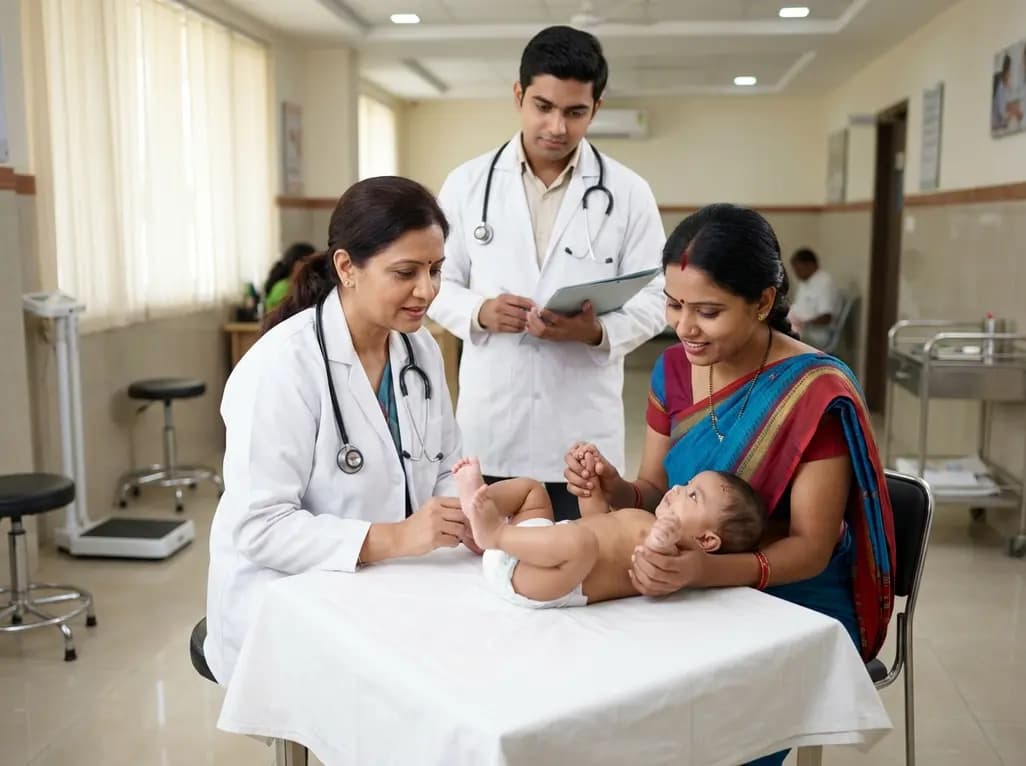
A recent study explores the critical link between preterm infant motor development and future socioemotional health. Specifically, researchers assessed the spontaneous movements of 106 preterm infants at an average corrected age of 14 weeks. Furthermore, the team followed these children until early school age to evaluate their social outcomes and self-esteem. Consequently, the findings show that atypical early movements predict lower social competence and self-esteem in later childhood. Additionally, childhood motor skills mediate this connection significantly. However, maternal emotional availability also plays a vital mediating role in these associations. Therefore, providing both motor and emotional support can improve a child's adjustment. Notably, these results highlight the importance of early developmental screenings. Thus, pediatricians should monitor both physical and emotional markers closely.
Early identification of movement quality serves as a powerful prognostic tool for clinicians. Furthermore, the study suggests that motor functioning in infancy serves as a foundation for broader psychological development. Consequently, children with poor infant movement often experience coordination difficulties in school. These motor challenges subsequently hinder social interactions with peers. Moreover, the findings demonstrate that maternal emotional availability acts as a buffer. Specifically, mothers who provide sensitive and non-intrusive care can improve social outcomes for high-risk children. Thus, clinicians should advocate for holistic intervention strategies. These strategies should address both the child's physical therapy needs and the mother's emotional support system. Therefore, early motor assessments should become a standard part of neonatal follow-up care.
Atypical movements often lead to poorer motor skills in school age. Consequently, children may struggle with physical play, which can lower their social confidence and peer acceptance.
Mothers who are emotionally available help mediate the link between infant movements and social competence. Their support provides a secure emotional base that encourages positive social behavior in the child.
Early screening identifies atypical spontaneous movements before major delays appear. Therefore, it allows for timely interventions that can improve both motor skills and long-term socioemotional health.
Disclaimer: This content is for informational and educational purposes only. It does not constitute professional medical advice, diagnosis, or treatment. Always seek the advice of your physician or other qualified healthcare provider with any questions you may have regarding a medical condition. Refer to the latest local and national guidelines for clinical practice.
References
Lev-Enacab O et al. Spontaneous movements of preterm-born infants predict social competence and self-esteem at early school age: The mediating role of motor skills and maternal emotional availability. Dev Psychol. 2026 Jun 01. doi: 10.1037/dev0002207. PMID: 42224003.
Spittle AJ, et al. Early developmental intervention programmes after hospital discharge for infants born preterm. Cochrane Database Syst Rev. 2015;11:CD005495.
Einspieler C, Prechtl HF. Prechtl's assessment of general movements: a diagnostic tool for the functional assessment of the young nervous system. Ment Retard Dev Disabil Res Rev. 2005;11(1):61-7.

Read summarized clinical updates, watch expert medical content, and earn CME certifications right from your smartphone.
Open your smartphone camera to scan and install.





A study shows that atypical infant movements in preterm babies predict lower social competence and self-esteem, mediated by motor skills and maternal suppor...
4 months ago

As monsoon seasons elevate arboviral disease threats, Tamil Nadu has initiated an ICMR-monitored evaluation of the tetravalent dengue vaccine in Tenkasi district. Clinicians emphasize clinical monitoring, public prevention, and high-quality early pediatric care to reduce disease morbidity across endemic regions.
Today

A comparative cohort study evaluates vNOTES vs TLH hysterectomy for benign conditions, demonstrating shorter operative duration, faster return to daily activities, and equivalent female sexual function scores without increased dyspareunia.
Today

Review how tailored exercise programs benefit frail older patients with heart failure. Explore pathophysiological mechanisms, individualized training prescriptions, and strategies to overcome adherence barriers in clinical practice.
Today

This comparative study evaluates posterior labral tears with and without glenohumeral instability, highlighting distinct demographic patterns, MRI underestimation in stable shoulders, and successful arthroscopic repair outcomes.
Today

A clinical study demonstrates that early intervention with tocilizumab, either as monotherapy or bridged with corticosteroids, achieves significant proptosis reduction and resolves active inflammation in treatment-naive thyroid eye disease.
Today
