.webp&w=384&q=75)

Loading, please wait...
Loading, please wait...

Anemia and iron deficiency are very common, and they impact patients, and also they increase surgical risks. These conditions cause bad outcomes, but clinicians often overlook them. This guide explains the diagnosis of preoperative anemia cardiac surgery candidates. Specifically, it follows a statement by the Inter-American Society of Cardiology. Consequently, it provides clear diagnostic steps, and it helps clinicians because it simplifies the process.
Anemia is dangerous because it causes kidney injury, and also it leads to long hospital stays. Therefore, doctors must screen patients early and thoroughly. If they find anemia, then they can give iron, and this helps because it saves blood. Furthermore, it helps the patient to recover, and it saves lives. Moreover, it reduces mortality, and it improves health, and also it is cost-effective. Consequently, early detection is a priority, and it is simple, and it is effective.
The threshold for anemia is a hemoglobin level of 13 g/dL, and this applies to both men and women. Additionally, doctors must measure iron levels. A ferritin level below 100 ng/mL means iron deficiency, or a TSAT below 20% indicates a functional deficiency. Since iron is essential, these tests are needed, and they are crucial for safety. Therefore, screening should happen early, and it should be routine.
So, every clinic should follow these rules, and then they can ensure safety. And, they follow the evidence, because health is the goal. So, screening is a priority, and it works well, and also it is simple. Consequently, early action is best, and it ensures safety, and it helps recovery. Because the evidence is clear, doctors must act now.
Iron deficiency is diagnosed using ferritin and TSAT. Specifically, a ferritin level under 100 ng/mL or a TSAT under 20% shows a deficiency that needs treatment.
The goal is a hemoglobin level of at least 13 g/dL. Because lower levels increase surgical risks, doctors must treat anemia several weeks before the procedure.
Disclaimer: This content is for informational and educational purposes only. It does not constitute medical advice or a professional relationship. Refer to the latest local and national guidelines for clinical practice.
References
García-Zamora S et al. [Position paper on the clinical impact of anemia and iron deficiency prior to cardiac surgery. Part 1: diagnosis]. Arch Cardiol Mex. 2026 May 19. doi: 10.24875/ACM.25000290. PMID: 42155122.
Muñoz M, et al. International consensus statement on the peri-operative management of anaemia and iron deficiency. Anaesthesia. 2017;72(2):233-247.
Musallam KM, et al. Preoperative anaemia and postoperative outcomes in non-cardiac surgery: a retrospective cohort study. Lancet. 2011;378(9800):1396-1407.

Read summarized clinical updates, watch expert medical content, and earn CME certifications right from your smartphone.
Open your smartphone camera to scan and install.





A summary of the Inter-American Society of Cardiology position statement on diagnosing preoperative anemia and iron deficiency in cardiac surgery patients....
5 months ago
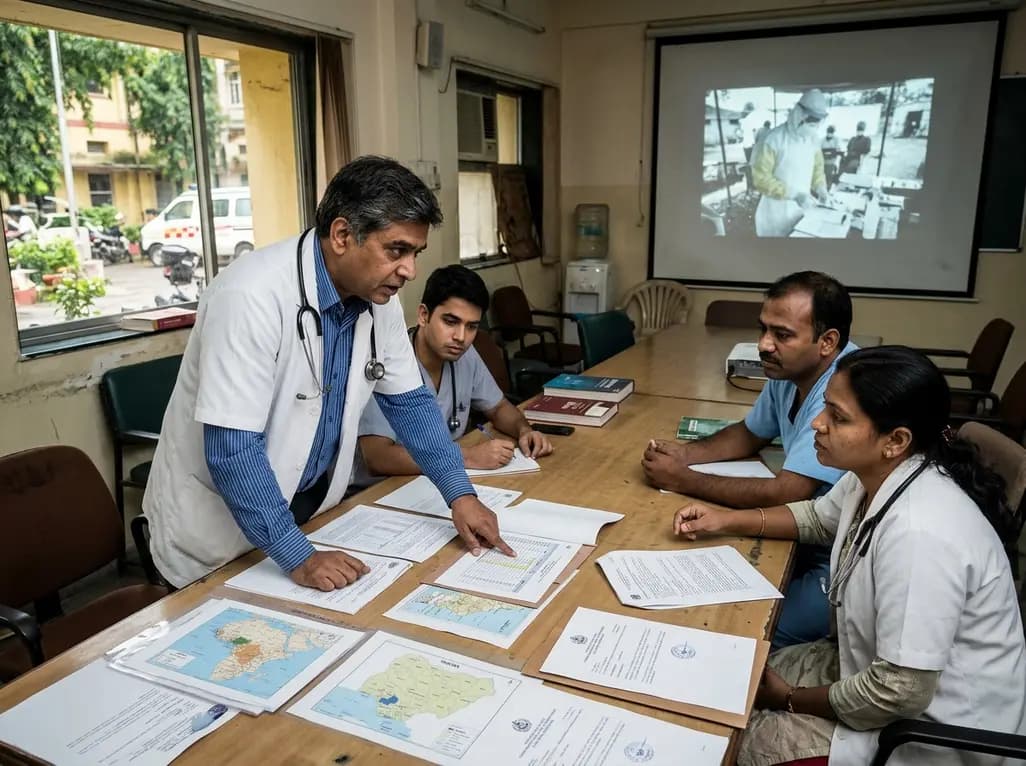
Following Nigeria's first recorded Ebola case linked to regional travel, the Africa CDC has convened an emergency ministerial summit. This alert underscores critical clinical priorities for healthcare professionals, including differentiating early viral infection from malaria, implementing barrier nursing, and triage.
Today

Leucine Rich Bio has introduced South Asia's first comprehensive vaginal microbiome test, BugSpeaks. By profiling microbial dysbiosis, pathogens, and antimicrobial resistance, this next-generation diagnostic platform provides clinicians with deeper insights into recurrent infections, fertility, and reproductive health.
Today

Review how tailored exercise programs benefit frail older patients with heart failure. Explore pathophysiological mechanisms, individualized training prescriptions, and strategies to overcome adherence barriers in clinical practice.
Today

This comparative study evaluates posterior labral tears with and without glenohumeral instability, highlighting distinct demographic patterns, MRI underestimation in stable shoulders, and successful arthroscopic repair outcomes.
Today

A clinical study demonstrates that early intervention with tocilizumab, either as monotherapy or bridged with corticosteroids, achieves significant proptosis reduction and resolves active inflammation in treatment-naive thyroid eye disease.
Today
