.webp&w=384&q=75)

Loading, please wait...
Loading, please wait...

Adverse pregnancy outcomes (APOs), including gestational diabetes and preeclampsia, remain major contributors to maternal morbidity worldwide. While clinical factors are standard predictors, most current models neglect broader social determinants. Therefore, a recently published study protocol introduces the Adverse Pregnancy Outcomes Population Risk Tool (PregPoRT). Specifically, this tool aims to accurately estimate adverse pregnancy outcome risk by leveraging nationally representative survey and administrative data. Consequently, it bridges the gap between clinical history and environmental influences.
In addition to clinical markers, PregPoRT incorporates a health equity-informed framework. Furthermore, the model analyzes biomedical, behavioral, and social variables alongside environmental data like air quality and neighborhood deprivation. In contrast to traditional tools, this comprehensive approach ensures that clinicians and health planners can identify populations at the highest risk. As a result, the tool supports more targeted and equitable health interventions. Similarly, recognizing these factors allows for a more holistic view of maternal well-being.
The development of PregPoRT involves a retrospective cohort of individuals from the Canadian Community Health Survey. Specifically, researchers utilize a Weibull accelerated failure time model to estimate risk. Moreover, the team employs the LASSO method for precise variable selection. Consequently, this methodology ensures high performance across discrimination and calibration metrics. Therefore, PregPoRT provides a robust foundation for future clinical applications in maternal health monitoring. Additionally, adopting such multi-factorial models in diverse regions like India could revolutionize prenatal care by identifying socially patterned risks.
PregPoRT focuses on a composite measure of major adverse pregnancy outcomes. These specifically include gestational diabetes, preeclampsia, and placental abruption, which researchers identified using validated clinical codes.
Most clinical scores rely on biological data from early pregnancy. In contrast, PregPoRT integrates social, behavioral, and environmental determinants of health that are often modifiable or socially patterned.
Disclaimer: This content is for informational and educational purposes only. It does not constitute medical advice or establish a doctor-patient relationship. Professional medical guidance should always be sought for specific health concerns. Refer to the latest local and national guidelines for clinical practice.
References
Chiodo S et al. A study protocol for a predictive model to assess population‑based risk of adverse pregnancy outcomes: The Adverse Pregnancy Outcomes Population Risk Tool (PregPoRT). Diagn Progn Res. 2026 Mar 03. doi: undefined. PMID: 41772741.
Alebel A et al. Development and validation of a risk score to predict adverse birth outcomes using maternal characteristics in northwest Ethiopia: a retrospective follow-up study. Front Med (Lausanne). 2024 Dec 17;11:1473215. doi: 10.3389/fmed.2024.1473215.
Leong Centre for Healthy Children. Predicting and preventing adverse pregnancy outcomes: Integrating clinical, social and environmental factors into population risk models. University of Toronto. Oct 2025.

Read summarized clinical updates, watch expert medical content, and earn CME certifications right from your smartphone.
Open your smartphone camera to scan and install.





PregPoRT is a new population-based tool that integrates social and environmental factors to estimate adverse pregnancy outcome risk for equitable health pla...
7 months ago

An ICMR study reveals that nearly 25% of tribal adults in Odisha suffer from renal decline. Driven by untreated hypertension, diabetes, and lifestyle risks, this hidden burden highlights the critical need for point-of-care diagnostics, proactive screening, and targeted non-communicable disease interventions.
Today

A study in Ultrasound in Obstetrics & Gynecology shows that quantitative vascularization of the anterior fornix/cervix with transvaginal ultrasound reliably identifies placenta accreta spectrum and predicts severe intraoperative hemorrhage, offering vital objective risk stratification.
Today
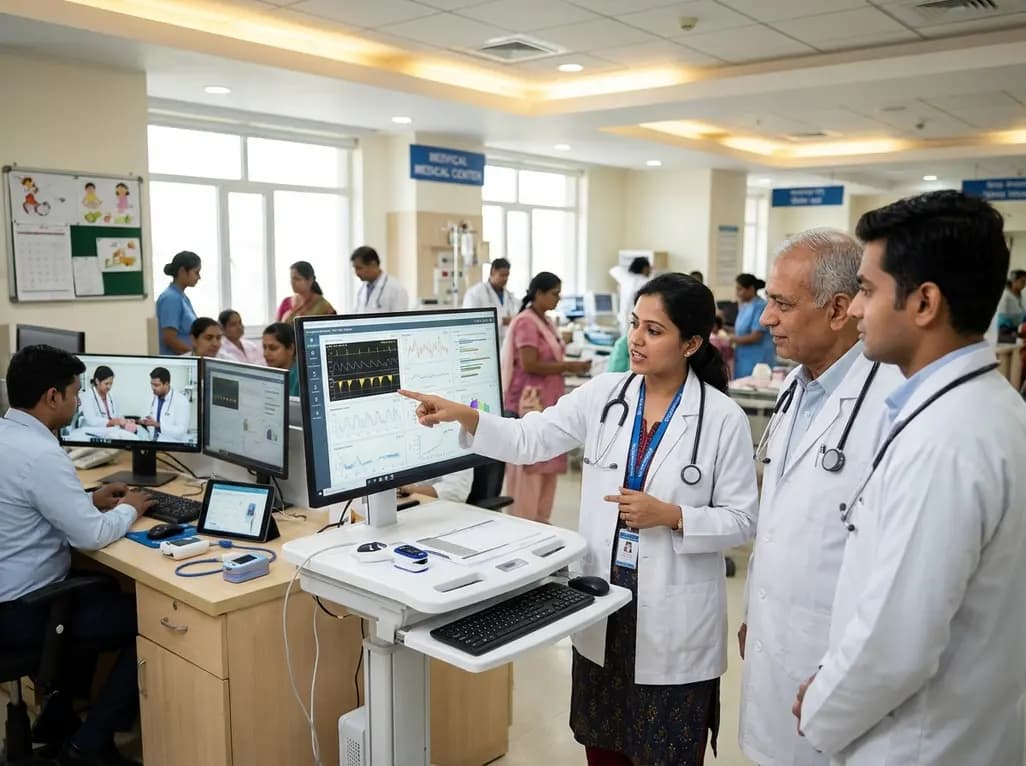
A landmark study details how an enterprise pediatric remote patient management model expanded from a single cardiology pilot to 16 diverse specialty programs by combining centralized digital operations with specialty clinical leadership.
Yesterday

Peripheral nerve injuries present clinical challenges due to regenerative mismatches between sensory and motor neurons. This review explores cutting-edge tissue-engineered nerve grafts designed as central-peripheral signal relays to overcome denervation atrophy and restore functional motor-sensory recovery.
Today
Protein O-GlcNAcylation couples cellular nutrient status to vital neuronal functions. This review explores how disrupted O-GlcNAc cycling drives both neurodevelopmental delays and neurodegenerative cascades, positioning metabolic post-translational modifications as therapeutic targets in clinical neurology.
Today
