

Loading, please wait...
Loading, please wait...

Intensive care bed utilization represents a persistent clinical and financial challenge across neurosurgical departments globally. Timely prediction of safe ICU discharge after craniotomy remains crucial for optimizing bed sources, reducing hospitalization expenditures, and preventing adverse events. Neurosurgical patients routinely occupy intensive care beds for extended postoperative surveillance. However, beds often remain occupied longer than strictly necessary due to subjective readiness criteria. Consequently, unexpected delays hinder surgical elective admissions and increase overall morbidity.
To address this clinical bottleneck, investigators recently designed an advanced predictive artificial intelligence framework. They leveraged massive real-world data from the Medical Information Mart for Intensive Care database. By analyzing comprehensive demographic, clinical, laboratory, and radiological parameters, clinicians can now objectively anticipate patient stability within a crucial twenty-four-hour window. This retrospective cohort evaluated 2,742 post-craniotomy patients to determine whether predictive algorithms could streamline patient triage. Ultimately, identifying early recovery readiness improves hospital throughput and safeguards patient outcomes.
The investigators extracted comprehensive records of 2,742 craniotomy patients identified through diagnosis-related groups and International Classification of Diseases coding. The patient cohort exhibited a mean age of 58.2 years, with male patients constituting 53.4 percent. Overall, these individuals accounted for 15,645 intensive care bed days, reflecting a mean ICU length of stay of 4.7 days. Furthermore, their cumulative hospital stay totaled 32,008 days, averaging 10.8 days per admission.
Data preprocessing addressed several complex challenges inherent in real-world electronic health records. Notably, researchers systematically converted unstructured, textual clinical examinations into structured numerical scales to preserve valuable clinical granularity. Subsequently, the research team partitioned the cohort into a training set comprising 70 percent, a validation set of 15 percent, and an independent test set of 15 percent. They trained four distinct predictive algorithms: multivariable logistic regression, decision trees, random forests, and deep neural networks using Python and R environments.
The comparative evaluation revealed notable differences among the four computational paradigms when predicting next-day discharge readiness. Specifically, the random forest algorithm demonstrated the highest overall discriminative performance on the independent test dataset. This model achieved an impressive area under the receiver operating characteristic curve of 0.831, paired with an average precision of 0.561. In addition, the random forest model secured an overall diagnostic accuracy of 0.827 and an F1 score of 0.339.
Meanwhile, the deep neural network delivered similarly robust results, generating an AUC of 0.824 alongside an average precision of 0.558 and an accuracy of 0.830. Traditional multivariable logistic regression performed admirably as well, producing an AUC of 0.821 and an accuracy of 0.829. Conversely, the decision tree model showed the lowest predictive performance across the board, finishing with an AUC of 0.813. These findings confirm that non-linear ensemble architectures capture complex physiological interactions far better than conventional single trees.
Predictive algorithms require clear physiological anchors to gain acceptance among bedside intensivists and neurosurgeons. Through Shapley Additive Explanations analysis, the researchers identified the primary physiological parameters driving model outputs. Unsurprisingly, the post-craniotomy Glasgow Coma Scale score emerged as an indispensable determinant of recovery readiness. Patients who regained verbal fluency, motor compliance, and spontaneous eye opening demonstrated a markedly higher probability of prompt discharge.
Furthermore, respiratory dynamics played an equally crucial role in determining successful disposition. Parameters such as spontaneous tidal volume and quantified respiratory effort heavily influenced algorithmic decisions. Additionally, elevated intracranial pressure readings immediately signaled prolonged critical care requirements. Arterial blood gas markers, particularly arterial pH, provided rapid insight into systemic metabolic homeostasis. Finally, neurological alertness quantified via the Richmond Agitation-Sedation Scale proved essential, as calm and responsive individuals swiftly met safe transfer criteria.
Historically, artificial intelligence algorithms faced intense skepticism in acute neurocritical environments due to the opaque black-box phenomenon. Clinicians rightfully hesitate to trust uninterpretable machine learning calculations when patient survival is at stake. However, the integration of Shapley Additive Explanations directly addresses this barrier by providing individual-level explainability for every single prediction. SHAP calculates the exact positive or negative contribution of each variable toward the final discharge probability.
Consequently, intensivists can instantly inspect which specific physiological factors contributed to a patient's projected readiness score. If an algorithm flags a patient as unready for discharge, the attending team can rapidly examine the underlying drivers. For instance, the system might highlight borderline arterial pH or fluctuating intracranial pressure spikes. Thus, clinicians can direct targeted therapeutic interventions to correct those specific deficits before re-evaluating the patient. By bridging computational precision with transparent pathophysiology, explainable machine learning models foster clinical trust.
Implementing validated predictive models carries profound organizational and economic advantages for healthcare institutions worldwide. Critical care beds represent the most resource-intensive infrastructure within any tertiary hospital setting. Unplanned craniotomy delays often occur when surgical teams cannot secure post-procedure intensive care placement. Therefore, accurately forecasting ICU discharge within twenty-four hours enables administrators to optimize operating room schedules and transfer workflows.
Additionally, early and safe de-escalation from the intensive care unit protects recovering neurosurgical patients from hospital-acquired complications. Prolonged ICU stays elevate the baseline risk of catheter-associated infections, delirium, ventilator-associated pneumonia, and resistant pathogen colonization. By transitioning stable craniotomy patients promptly to neurosurgical step-down floors, clinical teams minimize these preventable nosocomial hazards. Furthermore, structured data conversion demonstrates that electronic health records can reliably power real-time predictive dashboards. Ultimately, combining data-driven precision with clinical expertise creates an efficient neurosurgical care paradigm.
Machine learning evaluates multi-parameter clinical, laboratory, and radiological data simultaneously. By identifying subtle physiological interactions that human clinicians might overlook, models accurately forecast patient stability within twenty-four hours. This allows timely step-down transfers, avoids unnecessary ICU occupancy, minimizes nosocomial infection risks, and optimizes surgical bed scheduling.
Shapley Additive Explanations analysis identifies the Glasgow Coma Scale, intracranial pressure, and arterial pH as primary predictors. Furthermore, respiratory dynamics including tidal volume, patient ventilatory effort, and sedation levels measured by the Richmond Agitation-Sedation Scale significantly guide algorithmic predictions regarding neurosurgical recovery and readiness for extubation or transfer.
Explainability tools like SHAP demystify complex neural networks and random forests by detailing how each physiological variable influences predictions. Intensivists require transparent clinical reasoning to safely trust automated outputs. Understanding specific risk factors enables clinicians to deliver targeted medical interventions rather than relying blindly on opaque algorithmic forecasts.
Disclaimer: This content is for informational and educational purposes only and should not be considered as medical advice or a substitute for professional clinical judgment. Always seek the advice of a qualified healthcare provider regarding any medical condition or treatment options. The views expressed are based on recent medical literature, but healthcare practices can vary widely. Refer to the latest local and national guidelines for clinical practice.
References

Read summarized clinical updates, watch expert medical content, and earn CME certifications right from your smartphone.
Open your smartphone camera to scan and install.





A big data study evaluating machine learning models reveals that random forest algorithms and neural networks accurately predict 24-hour ICU discharge after craniotomy. Key physiological drivers include Glasgow Coma Scale, intracranial pressure, arterial pH, and mechanical ventilation parameters.
Today
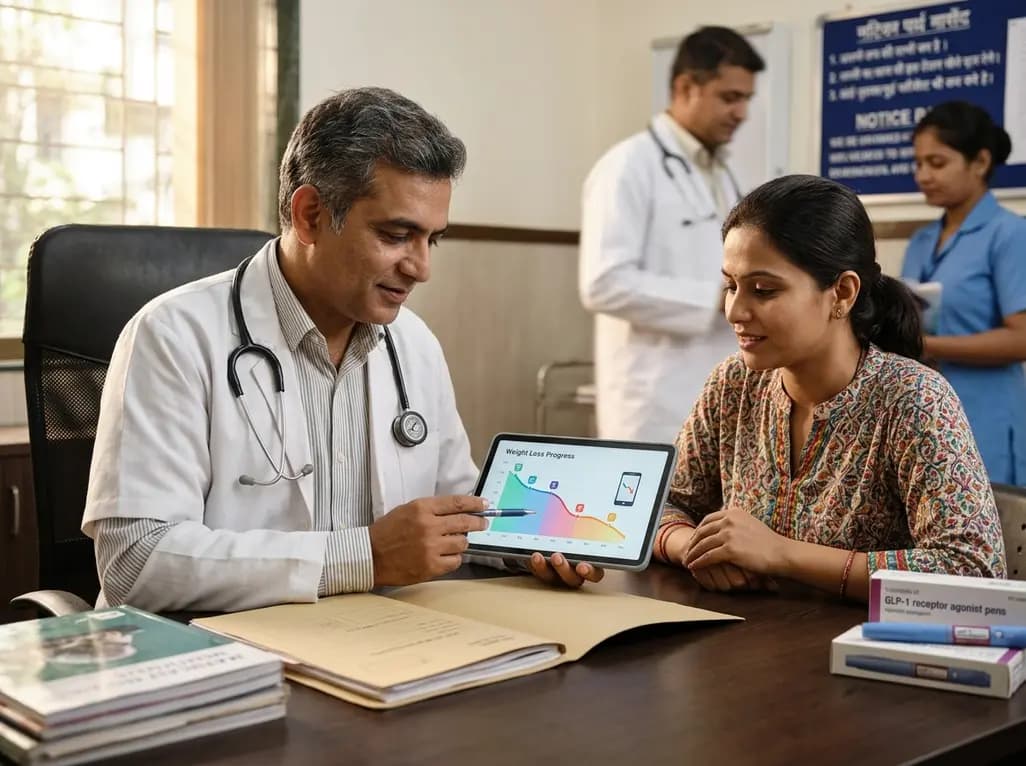
A retrospective study of 6,113 adults shows that combining GLP-1 receptor agonists with digital health apps nearly doubles the odds of achieving significant weight loss. Frequent progress logging serves as a primary behavioral driver of long-term metabolic success.
Today

Sexual dysfunction affects a high proportion of reproductive-age females with multiple sclerosis. This comprehensive review highlights multi-tier etiologies, proactive clinical screening tools, preconception counseling considerations, and integrated therapeutic options across multidisciplinary care pathways.
Today

Researchers have engineered an innovative CRISPR-Cas12a fluorescent diagnostic kit for clinical sST2 detection. By combining nanotechnology with enzymatic trans-cleavage, this platform enables rapid, ultrasensitive heart failure diagnosis and risk stratification, outperforming conventional laboratory ELISA methods.
Today

Non-union fractures occur in 2-5% of cases, causing significant disability and cost. Conservative modalities such as LIPUS, PEMF, and focused ESWT offer non-surgical healing options for defects up to 5-10 mm when adequate mechanical stability exists without infection.
Today

India is poised to transform chronic disease management through wearable health technology. Discover how continuous remote monitoring and predictive algorithms empower clinicians to detect early cardiovascular signals, personalize metabolic interventions, and deliver equitable preventive care across populations.
Yesterday
