.webp&w=384&q=75)

Loading, please wait...
Loading, please wait...

Researchers recently developed a sophisticated deep survival model for predicting cognitive impairment risk in adults who currently show no symptoms. This innovative study utilized data from 1,415 cognitively normal participants to identify individuals likely to develop Alzheimer's disease years before clinical onset. Consequently, this breakthrough could transform how clinicians approach early intervention and clinical trial recruitment. By identifying high-risk individuals early, healthcare providers can implement strategies to modify disease progression effectively.
The research team analyzed baseline clinical measures and magnetic resonance imaging (MRI) scans. By using deep learning, they successfully estimated the probability of conversion to cognitive impairment over a span of up to 22 years. Notably, the model achieved a c-index of 0.88 and an AUC ROC of 0.89. Furthermore, it outperformed previous machine learning iterations in identifying preclinical Alzheimer's disease. This high level of precision allows for a more reliable assessment of a patient's long-term neurological health.
The findings suggest that much of the uncertainty in risk estimation stems from modifiable lifestyle factors. Therefore, clinicians can use these insights to tailor preventative strategies for high-risk patients. Because the model identifies subtle changes early, it offers a vital window for disease-modifying therapies. Additionally, this approach helps refine the selection process for clinical trials. This ensures that the right participants receive experimental treatments when they are most likely to benefit. The study underscores the importance of integrating advanced AI tools into routine geriatric and neurological care.
The model demonstrates high predictive power with a c-index of 0.88 and an AUC ROC of 0.89, which is significantly better than earlier machine learning models.
Yes, the study indicates that uncertainty in risk estimation often relates to modifiable lifestyle factors, suggesting that early interventions could potentially lower overall risk.
Disclaimer: This content is for informational and educational purposes only and does not constitute medical advice or a professional relationship. While we strive for accuracy, the field of medicine is constantly evolving. Refer to the latest local and national guidelines for clinical practice.
References
Imms P et al. Deep survival modelling to predict future cognitive impairment in unimpaired adults. J Gerontol A Biol Sci Med Sci. 2026 Mar 17. doi: undefined. PMID: 41844537.
Thurston A. New AI Program from BU Researchers Could Predict Likelihood of Alzheimer's Disease. bu.edu. June 25, 2024.
Alzra. AI May Predict Alzheimer's up to Seven Years Before Symptoms Manifest. alzra.org. March 28, 2024.

Read summarized clinical updates, watch expert medical content, and earn CME certifications right from your smartphone.
Open your smartphone camera to scan and install.





A deep survival model predicts cognitive impairment risk in healthy adults with 89% AUC, enabling early Alzheimer's intervention up to 22 years in advance....
7 months ago

A breakthrough ultrathin multimodal sensor decouples physical hemodynamic monitoring from disposable electrochemical calibration, achieving long-term wearable glucose prediction with 81.36% accuracy and a 9.12% MARD. This offers a robust, drift-free solution for outpatient metabolic surveillance.
Today

Demanding exhaustive hormonal profiling can inadvertently discourage clinical studies involving females. Methodological standards must align with the specific scientific question to expand, not restrict, equitable evidence for women.
Today

Co-administering antiseizure medications and DOACs frequently causes pharmacokinetic interactions, subtherapeutic drug levels, and thromboembolic failures. This review highlights enzyme induction risks, unpredictable outcomes with levetiracetam, and the vital role of therapeutic drug monitoring.
Today
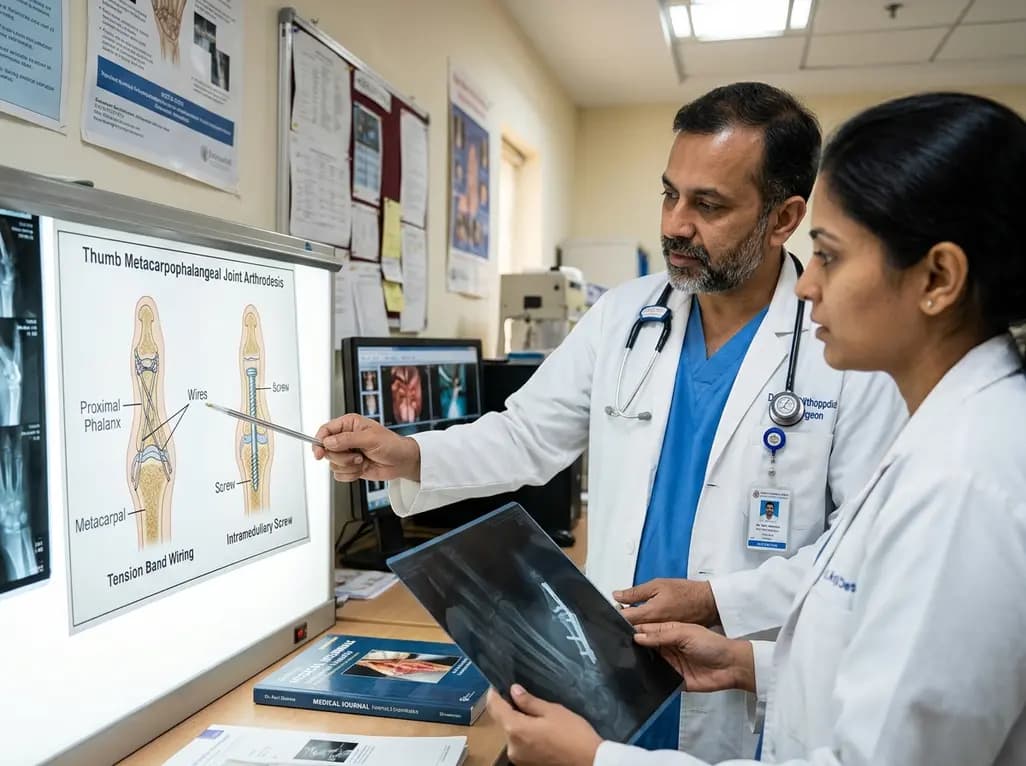
A comparative review of tension band wiring and intramedullary screw fixation in thumb metacarpophalangeal arthrodesis, evaluating union rates, hardware complications, and clinical outcomes.
Today

Following regulatory scrutiny from FSSAI regarding promotional representations and lean muscle preservation claims, Dr. Reddy's Laboratories and Nestlé Health Science are currently reviewing the branding and marketing strategy for their joint nutritional supplement Celevida GLP+.
Today
