.webp&w=384&q=75)

Loading, please wait...
Loading, please wait...

Posterior vault distraction osteogenesis (PVDO) has emerged as a transformative surgical intervention for patients with complex craniofacial conditions. Specifically, it addresses the challenges of nonsyndromic sagittal craniosynostosis, particularly when complicated by slit ventricle syndrome (SVS). This condition often leads to elevated intracranial pressure and frequent shunt-related complications. Therefore, increasing intracranial volume becomes a primary therapeutic goal to improve patient outcomes and stabilize neurological health.
Researchers recently conducted a case series to evaluate the volumetric changes following this procedure. Initially, patients with SVS presented with an average lateral ventricular volume of only 2.10 cm³. In contrast, age and sex-matched controls exhibited much larger volumes, averaging 8.21 cm³. However, the application of posterior vault distraction osteogenesis led to a significant expansion of the internal cranial environment. Following the distraction phase, the lateral ventricular volume in SVS patients increased to an average of 6.11 cm³. Meanwhile, the control group remained relatively stable with only a slight increase. Consequently, these findings suggest that PVDO provides a physical environment that allows the ventricles to expand toward normal dimensions.
The success of this technique highlights the role of advanced imaging in surgical planning. For instance, clinicians used specialized software to track precise volumetric changes on CT scans. This data is crucial because it helps predict long-term stability and the potential reduction in shunt revisions. Furthermore, the procedure effectively lowers intracranial pressure by expanding the cranial vault. As a result, patients may experience fewer symptoms associated with cephalocranial disproportion. Although the sample size in this series was small, the results offer a compelling foundation for future large-scale studies. Surgeons now have more evidence to support PVDO as a viable strategy for managing concurrent craniosynostosis and SVS.
The procedure expands the total volume of the skull. This expansion reduces the external pressure on the brain tissue, which allows the previously compressed lateral ventricles to expand and hold more cerebrospinal fluid.
Slit ventricle syndrome is challenging because the ventricles are so small that shunt catheters often become blocked. Additionally, the lack of cranial compliance means even small changes in fluid volume can cause significant spikes in intracranial pressure.
Advanced 3D imaging and volumetric software allow surgeons to measure precise changes in brain and ventricle size. This helps in assessing the success of the distraction process and planning the next steps in the patient's care.
Disclaimer: This content is for informational and educational purposes only. It is not intended as a substitute for professional medical advice, diagnosis, or treatment. Always seek the advice of your physician or other qualified health provider with any questions you may have regarding a medical condition. Refer to the latest local and national guidelines for clinical practice.
References
Velazquez A et al. Analysis of Lateral Ventricular Volume Changes in Patients With Nonsyndromic Sagittal Craniosynostosis and Slit Ventricle Syndrome Following Posterior Vault Distraction. J Craniofac Surg. 2026 Mar 30. doi: 10.1097/SCS.0000000000012663. PMID: 41911586.
White N, et al. Posterior cranial vault expansion: distraction osteogenesis versus conventional techniques. J Craniofac Surg. 2009;20(4):1159-1164.
Greives MR, et al. Posterior vault distraction osteogenesis: a single-institution experience. J Craniofac Surg. 2011;22(6):2045-2049.
"
Read summarized clinical updates, watch expert medical content, and earn CME certifications right from your smartphone.
Open your smartphone camera to scan and install.





A recent case series explores how posterior vault distraction osteogenesis (PVDO) significantly increases lateral ventricular volume in patients with SVS....
6 months ago

A landmark 12-year longitudinal study highlights significant reductions in opioid prescribing for nonspecific low back pain following clinical guidelines and prescription monitoring systems, emphasizing non-opioid multimodal pain care.
Today

A study in Ultrasound in Obstetrics & Gynecology shows that quantitative vascularization of the anterior fornix/cervix with transvaginal ultrasound reliably identifies placenta accreta spectrum and predicts severe intraoperative hemorrhage, offering vital objective risk stratification.
Today
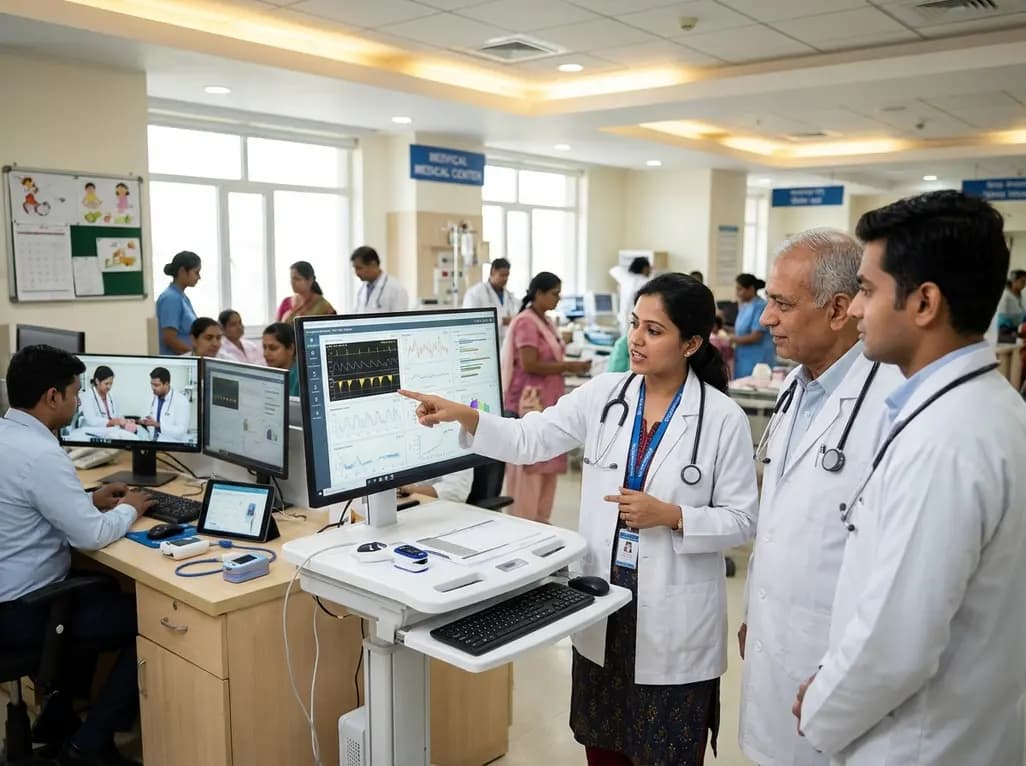
A landmark study details how an enterprise pediatric remote patient management model expanded from a single cardiology pilot to 16 diverse specialty programs by combining centralized digital operations with specialty clinical leadership.
Yesterday
A breakthrough study shows that 3D-planned corrective osteotomy successfully resolves distal radioulnar joint instability in pediatric diaphyseal forearm malunions. The precise osseous realignment eliminates chronic wrist pain and restores joint function without requiring secondary soft-tissue reconstruction.
Today

Protein O-GlcNAcylation couples cellular nutrient status to vital neuronal functions. This review explores how disrupted O-GlcNAc cycling drives both neurodevelopmental delays and neurodegenerative cascades, positioning metabolic post-translational modifications as therapeutic targets in clinical neurology.
Today
