

Loading, please wait...
Loading, please wait...

Neurogenic lower urinary tract dysfunction presents significant management dilemmas in neuro-rehabilitation. Specifically, posterior tibial nerve stimulation has emerged as a promising adjunctive modality to mitigate refractory lower urinary tract symptoms. Individuals recovering from incomplete spinal cord injuries frequently experience disruptive storage symptoms that resist standard antimuscarinic pharmacotherapy. Consequently, clinicians must identify effective combination strategies that optimize bladder compliance and prevent renal deterioration without introducing severe systemic adverse effects.
Incomplete spinal cord lesions interrupt descending supraspinal inhibitory pathways that govern normal micturition. Consequently, the isolated sacral cord develops autonomous reflex pathways that trigger involuntary detrusor contractions during bladder filling. Urologists classify this pathological condition as neurogenic detrusor overactivity. This dysfunction generates elevated intravesical storage pressures and causes frequent urinary incontinence. In addition, persistent uninhibited contractions disrupt sleep, increase infection risks, and impair daily functioning. Furthermore, sustained high pressures threaten the upper tract, occasionally causing hydronephrosis and progressive renal damage. Standard medical therapy relies primarily on oral antimuscarinics to suppress involuntary detrusor contractions. However, pharmacological monotherapy often yields incomplete symptom resolution. Moreover, many patients cannot tolerate dose escalation due to severe xerostomia, constipation, blurred vision, and cognitive disturbances. Therefore, multidisciplinary rehabilitation teams actively investigate non-invasive neuromodulatory solutions that augment pharmacological efficacy. Identifying well-tolerated combination therapies remains essential for optimizing independence and improving long-term outcomes in spinal cord injury survivors.
Posterior tibial nerve stimulation delivers electrical neuromodulation to the sacral micturition center via accessible peripheral pathways. Anatomically, the posterior tibial nerve contains mixed sensory and motor fibers originating from the L4 through S3 spinal roots. Notably, these spinal roots directly share segmental origin with the parasympathetic and somatic innervation of the lower urinary tract. When surface electrodes deliver low-frequency currents near the medial malleolus, afferent signals travel retrogradely toward the spinal cord. Consequently, these ascending impulses stimulate inhibitory interneurons within the sacral dorsal horn. This neuromodulation dampens aberrant parasympathetic preganglionic efferent drive to the detrusor muscle. In addition, peripheral nerve stimulation suppresses hyperexcitable visceral C-fiber bladder afferents that trigger detrusor hyperactivity. Furthermore, neuroimaging investigations demonstrate that chronic peripheral stimulation modulates supraspinal micturition centers within the brainstem and cerebral cortex. Therefore, this non-invasive approach modifies abnormal reflex arcs through physiological neuromodulation rather than systemic biochemical blockade. As a result, clinicians achieve additive therapeutic efficacy alongside oral antimuscarinic medications without aggravating pharmacological toxicity.
To evaluate this therapeutic combination, researchers conducted a prospective clinical trial in the physical medicine and rehabilitation department of a tertiary medical center. The investigators enrolled twenty-nine adults with persistent neurogenic detrusor overactivity from incomplete spinal cord trauma. Notably, all participants were already taking prescribed antimuscarinic agents yet continued to experience distressing urinary incontinence. The protocol administered fifteen sessions of transcutaneous posterior tibial nerve stimulation. Furthermore, during each fifteen-minute session, clinical staff placed surface electrodes over the posterior tibial nerve posterior to the medial malleolus. The stimulation device delivered electrical pulses at a fixed frequency of 20 Hertz with a pulse duration of 200 microseconds. Meanwhile, operators adjusted current intensity between 10 and 40 milliamperes according to individual sensory and motor tolerance. Before starting therapy, clinicians performed baseline multichannel cystometry to document storage parameters. Following fifteen sessions, investigators repeated cystometry under identical filling parameters. Consequently, this rigorous design permitted precise quantification of improvements attributable directly to adjunctive stimulation.
The study demonstrated significant physiological benefits across primary urodynamic parameters. The cohort had a mean age of 44.5 years, representing adults navigating active vocational and social rehabilitation. Following the fifteen sessions, repeat cystometry revealed substantial detrusor stabilization during bladder filling. Most notably, the reflex volume increased significantly, showing an average improvement of 111 milliliters over baseline measurements. Consequently, patients retained substantially larger bladder volumes before experiencing an involuntary detrusor contraction. Furthermore, the urodynamic evaluations confirmed significant gains in maximal cystometric bladder capacity and improved compliance. Concurrently, maximal detrusor storage pressures decreased, reducing mechanical stress against the bladder wall. These favorable urodynamic adjustments directly diminished daily incontinence episodes and reduced pad requirements. In addition, patients tolerated transcutaneous stimulation without treatment interruptions. Nobody experienced skin irritation, burns, sensory neuropathy, or autonomic dysreflexia. Therefore, adding transcutaneous electrical stimulation provides safe, tangible physiological enhancement for spinal cord injury patients who maintain incomplete responses to oral antimuscarinic monotherapy.
These prospective findings hold practical relevance for rehabilitation physicians, neurologists, and urologists managing spinal trauma. Preserving renal health and restoring social continence remain foundational goals throughout neuro-rehabilitation. While intradetrusor botulinum toxin injections or surgical bladder augmentation offer potent options, they introduce risks of retention and procedural morbidity. In contrast, transcutaneous tibial neuromodulation offers an accessible, non-invasive, and cost-effective clinical alternative. Healthcare teams can easily administer this protocol within outpatient physiotherapy units or structured rehabilitation clinics. Moreover, combining peripheral electrical stimulation with oral antimuscarinic drugs helps clinicians avoid aggressive pharmacological dose escalation. Thus, patients avoid debilitating anticholinergic side effects such as severe dry mouth and constipation. As a result, treatment adherence improves over extended periods of outpatient management. Clinicians should evaluate adjunctive neuromodulation for incomplete spinal cord injury patients who maintain suboptimal responses to pharmacotherapy. By adopting multimodal management pathways early, neuro-urology teams can prevent secondary urinary complications, foster personal independence, and substantially enrich overall quality of life.
Current clinical evidence indicates that posterior tibial nerve stimulation acts primarily as an effective adjunctive therapy rather than a complete substitute for antimuscarinics in neurogenic detrusor overactivity. While neuromodulation significantly improves reflex volume and bladder capacity, combining it with oral medications provides synergistic suppression of detrusor contractions. Consequently, this combination allows clinicians to lower pharmacological doses, minimizing uncomfortable anticholinergic side effects while preserving optimal lower urinary tract control.
The most prominent urodynamic improvement following posterior tibial nerve stimulation is the significant increase in reflex volume, which denotes the bladder volume at the first involuntary detrusor contraction. Furthermore, patients demonstrate marked improvements in maximum cystometric bladder capacity and overall bladder compliance. Concurrently, clinicians observe notable reductions in peak detrusor storage pressures. Together, these physiological shifts protect the upper urinary tract from high pressures and substantially reduce urinary incontinence.
Transcutaneous tibial nerve stimulation demonstrates an exceptional safety profile in individuals with incomplete spinal cord injury. Because clinicians apply non-invasive surface electrodes rather than percutaneous needles, the procedure avoids painful tissue penetration, bleeding, and infection risks. Furthermore, documented clinical trials report negligible adverse events, with no occurrences of treatment-limiting pain or autonomic dysreflexia. Consequently, patients tolerate the standard fifteen-session protocol exceptionally well across diverse neuro-rehabilitation and clinical outpatient settings.
Disclaimer: This content is for informational and educational purposes only... Refer to the latest local and national guidelines for clinical practice.
References

Read summarized clinical updates, watch expert medical content, and earn CME certifications right from your smartphone.
Open your smartphone camera to scan and install.





A prospective study demonstrates that transcutaneous posterior tibial nerve stimulation provides significant short-term additive benefits in reflex volume and bladder capacity for incomplete spinal cord injury patients on antimuscarinics.
Today
Ambient digital scribes promise effortless medical documentation, but a critical sociotechnical commentary reveals that AI alters rather than eliminates charting work. Discover how shifting cognitive burdens, oversight risks, and workflow redesign impact clinical safety and healthcare practice.
Today

A new comparative study demonstrates that intraoperative imprint cytology achieves 96.6% diagnostic accuracy in ovarian tumours, outperforming frozen section in sensitivity for borderline lesions and offering an accessible, rapid alternative for resource-constrained surgical centres.
Today

Thoracic aortic aneurysm lacks etiologic medical therapy. A new study reveals that targeting specific αV integrins with Cilengitide attenuates TGF-β and mechanotransduction pathways, effectively limiting pro-fibrotic remodeling and aortic bulb dilation in both syndromic and sporadic disease models.
Today
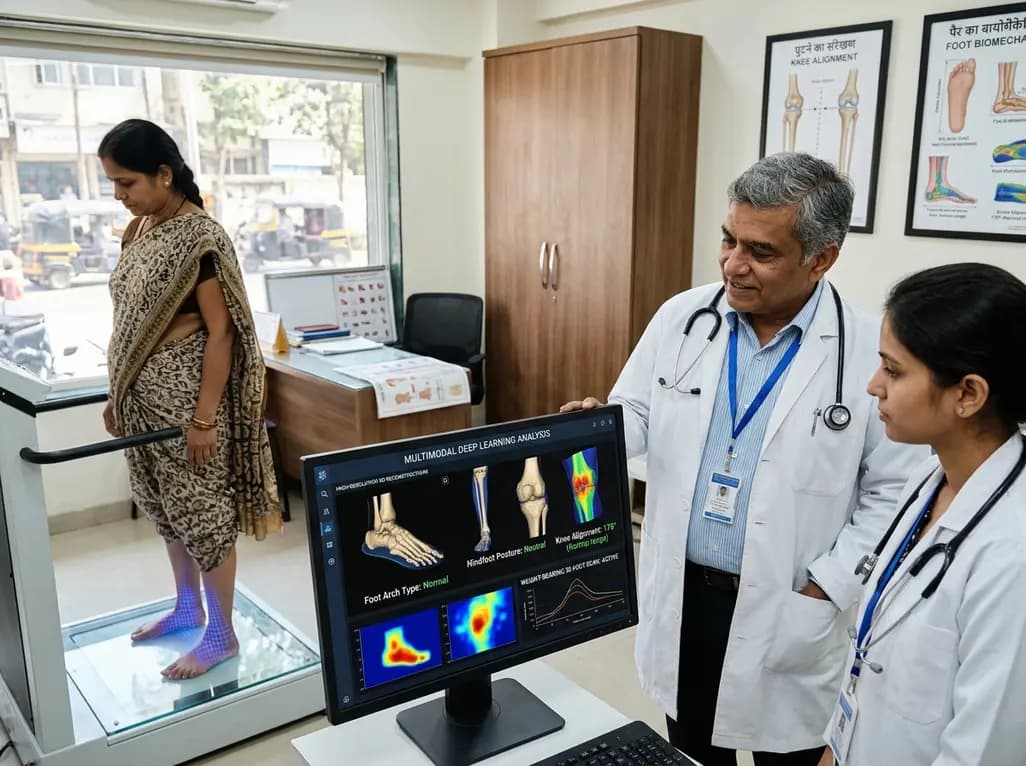
A multimodal deep learning framework utilizing weight-bearing 3D foot scans accurately screens lower-limb alignment, including arch type, hindfoot posture, and knee alignment, offering an accessible, radiation-free alternative to radiography for early biomechanical triage.
Today

A real-world retrospective study demonstrates that combining intravitreal ranibizumab with focal/grid macular laser significantly improves visual acuity and central macular thickness compared to laser monotherapy in patients with center-involved diabetic macular edema.
Today
