.webp&w=384&q=75)

Loading, please wait...
Loading, please wait...

Alcohol-induced gastric damage remains a significant clinical challenge for healthcare providers globally. Recent scientific breakthroughs suggest that a novel alcoholic gastric ulcer treatment using Lactobacillus rhamnosus JM023 postbiotics could transform patient care. Conventional synthetic drugs often struggle with low bioavailability and high gastrointestinal toxicity. Consequently, researchers have engineered a sodium alginate-based hydrogel to overcome these pharmaceutical barriers.
This composite hydrogel functions as a microenvironment-responsive delivery system. Notably, the material maintains more than 95% of its mass during simulated digestion. Therefore, it ensures the targeted release of postbiotics directly to the gastric mucosa. The hydrogel significantly reduces the ulcerated area while suppressing active bleeding. Furthermore, it enhances antioxidant enzymes like SOD and CAT. This process effectively neutralizes reactive oxygen species that cause tissue destruction.
Beyond local protection, the hydrogel modulates critical intracellular signaling pathways. Specifically, it downregulates pro-inflammatory cytokines like TNF-α and IL-6 through the NF-κB and Nrf2/HO-1 axes. In addition to these anti-inflammatory effects, the treatment restores gut microbiota homeostasis. It promotes the growth of beneficial genera such as Allobaculum and Lactobacillus. This dual-targeted approach addresses both local injury and systemic microbial health.
Postbiotics offer several advantages over live probiotics, including improved shelf-life and safety profiles. In this study, the JM023 strain demonstrated exceptional biocompatibility. Since the hydrogel exhibits a very low hemolysis rate, it remains safe for systemic use. Ultimately, this research provides a robust framework for developing advanced biomaterials to treat alcohol-induced mucosal injuries.
The hydrogel acts as a physical barrier and a bioactive delivery system. It releases postbiotics that boost antioxidant levels and lower inflammation, which directly repairs the gastric lining.
Sodium alginate provides excellent mechanical stability and slow degradation. These properties allow the treatment to persist in the harsh gastric environment, ensuring the therapeutic agents reach the ulcer site effectively.
Disclaimer: This content is for informational and educational purposes only. It does not constitute medical advice or a professional recommendation. The information provided should not be used to diagnose or treat a health problem or disease. Refer to the latest local and national guidelines for clinical practice.
References
Li Y et al. Lactobacillus rhamnosus JM023 Postbiotic-Loaded Sodium Alginate Hydrogel for Alleviating Alcoholic Gastric Ulcers. Adv Healthc Mater. 2026 May 10. doi: 10.1002/adhm.71236. PMID: 42106931.
Wu Y et al. Lactobacillus plantarum ZS62 Alleviates Alcohol-Induced Gastric Injury in Mice via an Anti-Oxidative Mechanism. Drug Des Devel Ther. 2021;15:1667-1676.
Lam EKW et al. Probiotic Lactobacillus rhamnosus GG enhances gastric ulcer healing in rats. Eur J Pharmacol. 2007;565(1-3):166-174.

Read summarized clinical updates, watch expert medical content, and earn CME certifications right from your smartphone.
Open your smartphone camera to scan and install.





A new study demonstrates that a postbiotic-loaded hydrogel effectively treats alcoholic gastric ulcers while restoring gut microbiota balance and homeostasi...
4 months ago

Agitation complicates neurorehabilitation and challenges clinical staff. A structured quality improvement initiative demonstrates that validated scales, clinical decision trees, and multidisciplinary education significantly enhance provider confidence and optimize patient safety during inpatient recovery.
Today

A global knowledge summary from the World Health Organization warns that tobacco smoking significantly increases infertility risks in women and causes substantial sperm and erectile dysfunction in men. Fortunately, quitting smoking substantially lowers these risks, providing clear reproductive benefits.
Today

Emerging evidence shows that even dim night-time light exposure alters cardiac geometry and weakens contractility. In a landmark cohort study, nocturnal light above 3 lux triggered concentric left ventricular hypertrophy and subclinical dysfunction, highlighting nocturnal illumination as a modifiable cardiac risk factor.
Today
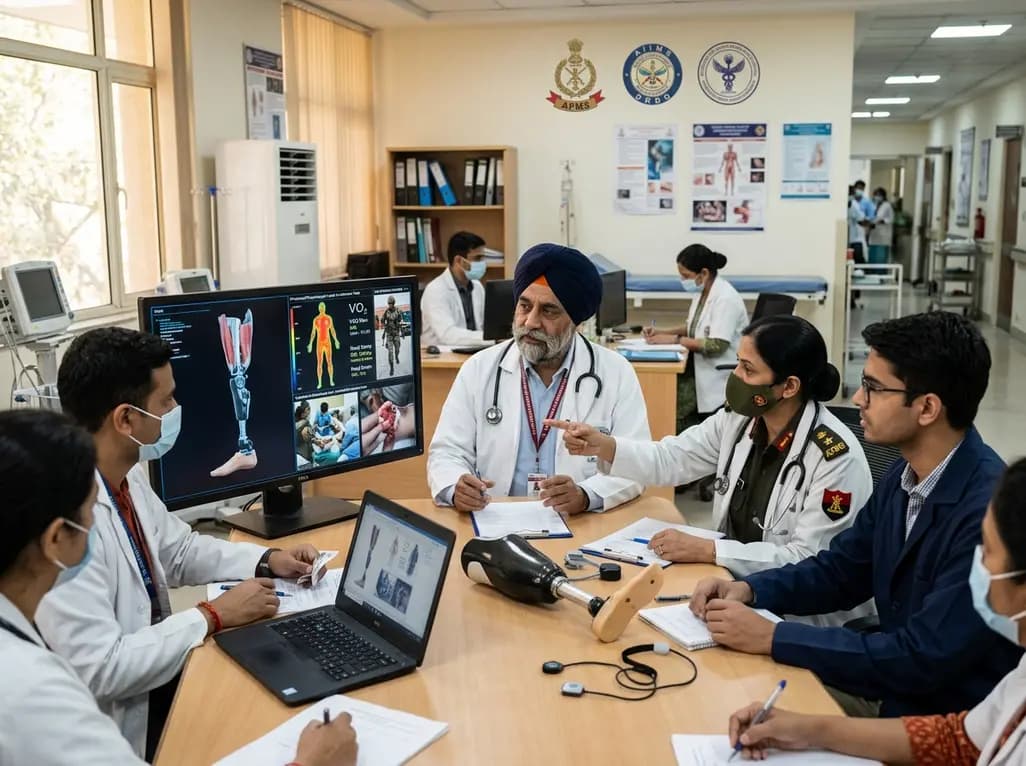
India's premier scientific bodies have joined the Armed Forces Medical Services to solve unique physiological and operational challenges faced by soldiers. The national collaboration covers combat casualty care, artificial intelligence diagnostics, bionic prosthetics, and extreme-environment physiological resilience.
Yesterday

A retrospective cohort study evaluates the short- and long-term impacts of SARS-CoV-2 infection on patients with Graves' disease receiving antithyroid drug therapy, highlighting thyroid status destabilization, clinical symptom exacerbations, and post-viral sequelae.
Today
