.webp&w=384&q=75)

Loading, please wait...
Loading, please wait...
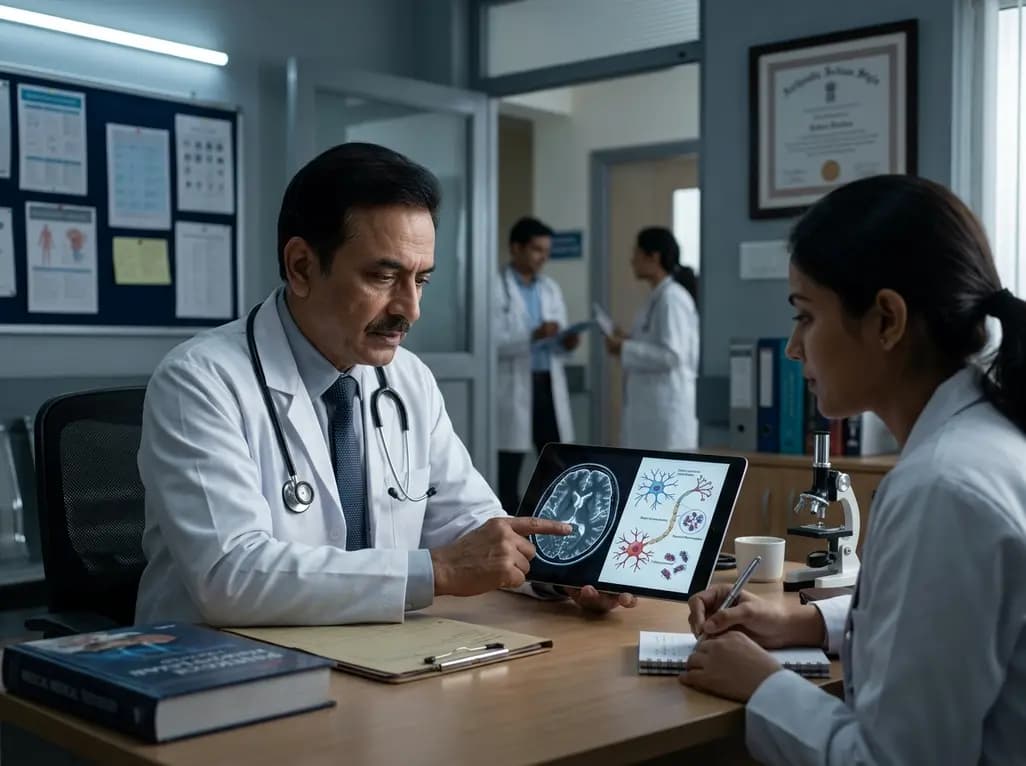
Clinicians in India are increasingly managing patients with persistent neurological symptoms following viral infections, often described as brain fog. Recent research shifts the focus from active viral replication to the toxicity of shed viral proteins. This phenomenon, known as post-viral neuroinflammation, suggests that viral components act as soluble neurotoxins long after the acute phase of infection has resolved. Consequently, even minimal central nervous system viral presence can trigger severe, chronic neurological sequelae.
Evidence from the last two years indicates that highly infectious virus families, including Coronaviridae and Flaviviridae, engage shared host pathways. Specifically, these viral proteins initiate a chronic neuroinflammatory cascade by activating glial Toll-like receptor (TLR)4 and TLR2 signaling. Furthermore, this activation sustains a state of microgliosis that persists even after viral clearance. Therefore, the innate immune response becomes a primary driver of ongoing tissue damage in the brain.
Moreover, viral proteins significantly disrupt host proteostasis. This interference seeds the aggregation of neurodegenerative proteins such as alpha-synuclein and tau. Notably, viral ligands like the SARS-CoV-2 spike protein can facilitate the intercellular spread of these misfolded proteins. Consequently, post-viral syndromes share mechanistic features with classic neurodegenerative disorders like Parkinson’s and Alzheimer’s disease.
Identifying these convergent mechanisms allows for the development of pan-viral therapies. Researchers are now investigating TLR inhibitors to dampen the inflammatory cascade. Additionally, autophagy activators show promise in restoring proteostasis by clearing toxic protein aggregates. Such interventions could provide relief for the diverse symptoms associated with post-acute sequelae of COVID-19 (PASC) and other post-viral conditions. In addition, these findings underscore the need for early neurological screening in post-viral patients to mitigate long-term proteinopathy risks.
Viral proteins act as shed neurotoxins that trigger immune receptors like TLR2 and TLR4 on glial cells. This initiates a chronic inflammatory state that persists even after the virus is no longer replicating.
Research suggests that viral proteins can disrupt how the brain handles cellular waste, leading to the aggregation of tau and alpha-synuclein. This process mirrors the early stages of neurodegenerative diseases.
Current research focuses on two main areas: TLR inhibitors to stop the inflammatory cycle and autophagy activators to help the brain clear out toxic, misfolded proteins.
Disclaimer: This content is for informational and educational purposes only and does not constitute medical advice or a professional relationship. Always seek the advice of a qualified healthcare provider for any questions regarding a medical condition. Refer to the latest local and national guidelines for clinical practice.
References
Käufer C et al. Beyond brain fog: viral proteins as convergent drivers of neuroinflammation and proteinopathy. Curr Opin Virol. 2026 Jun 05. doi: undefined. PMID: 42247713.
Richter F et al. Microgliosis and neuronal proteinopathy in brain persist beyond viral clearance in SARS-CoV-2 hamster model. EBioMedicine. 2022;79:103999.
Vorberg I et al. Viral ligands promote the intercellular transmission of prions and misfolded tau. Nature Communications. 2021;12:5984.

Read summarized clinical updates, watch expert medical content, and earn CME certifications right from your smartphone.
Open your smartphone camera to scan and install.





This review examines how shed viral proteins drive chronic neuroinflammation and neurodegenerative proteinopathies, identifying novel therapeutic targets....
4 months ago

Recent epidemiological data reveals a dramatic surge in summer heat mortality driven by human-induced climate warming. This analysis explores the pathophysiological impacts on cardiac and renal systems, diagnostic dilemmas in death certification, and essential emergency cooling protocols for acute clinical care.
Today

Odisha has established India's first state-level clinical protocol specifically tailored for pregnant women with sickle cell disease. Developed with NHM and UNICEF, the framework provides structured antenatal screening, crisis mitigation, standardized referral pathways, and specialized interdisciplinary care.
Today

India is advancing preventive healthcare by integrating genomics, artificial intelligence, and quantum technologies. With the SANGAM programme sequencing one million Indian genomes, clinicians can unlock personalized therapies, detect cardiometabolic risks early, and curb the burden of diabetes and heart disease.
Today

A randomized controlled trial demonstrates that an eight-week dual-task training intervention significantly improves static and dynamic postural control over standard balance exercises in individuals with chronic ankle instability, addressing critical neurocognitive deficits during athletic and daily activities.
Today

A retrospective cohort study of 7,716 ICU patients from the MIMIC-IV database demonstrates that Gradient Boosting Decision Trees significantly outperform traditional SOFA scores in predicting in-hospital mortality among patients with sepsis and diabetes, with SHAP analysis providing clinical interpretability.
Today
