.webp&w=384&q=75)

Loading, please wait...
Loading, please wait...
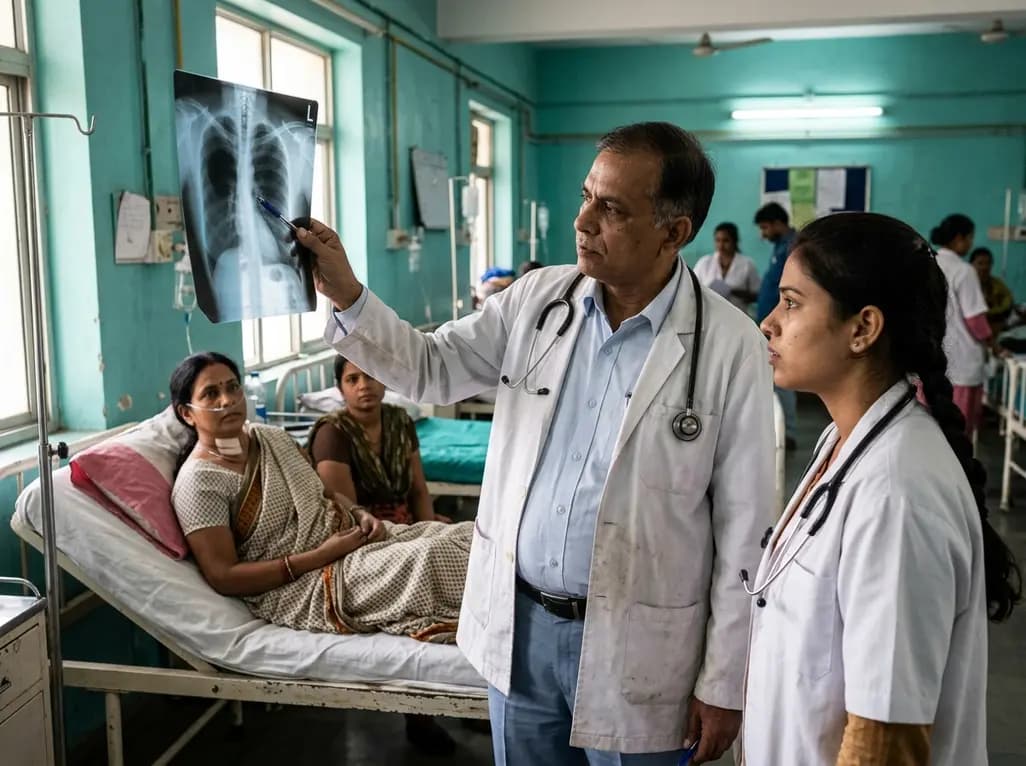
Thyroidectomy and parathyroidectomy are standard procedures in endocrine surgery. However, the occurrence of pneumothorax after thyroidectomy represents a rare but potentially devastating complication. While surgeons typically focus on recurrent laryngeal nerve injury or hypocalcemia, recent data highlights the profound prognostic significance of pleural air leaks. A large-scale analysis of over 228,000 patients reveals that this complication occurs in only 0.10% of cases. Despite its rarity, the clinical aftermath is significantly more severe than previously understood.
Specifically, the development of postoperative pneumothorax correlates with a 16-fold increase in all-cause mortality within one year. Additionally, these patients face a six-fold higher risk of developing pneumonia. Moreover, the study identified significant associations with dysphagia and vocal cord paralysis. Consequently, affected individuals frequently require mechanical ventilation and experience higher rates of emergency room visits and hospital readmissions. Therefore, even a small pleural injury during neck surgery can lead to a cascade of multi-system clinical failures.
Clinicians must maintain a high index of suspicion for respiratory distress following neck dissection. Notably, the risk factors often include difficult dissections toward the mediastinum or the pleura. Furthermore, early detection through radiographic imaging can facilitate prompt intervention. Because the associated risks persist for months after the initial event, multidisciplinary follow-up is essential. In conclusion, while thyroid surgery is generally safe, identifying and managing this rare complication is vital for reducing long-term mortality.
The incidence is extremely low, occurring in approximately 0.10% of patients. However, its rare occurrence does not diminish its clinical importance due to the high risk of mortality.
Patients who develop this condition face significantly higher risks of mortality, pneumonia, vocal cord paralysis, and the need for mechanical ventilation within a year following surgery.
Pneumothorax often indicates a more complex or invasive surgical course. This can involve extensive dissection that may indirectly impact the nerves and musculature involved in swallowing and vocal cord function.
Disclaimer: This content is for informational and educational purposes only... Refer to the latest local and national guidelines for clinical practice.
References
1. Jishu JA et al. Rare But Risky: Clinical Impacts of Pneumothorax After Thyroidectomy and Parathyroidectomy. Laryngoscope. 2026 Jun 12. doi: 10.1002/lary.70646. PMID: 42283140.
2. Krawitz R et al. Pneumothorax and Pneumomediastinum with Subcutaneous Emphysema Following Parathyroidectomy and Thyroidectomy. World J Endoc Surg 2019;11(2):46–48.
3. Hamour OA et al. Multiple Rare Complications Following Total Thyroidectomy and Bilateral Neck Dissection. Longdom Publishing 2015.

Read summarized clinical updates, watch expert medical content, and earn CME certifications right from your smartphone.
Open your smartphone camera to scan and install.





Pneumothorax after thyroid or parathyroid surgery is rare (0.10%) but carries severe clinical risks. This study shows it is linked to a 16-fold increase in 1-year mortality and higher rates of pneumonia, dysphagia, and hospital readmissions, necessitating vigilant postoperative monitoring.
4 months ago

As monsoon seasons elevate arboviral disease threats, Tamil Nadu has initiated an ICMR-monitored evaluation of the tetravalent dengue vaccine in Tenkasi district. Clinicians emphasize clinical monitoring, public prevention, and high-quality early pediatric care to reduce disease morbidity across endemic regions.
Today

A comparative cohort study evaluates vNOTES vs TLH hysterectomy for benign conditions, demonstrating shorter operative duration, faster return to daily activities, and equivalent female sexual function scores without increased dyspareunia.
Today

Review how tailored exercise programs benefit frail older patients with heart failure. Explore pathophysiological mechanisms, individualized training prescriptions, and strategies to overcome adherence barriers in clinical practice.
Today

This comparative study evaluates posterior labral tears with and without glenohumeral instability, highlighting distinct demographic patterns, MRI underestimation in stable shoulders, and successful arthroscopic repair outcomes.
Today

A clinical study demonstrates that early intervention with tocilizumab, either as monotherapy or bridged with corticosteroids, achieves significant proptosis reduction and resolves active inflammation in treatment-naive thyroid eye disease.
Today
