.webp&w=384&q=75)

Loading, please wait...
Loading, please wait...

Managing the risk of placenta accreta spectrum transfusion is a critical priority for obstetricians performing cesarean deliveries. Placenta accreta spectrum (PAS) often involves severe hemorrhage, making it a leading cause of maternal morbidity in India. However, specific indicators to predict the need for intraoperative blood products remain scarce in clinical practice. Consequently, researchers conducted a retrospective study to identify which routinely available clinical and sonographic factors correlate with transfusion requirements.
The study analyzed 312 patients and found that 40% required intraoperative blood products. Notably, an antenatal diagnosis of placenta previa and sonographic suspicion of PAS emerged as the strongest independent predictors. Patients with placenta previa faced a nearly five-fold increase in transfusion risk. Moreover, sonographic suspicion more than tripled the odds of needing a transfusion. These findings demonstrate that clinicians can effectively use these markers during preoperative planning to enhance patient safety. Similarly, identifying these factors early allows for better resource allocation in tertiary centers.
In cases of grade-1 PAS, placenta previa remained the primary predictor of transfusion. Furthermore, the researchers observed that intraoperative factors like hysterectomy and longer operative times were more common among transfused patients. However, these factors typically reflect surgical complexity rather than initial preoperative risk. Therefore, utilizing antenatal ultrasound and clinical history is essential for pragmatic surgical preparation. Additionally, a multidisciplinary approach ensures that surgical teams remain prepared for potential hemodynamic instability during delivery.
The primary clinical predictors are an antenatal diagnosis of placenta previa and sonographic suspicion of placenta accreta spectrum. These factors are strongly associated with the increased need for intraoperative blood products.
In grade-1 placenta accreta spectrum, placenta previa acts as the sole independent predictor for blood transfusion. It significantly increases the likelihood of surgical complexity and intraoperative hemorrhage.
Disclaimer: This content is for informational and educational purposes only. It does not constitute medical advice or establish a doctor-patient relationship. Refer to the latest local and national guidelines for clinical practice.
References

Read summarized clinical updates, watch expert medical content, and earn CME certifications right from your smartphone.
Open your smartphone camera to scan and install.





A study identifies placenta previa and ultrasound suspicion as major predictors for intraoperative blood transfusion in placenta accreta spectrum management...
4 months ago

The World Health Organization has launched a 10-year framework to address evidence gaps in traditional, complementary, and integrative medicine. Prioritizing conditions such as stroke, cancer, and depression, this global roadmap highlights rigorous clinical trials, pharmacovigilance, and safer patient care.
Today

A recent longitudinal study evaluated the link between prenatal loss of control eating and cardiovascular health using Life's Essential 8 frameworks. While direct associations across pregnancy were non-significant, the high prevalence of dysregulated eating highlights critical implications for obstetric practice.
Today

Explore modern perioperative management protocols for clinical xenotransplantation. Learn how costimulation blockade, anti-inflammatory perfusion, and coagulopathy rescue overcome interspecies hurdles.
Today

A retrospective study evaluating a locally deployed vision language model (Qwen3-VL) reveals that smartphone-captured radiographs and retrieval-augmented generation can paradoxically reduce diagnostic accuracy in bone tumor referrals due to optical noise and textual hallucinations.
Today
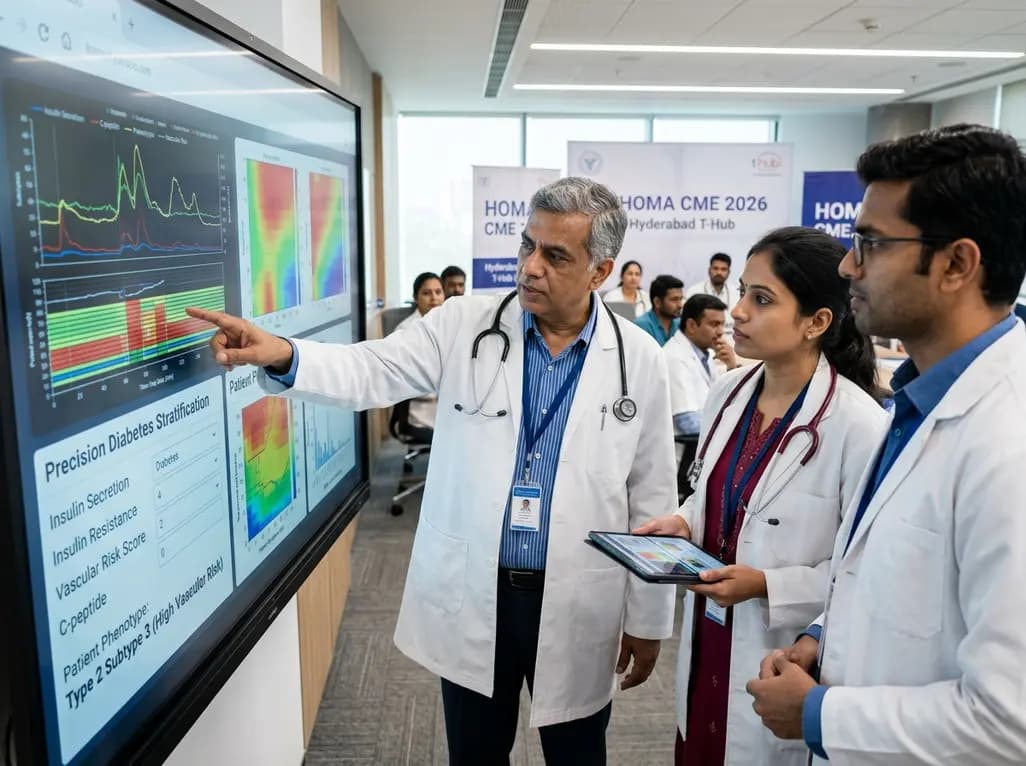
At Homa CME 2026 at Hyderabad's T-Hub, healthcare leaders emphasized moving beyond routine metrics through digital calculators and precision stratification. Discover why characterizing individual insulin secretion, resistance patterns, and vascular risks transforms chronic metabolic care in India.
Today
