.webp&w=384&q=75)

Loading, please wait...
Loading, please wait...

Unintended pregnancy represents a key marker of unmet sexual and reproductive health needs across diverse global populations. However, key populations face unique structural vulnerabilities that significantly increase their reproductive health risks. Addressing unintended pregnancy among sex workers requires tailored public health strategies, rigorous epidemiological monitoring, and accessible clinical care. In South Asian settings, female sex workers encounter societal stigma, economic hardship, and systemic healthcare barriers. These determinants severely restrict access to routine contraceptive services, emergency contraception, and gestational care. Consequently, women in commercial sex experience elevated rates of unplanned gestations and adverse reproductive outcomes compared to non-sex workers. Understanding the burden and behavioral patterns surrounding unintended gestations is essential for clinical practitioners and health planners. Recent epidemiological data from Colombo, Sri Lanka, offers critical evidence illuminating these disparities. By analyzing pregnancy awareness, routine testing, and actions taken post-conception, clinicians can design targeted outreach services. Ultimately, bridging these systemic gaps requires transforming observational research into responsive, peer-led health services that prioritize reproductive autonomy and harm reduction.
To address the scarcity of quantitative evidence regarding reproductive health among key populations in Sri Lanka, researchers conducted a community-based study in Colombo. The investigation surveyed 551 female sex workers aged 18 to 49 years between March and June 2025. Given that sex work is highly hidden, standard probability sampling methods are often impractical. Therefore, investigators utilized respondent-driven sampling, a peer-referral mechanism designed to access hard-to-reach populations while minimizing selection bias. Data analysis employed Gile's successive sampling estimator to generate representative, weighted prevalence estimates across the sample. Furthermore, multivariate logistic regressions identified women-level correlates associated with lifetime unintended pregnancy. To contextualize these findings, researchers conducted a meta-analysis comparing pregnancy-level metrics against six Sri Lankan non-sex worker studies. This multi-tiered methodological approach ensured robust, generalizable insights regarding gestational patterns and healthcare utilization among female sex workers.
The survey revealed a high lifetime exposure to pregnancy and unplanned gestations among participants. An overwhelming majority, 88.5 percent of surveyed women, reported having ever been pregnant. Among ever-pregnant participants, 51.1 percent reported experiencing at least one unintended pregnancy. When evaluating all 1,225 lifetime pregnancies recorded in the sample, 39.8 percent were classified as unintended. Furthermore, meta-analytic comparison with six Sri Lankan non-sex worker studies demonstrated that pregnancy-level unintended pregnancy among sex workers exceeded general population estimates by 11 to 13 percentage points. This marked disparity highlights persistent gaps in primary contraceptive protection and barrier method consistency. The study also delineated an important pregnancy-accounting cascade, illustrating significant downstream health and social consequences following unplanned conceptions. High rates of unintended pregnancy elevate maternal morbidity risks and signal severe systemic barriers to timely family planning care.
Evaluating the timeline of pregnancy recognition and subsequent action revealed important clinical dynamics. Approximately two-thirds of participants recognized their most recent pregnancy early, by four weeks' gestation. This indicates that women possess high bodily awareness regarding potential pregnancy signs. However, early recognition did not translate into timely diagnostic confirmation or preventive care. Routine pregnancy testing was remarkably low, reported by only 11.3 percent of participants. Moreover, 44.8 percent of women reported taking no preventive measures at their most recent unintended pregnancy. This substantial gap demonstrates missed opportunities at both the pre-conception and early post-conception stages. While early awareness provides a critical window for intervention, structural barriers hinder access to testing and immediate contraceptive guidance. Consequently, public health programs must establish accessible diagnostic pathways to support women immediately following gestational recognition.
Multivariate logistic regression models identified key individual-level variables associated with an increased likelihood of unintended gestations. Unintended pregnancy risk was significantly clustered among women initiating paid sex before age 19 and those with higher parity. Early entry into commercial sex work exposes young women to elevated reproductive risks when sexual negotiation power, health literacy, and systemic support are low. Younger populations also experience greater economic coercion and exposure to condom failure. Similarly, higher parity emerged as a major correlate, reflecting cumulative contraceptive failure or sustained unmet reproductive needs over time. The clustering of risk demonstrates that reproductive vulnerabilities are unevenly distributed within key populations. Age at occupational entry and reproductive history strongly influence risk. Clinical programs must therefore implement targeted risk stratification, prioritizing dedicated support for young entrants and multiparous sex workers.
Translating these findings into health strategies requires restructuring reproductive care for key populations. Health systems in Colombo must prioritize routine, outreach-based pregnancy testing to bridge the gap between early awareness and clinical confirmation. Mobile clinics, peer-led networks, and drop-in centers provide optimal settings for integrating confidential pregnancy testing with STI care. Furthermore, family planning services must guarantee rapid access to diverse, acceptable contraceptive options, including long-acting methods and emergency contraception. Overcoming access barriers requires eliminating administrative delays and financial costs while providing non-judgmental counseling. Healthcare staff require training in stigma reduction and trauma-informed care to ensure welcoming clinical environments. Targeted interventions should specifically support young entrants and women with high parity. By establishing integrated community-linked care, health systems can address missed preventive opportunities and reduce reproductive health disparities.
Initiating paid sex before age 19 and having higher parity represent the primary risk correlates for unintended pregnancy among sex workers. Early entry into sex work often coincides with limited reproductive health knowledge, diminished partner negotiation power, and systemic healthcare barriers. Similarly, higher parity reflects cumulative unmet contraceptive needs over time, underscoring the need for continuous, tailored family planning support throughout a woman's reproductive trajectory.
Although two-thirds of sex workers recognize pregnancy by four weeks' gestation, structural barriers impede timely testing. Institutional stigma, privacy concerns, service costs, and limited outreach testing prevent women from seeking medical confirmation. Consequently, only 11.3 percent engage in routine pregnancy testing, leading to missed opportunities for early counseling and care. Expanding peer-led, confidential rapid testing in community settings is essential to bridge this gap.
Healthcare providers can improve access by integrating peer-led outreach services that offer immediate, low-barrier access to diverse contraceptive options, including emergency contraception and long-acting reversible methods. Offering non-judgmental, confidential care within community drop-in centers helps overcome healthcare avoidance caused by stigma. Additionally, providing comprehensive reproductive education and empowering women with negotiation skills can significantly enhance preventive practices prior to unprotected exposure.
Disclaimer: This content is for informational and educational purposes only, and should not be taken as professional medical advice, diagnosis, or treatment. Always consult a qualified healthcare provider for specific medical guidance regarding reproductive health, contraception, or pregnancy management. Refer to the latest local and national guidelines for clinical practice.
References

Read summarized clinical updates, watch expert medical content, and earn CME certifications right from your smartphone.
Open your smartphone camera to scan and install.





A study in Colombo, Sri Lanka reveals that 39.8% of lifetime pregnancies among female sex workers were unintended. Early entry into sex work and higher parity were key risk correlates, emphasizing the need for outreach pregnancy testing and rapid access to contraception.
Today

Preclinical toxicology of an equimolar D-beta-hydroxybutyrate (D-BHB) formulation for long-chain fatty acid oxidation disorders established a minipig NOAEL of 500 mg/kg BID (1000 mg/kg/day). Key acute findings included transient hypertension, tachycardia, QTc prolongation, and diarrhea at high doses.
Today

A cross-sectional analysis from the Electronic Framingham Heart Study reveals that a higher daily heart rate per step ratio is associated with lower composite cognitive scores in older adults, highlighting smartwatch metrics as valuable tools for detecting subclinical cardiovascular factors linked to brain health.
Today
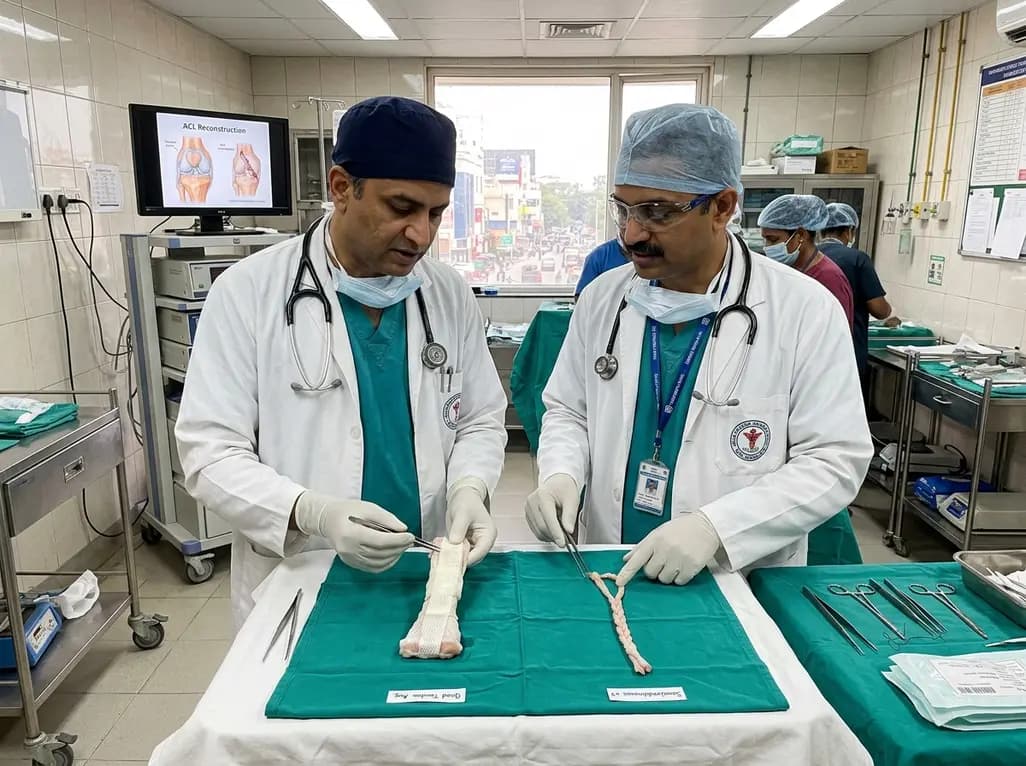
A cadaveric study compares the biomechanical strength, load-to-failure, and stiffness of tape-augmented all-soft tissue quadriceps tendon autografts against quadrupled semitendinosus constructs in ACL reconstruction, providing crucial insights for orthopaedic surgeons regarding graft selection and fixation.
Today

Metabolic dysfunction-associated fatty liver disease (MAFLD) involves severe lipid accumulation in hepatocytes. Recent research reveals that the microbial metabolite indole-3-propionic acid (IPA) activates the AHR/AMPK pathway, significantly reducing lipid synthesis and mitigating hepatic steatosis.
Today
