.webp&w=384&q=75)

Loading, please wait...
Loading, please wait...
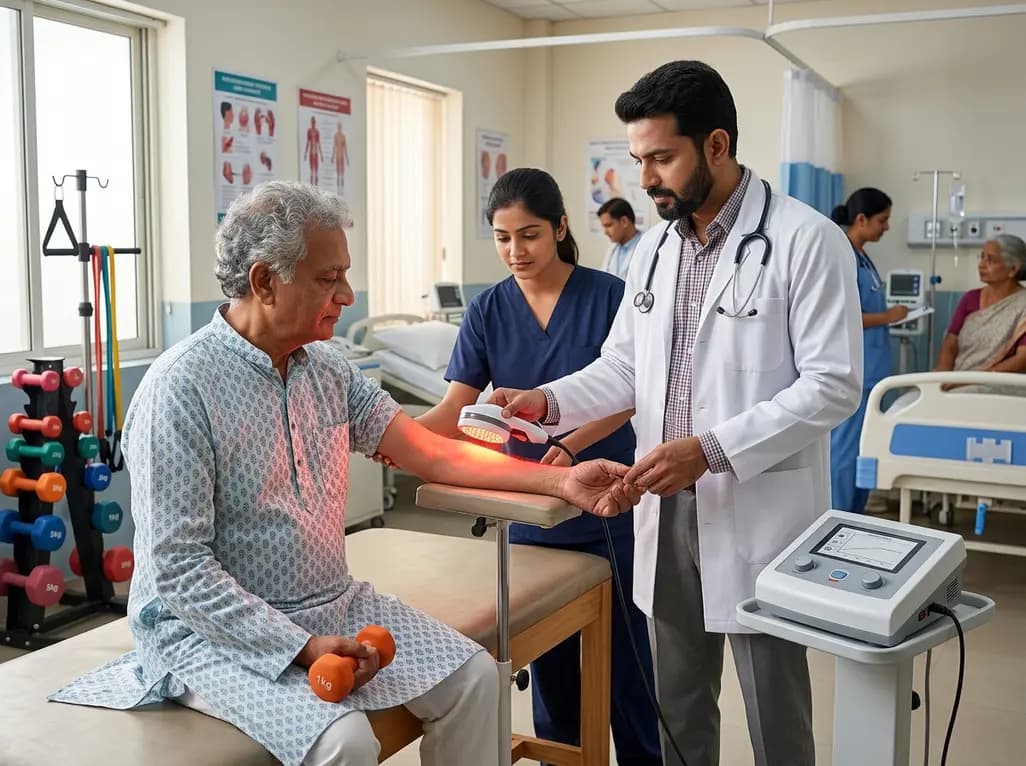
The intersection of aging and physical decline necessitates innovative therapeutic interventions to maintain quality of life. Recently, photobiomodulation in geriatric strength training has emerged as a potential strategy to augment the physiological adaptations typically observed with resistance exercise. By utilizing specific wavelengths of light, usually through low-level laser therapy or light-emitting diodes, clinicians hope to stimulate cellular processes that favor muscle hypertrophy and force production. Despite the theoretical benefits, the clinical application of this technology remains a subject of intense debate among experts. This review examines a comprehensive systematic analysis involving older adults to determine if adding light therapy to a structured lifting program truly yields superior outcomes. As we transition into an era of evidence-based geriatric rehabilitation, understanding these nuances becomes paramount for practitioners. Most doctors currently rely on progressive resistance training as the gold standard for combating sarcopenia. However, if photobiomodulation can offer even a marginal gain in efficiency, it could revolutionize how we approach the rehabilitation of the elderly population. Consequently, researchers have begun pooling data from various randomized controlled trials to establish a clearer consensus on its efficacy. While the technology is non-invasive, its actual impact on functional mobility requires rigorous validation before widespread adoption.
Understanding the underlying biological mechanisms is essential for evaluating the role of photobiomodulation in geriatric strength adaptations. Light therapy primarily targets the mitochondria, specifically the cytochrome c oxidase enzyme within the electron transport chain. When these organelles absorb photons, there is a subsequent increase in adenosine triphosphate production, which provides the necessary energy for cellular repair. Additionally, photobiomodulation modulates reactive oxygen species and nitric oxide levels, creating a cellular environment conducive to muscle recovery and reduced inflammation. These processes are particularly relevant for older adults who often suffer from chronic low-grade inflammation and mitochondrial dysfunction. By enhancing the energetic capacity of muscle fibers, light therapy may theoretically allow individuals to train at higher intensities. Furthermore, the stimulation of myogenic satellite cells could potentially facilitate better hypertrophic responses over a long-term periodized program. Nevertheless, the translation from molecular signaling to measurable gains in a one-repetition maximum is not always linear. Many factors, including the dosage of light and the timing of application, influence the final clinical outcome. Therefore, while the biological plausibility is strong, clinical results often exhibit significant variability depending on the study design. Ultimately, the goal is to harness these cellular changes to improve functional outcomes in an aging demographic.
The recent systematic review and meta-analysis conducted by Chen and colleagues provides a sober look at the efficacy of these interventions. Analyzing data from eleven randomized controlled trials involving over four hundred participants, the researchers focused on the additive effects of light therapy on maximal strength. Interestingly, the meta-analysis of trials using periodized resistance training did not find a statistically significant improvement in maximal muscle strength. The standardized mean difference was calculated at 0.26, which did not reach the threshold for clinical significance. Subgroup analyses offered some intriguing, though ultimately non-significant, trends. For instance, there appeared to be a slight favor toward photobiomodulation in unilateral strength tests compared to bilateral outcomes. However, these effects were often sensitive to individual study results and lacked the robustness required for a definitive recommendation. These findings suggest that for the average healthy older adult engaging in a standard program, light therapy might not provide a transformative benefit for peak force production. This underscores the importance of focusing on the fundamentals of resistance training, such as progressive overload, before turning to adjunctive modalities. Consequently, practitioners must manage patient expectations regarding the magnitude of strength gains possible through supplemental light treatments in clinical practice.
While maximal strength gains may be elusive, photobiomodulation might still hold significant value for specific subsets of the elderly population. The systematic review highlighted that in non-resistance training contexts, certain studies reported improvements in fatigue resistance and functional recovery. This is particularly relevant for frail or critically ill older adults who may not tolerate high-intensity loading tasks. For these individuals, reducing the perceived exertion or accelerating the recovery of muscle function after light activity can be the difference between independence and disability. Photobiomodulation may act as a bridge, allowing the most vulnerable patients to participate in rehabilitative exercises that would otherwise be too taxing. Moreover, the therapy's impact on muscle soreness suggests it could be used to improve overall training tolerance. If an older patient feels less fatigued, they are more likely to adhere to a long-term exercise regimen, which eventually leads to better health outcomes. Consequently, the utility of light therapy might lie more in its permissive role—enabling better training—rather than in its direct additive role for maximal strength. Clinicians should consider the individual's baseline functional status when deciding whether to incorporate this technology into a care plan. Future research should pivot toward these functional and recovery-related metrics.
For healthcare providers in India, where the geriatric population is expanding, the integration of cost-effective and non-invasive therapies is a priority. Photobiomodulation presents an attractive option due to its high safety profile and ease of application in a clinical setting. However, based on the current evidence, it should not be marketed as a primary tool for building muscle in the elderly. Instead, it should be viewed as a secondary adjunct that may support overall training capacity. When designing a rehabilitation program, the focus must remain on evidence-based resistance training principles and nutritional support. If a clinic chooses to utilize light-emitting diodes, they should follow the protocols used in successful pilot studies, focusing on recovery-related outcomes. Furthermore, the lack of standardized dosing remains a significant hurdle in the field. Different wavelengths and energy densities can lead to different biological responses, a phenomenon known as the biphasic dose-response. Therefore, practitioners should stay updated on the latest literature to ensure they are using the most effective parameters. Ultimately, photobiomodulation is a promising field that requires more large-scale trials to confirm its specific clinical niches. Until then, it remains a valuable but supplementary tool in the comprehensive management of geriatric musculoskeletal health, alongside traditional physical activity and proper medical care.
Photobiomodulation works by using specific light wavelengths to stimulate mitochondria within muscle cells. This process enhances the activity of cytochrome c oxidase, leading to increased production of adenosine triphosphate (ATP). Higher ATP levels provide more energy for cellular repair and protein synthesis. Additionally, the therapy helps modulate oxidative stress and reduces systemic inflammation, which are common barriers to muscle growth and recovery in the elderly population during exercise protocols.
No, the current evidence suggests that light therapy is not a substitute for traditional resistance training. While it can be a useful adjunct, a recent meta-analysis showed that it did not significantly increase maximal strength gains over resistance training alone in older adults. Therefore, clinicians should prioritize progressive resistance exercise as the primary intervention for building muscle, using photobiomodulation only as a secondary tool to potentially improve recovery and training tolerance during rehabilitation.
Evidence indicates that frail, critically ill, or highly sedentary older adults might derive the most benefit from photobiomodulation. In these populations, the therapy may help reduce muscle fatigue and improve functional recovery after activity. This allows individuals with low physical resilience to tolerate rehabilitative exercises more effectively. While maximal strength gains are not guaranteed, the improvement in exercise tolerance can lead to better adherence to physical therapy and improved long-term functional health outcomes.
Disclaimer: This content is for informational and educational purposes only and does not constitute professional medical advice, diagnosis, or treatment. Always seek the advice of your physician or other qualified health provider with any questions you may have regarding a medical condition. Refer to the latest local and national guidelines for clinical practice.
References
Chen H et al. Photobiomodulation as an Adjunct to Resistance Training in Older Adults: A Systematic Review and Meta-Analysis. Photobiomodul Photomed Laser Surg. 2026 Jul 20. doi: 10.1177/25785478261469320. PMID: 42473844.
Ferraresi C, Huang YY, Hamblin MR. Photobiomodulation in human muscle tissue: an advantage in sports performance? J Biophotonics. 2016 Dec;9(11-12):1273-1299.
Reisman S, et al. Effects of Photobiomodulation Therapy on Muscle Strength and Performance in Older Adults: A Meta-Analysis. Lasers Med Sci. 2024.
"
Read summarized clinical updates, watch expert medical content, and earn CME certifications right from your smartphone.
Open your smartphone camera to scan and install.





A 2026 meta-analysis explores photobiomodulation (PBM) as an adjunct to resistance training for older adults. While PBM did not significantly boost maximal strength (1RM) in healthy seniors, it shows promise for recovery and fatigue management, especially in frail or vulnerable populations.
3 months ago

Review how tailored exercise programs benefit frail older patients with heart failure. Explore pathophysiological mechanisms, individualized training prescriptions, and strategies to overcome adherence barriers in clinical practice.
Today

Leucine Rich Bio has introduced South Asia's first comprehensive vaginal microbiome test, BugSpeaks. By profiling microbial dysbiosis, pathogens, and antimicrobial resistance, this next-generation diagnostic platform provides clinicians with deeper insights into recurrent infections, fertility, and reproductive health.
Today

In high-risk pulmonary embolism complicated by severe anemia and active uterine bleeding, systemic thrombolysis is contraindicated. Large-bore aspiration thrombectomy provides rapid hemodynamic rescue without fibrinolysis, supported by inferior vena cava filter placement and multidisciplinary critical care.
Today

This comparative study evaluates posterior labral tears with and without glenohumeral instability, highlighting distinct demographic patterns, MRI underestimation in stable shoulders, and successful arthroscopic repair outcomes.
Today

A clinical study demonstrates that early intervention with tocilizumab, either as monotherapy or bridged with corticosteroids, achieves significant proptosis reduction and resolves active inflammation in treatment-naive thyroid eye disease.
Today
