

Loading, please wait...
Loading, please wait...

Suicide represents an urgent global public health priority that accounts for more than 700,000 fatalities annually. Understanding shifting suicide mortality trends remains essential for designing targeted preventive frameworks across lower- and middle-income nations. Although international datasets regularly track intentional self-harm, national statistics in the Philippines experienced a prolonged reporting gap after 2005. Consequently, healthcare providers and policymakers lacked empirical insights into evolving epidemiological patterns, particularly during the acute disruptions caused by the COVID-19 pandemic.
To establish a contemporary epidemiological baseline, researchers evaluated vital statistics from the Philippine Statistics Authority covering 2006 through 2022. Additionally, investigators cross-referenced police-investigated incidents recorded between 2020 and 2023. They applied ICD-10 codes X60 through X84 to ascertain intentional self-harm fatalities. Furthermore, the investigators calculated age-standardized death rates and conducted interrupted time-series analyses. This rigorous approach enabled the team to evaluate structural shifts across age brackets, biological sexes, geographical territories, and lethal mechanisms.
Historically, age-standardized death rates remained largely stable across the Philippine archipelago between 2006 and 2019. However, the onset of the global health emergency coincided with an abrupt and unprecedented departure from historical baselines. Specifically, age-standardized rates increased by an alarming 67.5% between 2019 and 2020. This stark elevation diverged notably from trajectories documented across many high-income economies, where early lockdown measures did not instantly drive higher national suicide mortality. Therefore, the findings highlight unique systemic and economic vulnerabilities present within developing healthcare infrastructures.
The interrupted time-series model confirmed that acute societal disruptions closely correlated with increased self-harm fatalities. In particular, the sudden surge during 2020 reflected intense community quarantine protocols, severe economic curtailment, and restricted access to supportive outpatient services. Prolonged isolation and financial distress exacerbated underlying psychiatric morbidities across vulnerable households. Consequently, clinical distress manifested rapidly before social safety nets could fully adapt to the crisis.
Encouragingly, the epidemiological surge proved transient rather than permanent. After peaking dramatically between 2020 and 2021, mortality measures declined steadily. By 2022, age-standardized death rates reverted to expected pre-pandemic trajectories. This normalization suggests that communities developed adaptive coping mechanisms over time. In addition, the gradual resumption of commercial activity and in-person social interactions alleviated extreme isolation. Nonetheless, public health authorities must recognize that acute macroeconomic disruptions can rapidly compromise vulnerable populations during nationwide emergencies.
Throughout the seventeen-year observation window, intentional self-harm exhibited pronounced demographic skewing. Males accounted for more than 70% of total reported deaths each year. Moreover, the male-to-female age-standardized death rate ratio reached an unprecedented peak of 5.20 in 2021. This substantial gender disparity aligns with global literature on toxic masculinity, reluctance to seek psychological care, and selection of higher-lethality modalities among men.
Simultaneously, young demographics suffered disproportionate psychological adversity during the pandemic window. Young individuals aged 10 to 24 accounted for approximately one-third of all documented deaths during the pandemic peak. School closures, academic disruptions, digital fatigue, and home confinement heavily impacted youth psychological resilience. Therefore, clinicians must maintain high clinical suspicion for depressive disorders and self-harm ideation when evaluating adolescents and young adults who experience major lifestyle disruptions.
Preventive strategies depend heavily on identifying the specific means utilized in intentional self-harm. Throughout the analyzed timeframe, hanging persisted as the primary modality across all demographics. Furthermore, acute self-poisoning represented the second most frequent mechanism. Individuals predominantly ingested non-pesticide household chemicals, followed by agricultural pesticides. The frequent utilization of domestic agents highlights significant challenges for suicide prevention, as household items remain widely accessible.
Consequently, public health experts emphasize that means restriction must serve as a central pillar of national mental health strategies. Restricting access to highly toxic pesticides through strict regulatory oversight can significantly curb fatal self-harm episodes, a strategy validated in several Asian countries. Similarly, community-level gatekeeper training can assist families in identifying covert warning signs before an individual accesses lethal means. Because hanging remains pervasive, broad psychosocial screening and crisis line availability must complement physical means restriction.
The longitudinal data demonstrated marked geographical variation across the seventeen administrative divisions of the Philippines. Region VII consistently documented the highest median suicide death rates from 2006 to 2022. Additionally, the Cordillera Administrative Region, Region II, Region X, and Region XI consistently reported substantial mortality burdens. These patterns suggest that geographical, cultural, and socioeconomic factors persistently shape suicide risks across distinct provinces.
Accordingly, centralized or uniform public health interventions cannot sufficiently address the diverse realities of local provinces. Isolated rural communities frequently lack specialized psychiatric facilities, leaving primary healthcare practitioners with the entire burden of psychiatric triage. Therefore, decentralized health planning is vital. National agencies must allocate funding directly toward higher-burden provinces. By establishing community-based crisis interventions and strengthening local psychiatric referral networks, healthcare systems can reduce preventable mortality.
These findings present vital implications for clinicians across primary care, emergency medicine, and general psychiatry. Primary care providers serve as the initial contact point for patients experiencing severe affective distress. Hence, incorporating validated depressive symptom questionnaires and routine suicide risk assessments during routine consultations can identify suicidal ideation early. Early detection allows timely psychotherapeutic and pharmacological interventions before crises escalate.
Furthermore, medical institutions must strengthen collaborative psychiatric networks and real-time mortality surveillance systems. Prompt, standardized death registration allows epidemiologists to detect regional clustering swiftly. Similarly, public awareness campaigns must aggressively dismantle cultural stigma surrounding psychiatric consultations. When communities normalize mental health discussions, vulnerable individuals seek professional support much earlier. Ultimately, comprehensive surveillance, targeted youth support, and equitable resource allocation will safeguard vulnerable populations against future socioeconomic shocks.
The abrupt 67.5% increase in age-standardized death rates during 2020 coincided with strict pandemic lockdowns, sudden economic hardships, social isolation, and disrupted healthcare access. These compounding stressors overwhelmed individual coping mechanisms, triggering acute psychiatric crises before support systems could mobilize.
Youth aged 10 to 24 experienced significant vulnerability, accounting for one-third of all documented suicide deaths at the pandemic peak. Prolonged school closures, loss of peer socialization, family distress, and uncertain academic futures contributed substantially to this heightened mortality.
Restricting access to lethal means, such as toxic pesticides and hazardous household chemicals, introduces a crucial delay during acute impulsive crises. Because many suicidal crises are transient, restricting immediately lethal means allows time for distress to subside or for lifesaving interventions to occur.
Disclaimer: This content is for informational and educational purposes only and should not be considered professional medical advice. Always consult a qualified healthcare provider for diagnosis and treatment of any health condition. Refer to the latest local and national guidelines for clinical practice.
References
Ramirez CM et al. An updated suicide statistical profile of the Philippines: 2006-2022. Asian J Psychiatr. 2026 Nov. doi: 10.1016/j.ajp.2026.105158. PMID: 42849363.
World Health Organization. Suicide worldwide in 2019: Global Health Estimates. Geneva: World Health Organization; 2021.
Pirkis J, John A, Shin S, et al. Suicide trends in the early months of the COVID-19 pandemic: an interrupted time-series analysis of preliminary data from 21 countries. Lancet Psychiatry. 2021;8(7):579-588.
Redaniel MT, Lebanan-Cabigon M, Gunnell D. Suicide in the Philippines: time trend analysis (1974-2005) and literature review. BMC Public Health. 2011;11:533.

Read summarized clinical updates, watch expert medical content, and earn CME certifications right from your smartphone.
Open your smartphone camera to scan and install.





A comprehensive study on Philippine suicide mortality trends from 2006 to 2022 highlights a sharp 67.5% rise in age-standardized death rates during the early COVID-19 pandemic, followed by a return to baseline. The findings emphasize disproportionate youth vulnerabilities and urgent surveillance needs.
Today

A retrospective study of 6,113 adults shows that combining GLP-1 receptor agonists with digital health apps nearly doubles the odds of achieving significant weight loss. Frequent progress logging serves as a primary behavioral driver of long-term metabolic success.
Today

Sexual dysfunction affects a high proportion of reproductive-age females with multiple sclerosis. This comprehensive review highlights multi-tier etiologies, proactive clinical screening tools, preconception counseling considerations, and integrated therapeutic options across multidisciplinary care pathways.
Today

Researchers have engineered an innovative CRISPR-Cas12a fluorescent diagnostic kit for clinical sST2 detection. By combining nanotechnology with enzymatic trans-cleavage, this platform enables rapid, ultrasensitive heart failure diagnosis and risk stratification, outperforming conventional laboratory ELISA methods.
Today

Non-union fractures occur in 2-5% of cases, causing significant disability and cost. Conservative modalities such as LIPUS, PEMF, and focused ESWT offer non-surgical healing options for defects up to 5-10 mm when adequate mechanical stability exists without infection.
Today
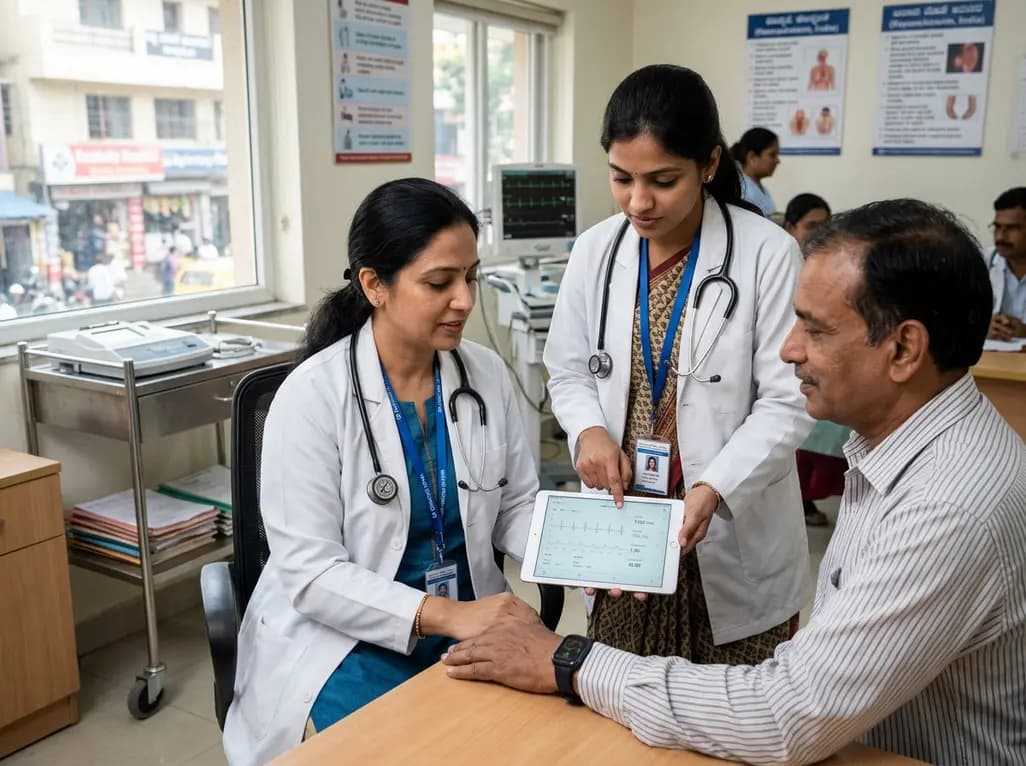
India is poised to transform chronic disease management through wearable health technology. Discover how continuous remote monitoring and predictive algorithms empower clinicians to detect early cardiovascular signals, personalize metabolic interventions, and deliver equitable preventive care across populations.
Yesterday
