.webp&w=384&q=75)

Loading, please wait...
Loading, please wait...
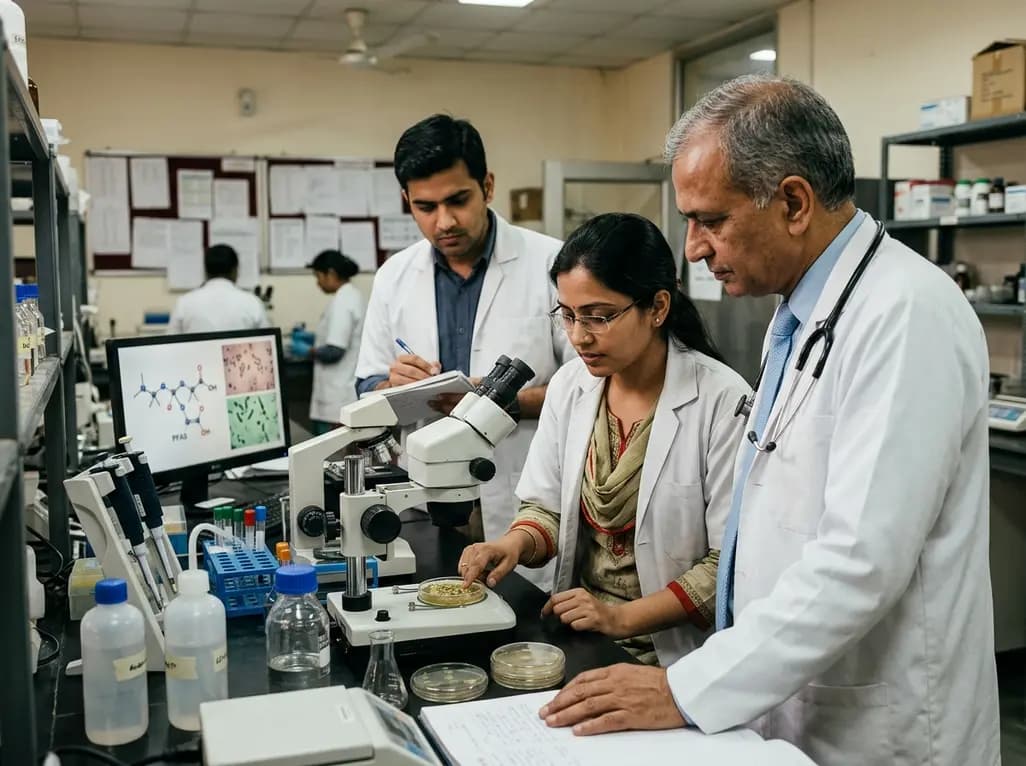
PFAS compounds, often called "forever chemicals," pose significant health risks across India, including endocrine disruption and chronic metabolic disorders. A recent investigation into PFAS microbial dehalogenation reveals a promising pathway for breaking down chlorinated alternatives (Cl-PFAS). Specifically, researchers examined how these substances transform under environmentally relevant reducing conditions.
The study highlights that Cl-PFAS, such as 3,5,6-trichlorooctafluorohexanoic acid (CTFE3), exhibit higher reactivity than legacy compounds. Therefore, understanding their breakdown is vital for public health. The researchers tested four environments: nitrate-, sulfate-, iron-reducing, and methanogenic conditions. Consequently, they discovered that nitrate- and sulfate-reducing environments achieved roughly 60% defluorination. In contrast, methanogenic conditions only managed a 30% efficiency rate under the tested parameters.
Furthermore, the analysis suggested that nitrate and sulfate conditions foster more diverse and sequential hydrolytic dechlorination. Because of this, the molecules undergo more extensive and efficient breakdown. The study team consistently observed the enrichment of specific genes associated with these hydrolytic pathways. Moreover, metagenomic binning identified key bacterial taxa, including Methyloversatilis discipulorum and Herbaspirillum seropedicae, as the primary drivers of this transformation.
Ultimately, these findings offer a scientific roadmap for sustainable environmental remediation. Because India faces growing industrial pollution, targeted bioremediation using these specific microbial pathways could reduce long-term exposure risks. Thus, doctors and public health officials should stay informed about these emerging environmental health solutions to better understand community health risks.
It is a biological process where specific bacteria remove halogen atoms, such as chlorine or fluorine, from PFAS molecules. This process makes the chemicals easier to degrade in natural environments.
Research indicates that nitrate- and sulfate-reducing conditions are the most effective. These environments achieve nearly double the defluorination efficiency compared to iron-reducing or methanogenic conditions.
PFAS exposure is linked to chronic diseases like diabetes and cancer. Identifying how to eliminate these chemicals from water and soil helps prevent large-scale health crises in industrial regions across the country.
Disclaimer: This content is for informational and educational purposes only. It does not constitute medical advice or a professional recommendation. The information provided is based on early-stage environmental research. Refer to the latest local and national guidelines for clinical practice.
References

Read summarized clinical updates, watch expert medical content, and earn CME certifications right from your smartphone.
Open your smartphone camera to scan and install.





New study shows nitrate and sulfate environments boost the microbial dehalogenation of emerging Cl-PFAS, providing a roadmap for environmental remediation....
4 months ago

Review how tailored exercise programs benefit frail older patients with heart failure. Explore pathophysiological mechanisms, individualized training prescriptions, and strategies to overcome adherence barriers in clinical practice.
Today

Leucine Rich Bio has introduced South Asia's first comprehensive vaginal microbiome test, BugSpeaks. By profiling microbial dysbiosis, pathogens, and antimicrobial resistance, this next-generation diagnostic platform provides clinicians with deeper insights into recurrent infections, fertility, and reproductive health.
Today

In high-risk pulmonary embolism complicated by severe anemia and active uterine bleeding, systemic thrombolysis is contraindicated. Large-bore aspiration thrombectomy provides rapid hemodynamic rescue without fibrinolysis, supported by inferior vena cava filter placement and multidisciplinary critical care.
Today

This comparative study evaluates posterior labral tears with and without glenohumeral instability, highlighting distinct demographic patterns, MRI underestimation in stable shoulders, and successful arthroscopic repair outcomes.
Today

A clinical study demonstrates that early intervention with tocilizumab, either as monotherapy or bridged with corticosteroids, achieves significant proptosis reduction and resolves active inflammation in treatment-naive thyroid eye disease.
Today
