.webp&w=384&q=75)

Loading, please wait...
Loading, please wait...
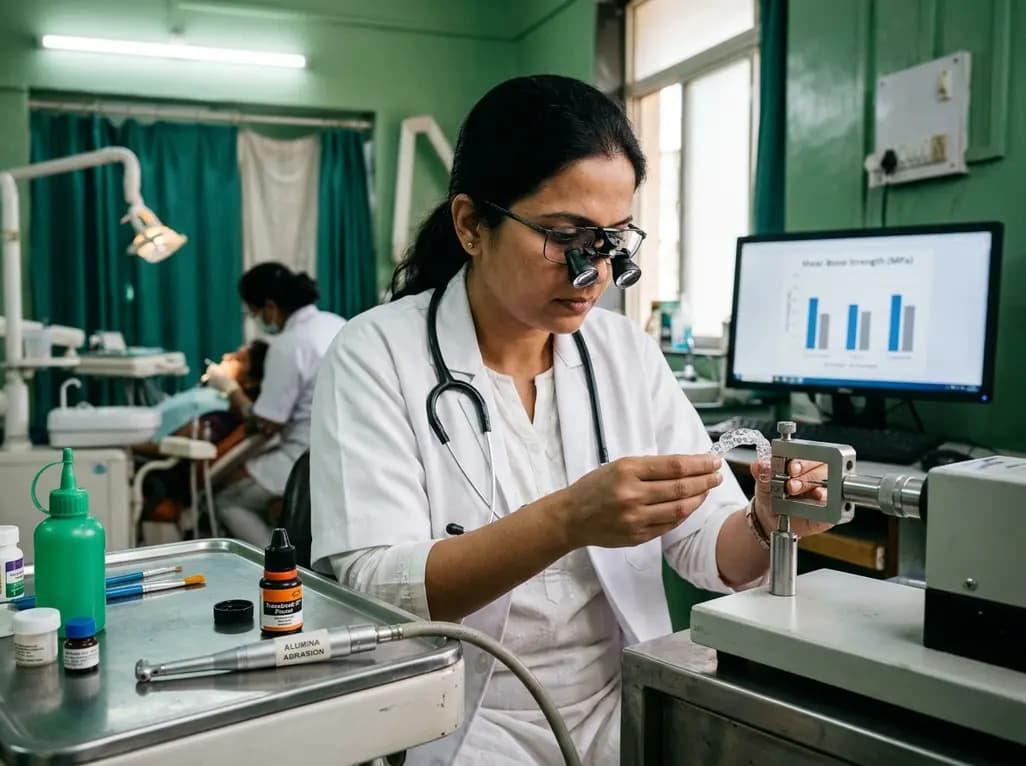
Clear aligner therapy continues to transform contemporary orthodontic care across clinical practices worldwide. However, managing complex tooth movements frequently requires dentists to bond auxiliaries directly onto thermoplastic appliances. Achieving dependable PET-G aligner bond strength represents a critical clinical challenge because standard composite adhesives bond poorly to smooth glycol-modified polyethylene terephthalate surfaces. When attachments or elastic hooks dislodge unexpectedly, treatment tracking stalls and patient chair time increases substantially. Therefore, orthodontic clinicians must identify reliable bonding protocols to enhance auxiliary retention and prevent mid-treatment appliance failures.
Orthodontists routinely prescribe clear aligners fabricated from PET-G because the polymer provides exceptional optical clarity, favorable flexibility, and reliable formability. Nevertheless, complex malocclusions often demand additional biomechanical forces that plastic alone cannot deliver. Clinicians frequently bond metal or composite buttons, elastics, and traction hooks onto aligners to correct sagittal discrepancies or rotate stubborn premolars. Unfortunately, PET-G possesses a dense, hydrophobic, and chemically inert surface that resists conventional chemical adhesion. When practitioners use standard bis-GMA composite resins without proper surface preparation, the bond interface frequently separates under intraoral masticatory and traction forces. Consequently, bracket or button debonding creates significant treatment delays and increases emergency visits. Furthermore, unexpected detachment can compromise patient compliance and degrade overall tracking predictability. In addition, repeated bonding attempts may distort thin thermoformed plastic trays and weaken their structural integrity. To overcome these interface hurdles, researchers actively investigate targeted surface conditioning techniques and alternative adhesive chemistries. Mechanical roughening and chemical primers alter the plastic substrate, thereby facilitating stronger micro-mechanical interlocking. Selecting the correct combination of material and surface treatment remains essential for establishing durable auxiliary retention during everyday orthodontic therapy.
To address this technical challenge, investigators designed a rigorous laboratory trial evaluating distinct conditioning methods and adhesive systems. The researchers randomly divided PET-G specimens into eight non-factorial experimental groups with eleven samples per cohort. Specifically, the study examined three prominent orthodontic adhesives: Transbond XT, LC Orthomite, and Super-Bond. The protocol evaluated each adhesive under untreated baseline conditions and following alumina air abrasion. Moreover, the team tested Transbond XT under two additional protocols involving chemical primer alone and alumina abrasion combined with primer. Alumina abrasion utilized microscopic particles to abrade the smooth polymer substrate and establish microscopic mechanical retentive features. Following surface preparation, the authors cured the adhesive resin cylinders onto the PET-G specimens according to standard manufacturer guidelines. Subsequently, the researchers subjected all prepared specimens to shear stress loading using a universal testing machine operating at 0.5 mm per minute. This controlled crosshead speed accurately recorded peak displacement forces prior to adhesive separation. Through this structured comparative design, the investigation systematically identified how distinct physical textures and chemical formulations influence the junctional integrity of clear aligner plastics. Furthermore, statistical analysis utilizing Kruskal-Wallis and Steel-Dwass tests provided robust verification of intergroup differences at a rigorous significance threshold.
The quantitative mechanical testing revealed striking performance disparities among the adhesive materials. Most notably, Super-Bond outperformed all other adhesives by generating significantly higher shear bond values, ranging from 25.1 to 27.0 MPa. Interestingly, Super-Bond achieved these superior values under both untreated baseline conditions and after alumina air abrasion. The self-curing methyl methacrylate adhesive contains 4-META and TBB, which chemically bond with synthetic polymers without requiring aggressive physical surface conditioning. In contrast, conventional light-cured composite adhesives demonstrated considerably lower retention when applied directly onto untreated PET-G surfaces. Transbond XT showed modest baseline bond strength, but specific preparatory steps significantly elevated its performance. For instance, alumina sandblasting significantly increased Transbond XT retention, while primer application independently produced a similar positive effect. Furthermore, combining alumina abrasion with chemical primer yielded the highest shear resistance for Transbond XT. Similarly, mechanical alumina abrasion significantly bolstered the bond values of LC Orthomite compared to its untreated baseline control. Therefore, clinicians who utilize standard light-cured composite resins must implement meticulous surface conditioning protocols. Without these preparatory treatments, conventional adhesives fail to achieve the clinically acceptable threshold required to withstand active orthodontic traction forces.
Beyond measuring numerical shear resistance, the investigators scrutinized the fractured surfaces using stereomicroscopy and field-emission scanning electron microscopy. This microscopic assessment offered profound insights into interfacial behavior and structural failure mechanisms. Specifically, the qualitative observations revealed a direct correlation between bond strength magnitude and fracture morphology. In the lower-strength experimental groups, adhesive failure predominated entirely. Under these circumstances, the resin cleanly separated from the smooth thermoplastic substrate, leaving the underlying PET-G surface virtually intact. This clean interfacial separation confirmed that insufficient mechanical micro-retention or chemical affinity existed between standard resins and raw plastic. In contrast, the high-strength groups exhibited markedly different debonding characteristics. Specimens prepared with Super-Bond or Transbond XT treated with alumina abrasion and primer frequently demonstrated cohesive failure within the PET-G material or mixed failure. Under high shear stress, the adhesive bond actually exceeded the internal tensile resistance of the plastic substrate. Consequently, the polymer fractured internally rather than debonding at the interface. Microscopic imaging demonstrated pronounced micro-retentive fissures created by alumina particles, facilitating deep resin penetration. These electron micrographs clearly illustrate why proper surface conditioning transforms a vulnerable superficial interface into a resilient, structurally integrated bond.
These laboratory outcomes provide actionable, evidence-based guidance for orthodontists managing complex aligner cases. Clear aligner therapy increasingly incorporates intermaxillary elastics, temporary anchorage devices, and rotational auxiliaries bonded onto thermoplastic shells. When clinicians select 4-META/MMA-TBB resin systems like Super-Bond, they achieve outstanding adhesion without requiring mechanical surface abrasion. This streamlined workflow eliminates dust contamination and preserves delicate thermoformed geometries from physical distortion. However, many practices prefer light-cured composite adhesives due to their familiar handling, immediate command set, and chairside availability. When practitioners bond with Transbond XT or LC Orthomite, relying solely on unconditioned plastic guarantees premature debonding. Instead, clinicians must systematically condition the bonding site with localized 50-micrometer alumina air abrasion. Furthermore, applying a dedicated orthodontic resin primer following air abrasion significantly enhances composite wetting and optimizes mechanical interlocking. Clinicians should exercise caution during chairside sandblasting to avoid creating excessive heat or thinning thin aligner margins. By tailoring surface conditioning protocols to the chosen adhesive chemistry, dental teams can dramatically decrease emergency appointments and improve biomechanical tracking. Ultimately, adopting these robust bonding protocols ensures predictable clinical results while maintaining the structural integrity of PET-G clear aligners.
Standard orthodontic composite resins rely primarily on micromechanical retention and chemical bonding to etched enamel or silanized porcelain. However, untreated PET-G presents an extremely smooth, non-polar, and chemically stable polymer surface. Standard dimethacrylate monomers cannot penetrate this dense plastic matrix at room temperature without prior surface alteration. Consequently, conventional composites establish only weak superficial interactions. These fragile bonds quickly fail under cyclic masticatory forces or continuous orthodontic elastic traction, leading to rapid adhesive debonding.
Alumina air abrasion propels fine aluminum oxide particles under controlled pressure against the aligner surface, systematically abrading the outer polymer layer. This process removes the inert superficial glaze and creates numerous micro-porosities and retentive undercuts. Consequently, the modified substrate exhibits significantly increased surface area and surface energy. When clinicians subsequently apply an adhesive or primer, the liquid resin infiltrates these microscopic irregularities. Polymerization then establishes robust micromechanical interlocking that substantially resists intraoral dislodging forces.
Super-Bond utilizes an advanced methyl methacrylate formulation initiated by tri-n-butylborane (TBB) and functionalized with 4-META. This specific chemical combination exhibits extraordinary wetting capabilities and monomer diffusivity into thermoplastic materials. The reactive liquid partially swells and penetrates the superficial PET-G polymer network without requiring prior physical roughening. As the monomer cures, it forms an interpenetrating polymer network directly within the aligner plastic. This molecular integration produces exceptional shear bond values exceeding twenty-five megapascals.
Disclaimer: This content is for informational and educational purposes only... Refer to the latest local and national guidelines for clinical practice.
References

Read summarized clinical updates, watch expert medical content, and earn CME certifications right from your smartphone.
Open your smartphone camera to scan and install.





A study evaluates surface treatments and adhesives on PET-G aligner shear bond strength. Super-Bond achieved high bond strength without pretreatment, while alumina abrasion and primer significantly enhanced Transbond XT and LC Orthomite retention.
Today
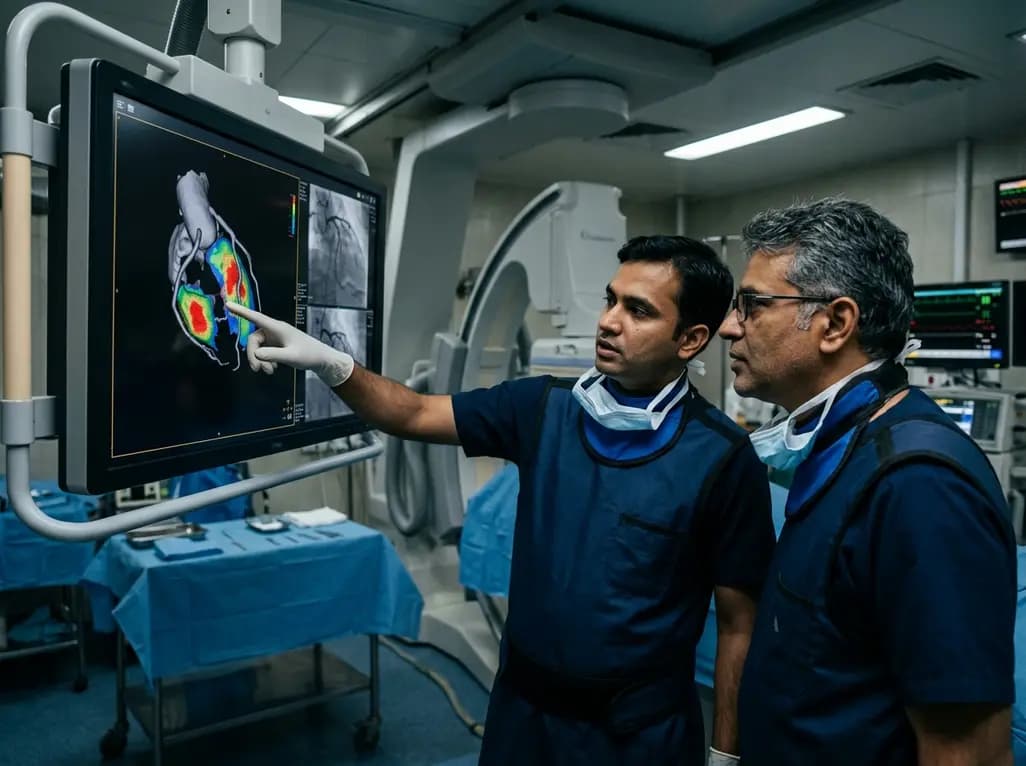
A groundbreaking study demonstrates that coronary angiography-derived radial wall strain reflects plaque morphology, predicting future rupture and erosion.
Today

A landmark randomized clinical trial published in NEJM reveals that high maternal intake of eggs and peanuts during pregnancy and lactation does not lower the risk of infant egg or peanut allergy at one year of age, reinforcing existing dietary recommendations for balanced maternal nutrition without restrictions.
Today
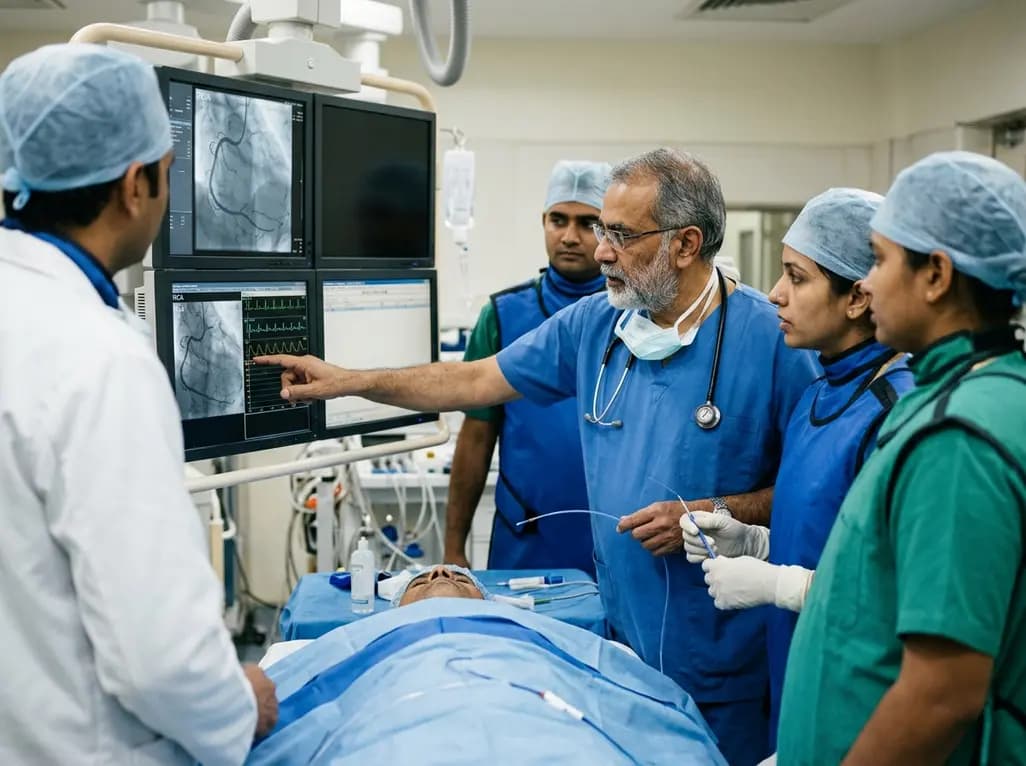
A nationwide Japan AMI Registry study reveals right ventricular involvement in RCA-related STEMI treated with PCI increases 12-month mortality (HR 2.05) and major bleeding (HR 2.28). In patients with RVI, major bleeding was tied to a nearly fivefold risk of death, highlighting crucial access and antithrombotic management.
Today

The SOLARIO trial shows that a short course (≤7 days) of systemic antibiotic therapy is noninferior to long courses (≥4 weeks) in orthopedic infections treated with local antibiotic carriers, with significantly fewer adverse events.
Today

Gestational diabetes doubles the future risk of type 2 diabetes for mothers and offspring. Adopting a life-course approach centered on family meals and brief, supportive nutrition messaging empowers households to reduce metabolic risks and establish sustainable dietary habits across generations.
Today
