.webp&w=384&q=75)

Loading, please wait...
Loading, please wait...
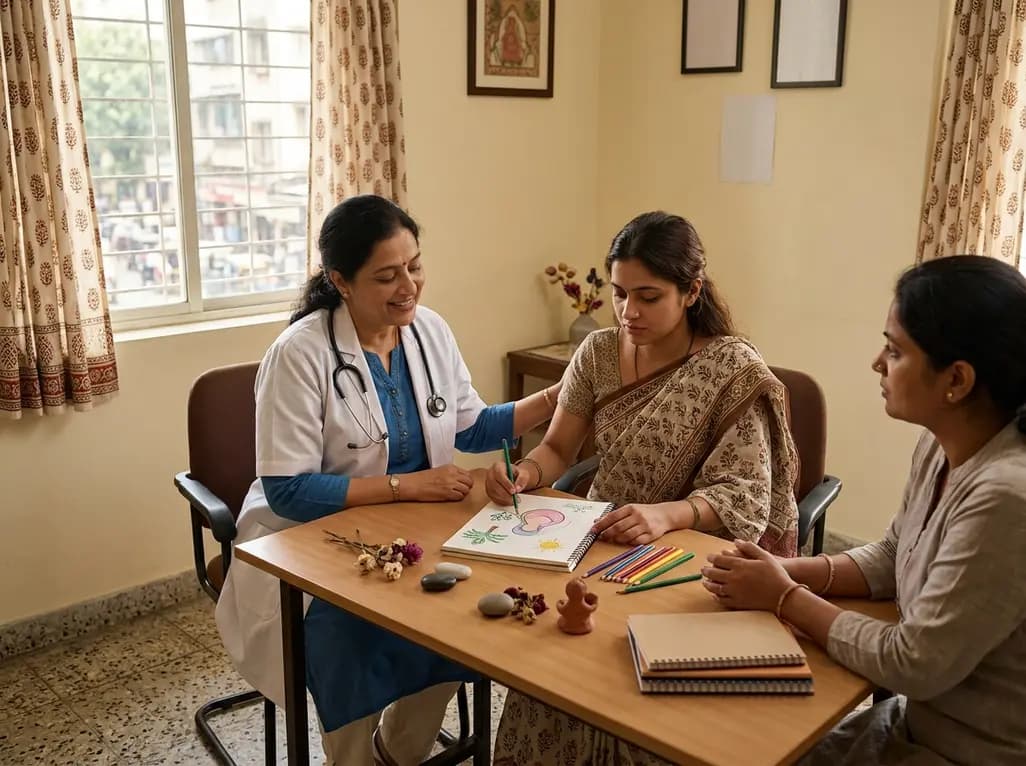
Perinatal mortality remains a profound global health challenge, particularly affecting women from minoritized backgrounds. Research consistently shows that these women experience significantly higher rates of stillbirth and neonatal death compared to their white counterparts. In India, where maternal health disparities are stark, the emotional and psychological toll of such losses often remains unaddressed. Addressing perinatal loss mental health requires a shift from traditional clinical models to more inclusive, culturally sensitive approaches. Many women from the global majority face significant barriers when attempting to access National Health Service (NHS) or similar public health services. These barriers often include a lack of cultural awareness among providers and a systemic failure to recognize unique grieving rituals. Consequently, many bereaved mothers suffer in silence, isolated by both their grief and their social environment. Improving mental health outcomes in this population necessitates exploring non-traditional therapeutic interventions. By identifying creative health methods, clinicians can provide more accessible pathways to healing. This article examines the vital role of arts and creative expression in fostering resilience after baby loss.
Creative health encompasses various non-pharmacological interventions that utilize artistic expression to improve wellbeing. These approaches include activities such as painting, journaling, music therapy, and community-based crafts. Specifically, these methods allow women to process complex emotions that words often fail to capture. For many women from minoritized backgrounds, traditional talk therapy may feel culturally distant or intimidating. In contrast, creative practices offer a safer space for emotional exploration. Research indicates that engaging in these activities can significantly reduce symptoms of anxiety and depression. Furthermore, these methods empower women by giving them agency over their own healing narrative. Instead of being passive recipients of care, participants become active creators of meaning. Clinicians should view creative health not just as an adjunct, but as a core component of holistic perinatal care. By integrating these practices into standard clinical protocols, health systems can better serve diverse populations. These interventions provide a vital bridge between clinical care and community-based support systems. Ultimately, they offer a versatile toolkit for addressing the multifaceted nature of grief.
A recent scoping review highlights how creative approaches facilitate a deeper understanding of baby loss among minoritized women. This process often involves navigating the \"unseen\" aspects of grief, such as identity shifts and societal silence. Importantly, perinatal loss mental health is heavily influenced by how a mother reconstructs her identity after the loss of her child. Creative expression allows these women to foster a continuing bond with their baby, which is a crucial element of healthy mourning. For instance, creating a memorial artwork or writing letters to the child helps maintain a spiritual or emotional connection. This connection provides comfort and reduces the sense of total abandonment often associated with stillbirth. Moreover, these creative acts help break the cultural silence surrounding baby loss in many communities. When women share their creative output, they often find that others have had similar experiences. This collective sharing reduces stigma and validates the mother’s pain. Consequently, the focus shifts from pathologizing grief to honoring the experience through tangible expression. This transformation is essential for long-term psychological recovery and emotional stability.
The journey after baby loss is frequently marked by a profound loss of self-concept. Mothers often struggle to define who they are when their role as a parent has been tragically altered. Creative health interventions provide a reflective mirror, helping women navigate this identity crisis. Through various artistic mediums, women can explore their changing roles and envision a future that incorporates their loss. Notably, this reflection is particularly important for women from minoritized backgrounds who may face intersectional challenges. These challenges include navigating racism within healthcare systems while simultaneously dealing with personal bereavement. Creative practices offer a private sanctuary to process these layered traumas. Additionally, these methods encourage women to identify their strengths and sources of resilience. By focusing on the act of creation, participants often rediscover a sense of purpose and competence. This renewed self-esteem is a critical buffer against the chronic stress associated with perinatal bereavement. Therefore, clinicians should actively encourage bereaved mothers to engage in self-reflective creative hobbies. Such activities serve as a vital lifeline during the most isolating periods of grief.
Isolation is one of the most significant risk factors for poor mental health after perinatal loss. Group-based creative methods are exceptionally effective at countering this isolation by fostering a sense of belonging. When minoritized women come together in creative spaces, they build supportive communities rooted in shared experience. These groups offer a unique form of peer support that is often more effective than formal counseling. Specifically, the shared focus on a creative task reduces the pressure to speak, allowing connection to happen organically. Participants frequently report feeling \"heard\" and \"seen\" without needing to explain their cultural context. Furthermore, these groups help dismantle the silence that often surrounds baby loss within specific ethnic communities. By normalizing the conversation through art, women feel more comfortable discussing their grief with their families. Consequently, the entire community benefits from increased awareness and reduced stigma. Healthcare providers should collaborate with local community organizations to establish these creative hubs. These partnerships ensure that the interventions remain culturally relevant and accessible to those who need them most.
Despite the evident benefits of creative health, there remains a significant lack of robust research in this area. Most existing studies focus on majority populations, leaving the unique needs of global majority women under-explored. Future research must prioritize culturally informed interventions that respect diverse traditions and belief systems. For clinicians in India, this means adapting creative health models to fit the local socio-cultural landscape. We need more longitudinal studies to determine the long-term impact of these interventions on maternal mental health. Additionally, researchers should explore which specific creative modalities are most effective for different cultural groups. Such data will allow for the development of tailored programs that maximize therapeutic outcomes. Addressing the current research gap is not just an academic necessity but a moral imperative. By building a stronger evidence base, we can advocate for better funding and integration of creative health into public policy. Ultimately, the goal is to ensure that every bereaved mother, regardless of her background, has access to high-quality support. This commitment to inclusive research will pave the way for a more equitable healthcare system.
Creative health provides a culturally safe and non-verbal outlet for expressing complex emotions that might be difficult to share in traditional clinical settings. It helps women from minoritized backgrounds navigate identity shifts and social silence. By fostering community connection and allowing for the creation of continuing bonds with their baby, these approaches reduce isolation and empower women to take an active role in their own psychological healing journey.
Group-based activities are vital because they counter the deep isolation often felt after perinatal loss. These sessions create a sense of belonging and provide a platform for shared experiences among women with similar cultural backgrounds. By working on creative projects together, participants find organic ways to support one another, which helps dismantle community stigmas and encourages open dialogue about grief and mental health within their social circles.
Current research often underrepresents the experiences of women from the global majority, leading to a lack of culturally sensitive support options. More research is essential to understand how different cultural rituals and societal pressures influence the grieving process. This data helps clinicians develop tailored, effective interventions that respect diverse traditions. Closing this research gap ensures that mental health services are equitable and accessible to all bereaved mothers regardless of ethnicity.
Disclaimer: This content is for informational and educational purposes only. It does not constitute professional medical advice, diagnosis, or treatment. Always seek the advice of your physician or other qualified healthcare provider with any questions you may have regarding a medical condition. Refer to the latest local and national guidelines for clinical practice.
References
Verdi E et al. Creative Health and the Impact on Mental Health Support for Women From Minoritized Backgrounds Experiencing Baby Loss: A Scoping Review. Birth. 2026 Jul 05. doi: 10.1111/birt.70092. PMID: 42402010.
Zahmatkesh M et al. The role of art therapy on quality of life of women with recent pregnancy loss: A randomized clinical trial. PLOS One. 2024;19(7):e0305403. doi: 10.1371/journal.pone.0305403.
Votruba N et al. Experts come together for urgent action on perinatal mental health in India. The George Institute for Global Health. 2025 Sep 23.
"
Read summarized clinical updates, watch expert medical content, and earn CME certifications right from your smartphone.
Open your smartphone camera to scan and install.





This scoping review explores creative health's role in supporting the mental wellbeing of minoritized women after baby loss. It highlights the importance of identity, community belonging, and culturally sensitive interventions to address the disparities in perinatal mental health care.
3 months ago

As monsoon seasons elevate arboviral disease threats, Tamil Nadu has initiated an ICMR-monitored evaluation of the tetravalent dengue vaccine in Tenkasi district. Clinicians emphasize clinical monitoring, public prevention, and high-quality early pediatric care to reduce disease morbidity across endemic regions.
Today

A comparative cohort study evaluates vNOTES vs TLH hysterectomy for benign conditions, demonstrating shorter operative duration, faster return to daily activities, and equivalent female sexual function scores without increased dyspareunia.
Today

Review how tailored exercise programs benefit frail older patients with heart failure. Explore pathophysiological mechanisms, individualized training prescriptions, and strategies to overcome adherence barriers in clinical practice.
Today

This comparative study evaluates posterior labral tears with and without glenohumeral instability, highlighting distinct demographic patterns, MRI underestimation in stable shoulders, and successful arthroscopic repair outcomes.
Yesterday

A clinical study demonstrates that early intervention with tocilizumab, either as monotherapy or bridged with corticosteroids, achieves significant proptosis reduction and resolves active inflammation in treatment-naive thyroid eye disease.
Today
