.webp&w=384&q=75)

Loading, please wait...
Loading, please wait...

Recent advances in dynamic organ preservation have transformed modern DCD liver transplantation worldwide. Historically, donation after circulatory death carried elevated risks of ischemic cholangiopathy under static cold storage. However, innovative perfusion methods mitigate warm ischemic insults during recovery. Specifically, clinicians utilize in situ normothermic regional perfusion (NRP) and ex situ normothermic machine perfusion (NMP) with great success. Consequently, transplant teams now accept higher-risk grafts with greater clinical confidence. This detailed analysis examines national registry trends, graft viability criteria, and post-transplant outcomes relevant to hepatologists and transplant surgeons.
Perfusion technology has shifted from an experimental technique to the standard of care for circulatory death donors. In the Scientific Registry of Transplant Recipients (SRTR) database, researchers assessed 6,182 adult recipients who underwent transplantation between 2021 and 2025. Over this observation window, standard static cold storage declined dramatically as centers integrated active machine perfusion. For instance, by early 2025, approximately 80 percent of all circulatory death allografts underwent dynamic perfusion prior to implantation.
Moreover, clinicians primarily selected NMP alone, which accounted for 38.0 percent of all cases in the study cohort. Meanwhile, NRP alone represented 16.3 percent, and combined sequential NRP plus NMP comprised 6.9 percent of procedures. Static preservation without any perfusion fell to 38.8 percent across the entire era. Notably, the rapid uptake of perfusion reflects surgeon confidence in restoring cellular energy stores before reperfusion. Furthermore, these technological interventions allow detailed real-time metabolic testing, including continuous lactate clearance assessment and bile production monitoring. Therefore, active perfusion has completely revolutionized contemporary graft preservation protocols.
Transplant centers display distinct technical preferences when implementing dynamic preservation techniques. Specifically, NMP alone serves as the dominant strategy nationwide because mobile devices facilitate ex situ preservation during extended transport. In contrast, surgeons preferentially employ NRP for locally allocated grafts where specialized cannulation teams operate within local procurement hospitals. Because NRP restores warm oxygenated blood flow in situ, it re-establishes physiologic circulation before cold flush.
Consequently, local procurement organizations increasingly establish standardized NRP regional protocols to support multiple recipient centers simultaneously. However, logistical complexity and surgical expertise requirements currently constrain universal NRP implementation. In addition, centers that combine both modalities typically utilize NRP for initial donor recovery, followed immediately by NMP for subsequent organ transport and assessment. Thus, the choice between NRP and NMP depends heavily on geographical distances, organ sharing logistics, and local institutional equipment. Regardless of the exact pathway chosen, centers continue to phase out unperfused preservation protocols.
The selective application of perfusion reflects deliberate clinical risk mitigation by multidisciplinary transplant committees. In national cohorts, perfusion modalities were utilized far more frequently in marginal donors possessing elevated risk profiles. For example, surgical teams applied active perfusion to grafts obtained from older donors and individuals with significant body mass indices. In contrast, transplant centers more frequently utilized unperfused static storage for younger donors with minimal warm ischemia times.
Furthermore, dynamic preservation mitigates the elevated susceptibility of steatotic livers to severe ischemia-reperfusion injury. Under normothermic conditions, mitochondrial respiration resumes, replenishing adenosine triphosphate levels while flushing inflammatory cytokines from microvascular beds. Therefore, active perfusion transforms previously marginal allografts into viable clinical resources. Additionally, real-time hemodynamic tracing and perfusate gas analysis enable clinicians to verify graft recovery objectively. As a result, transplant programs have substantially expanded their donor acceptance criteria without compromising recipient safety.
Clinical registry analysis reveals unmistakable graft survival advantages associated with dynamic preservation techniques. Specifically, all three perfusion strategies—NMP alone, NRP alone, and combined NRP plus NMP—demonstrated superior early death-censored graft survival compared with unperfused storage. By minimizing severe cellular necrosis and biliary epithelial injury, perfusion protects against early allograft dysfunction. Moreover, reduced ischemic cholangiopathy rates directly improve long-term allograft durability.
Interestingly, the registry data showed that combined sequential NRP plus NMP provided no significant short-term survival superiority over either modality alone. Both single-modality approaches achieved outstanding early graft performance when properly executed. Furthermore, overall patient survival remained statistically comparable across all preservation categories, indicating excellent recipient selection and post-operative critical care. Consequently, clinicians should select preservation tools based on institutional capabilities and donor logistics rather than assuming dual perfusion always confers superior biological outcomes.
A notable disparity exists in perfusion adoption between high-volume and low-volume transplant centers. High-volume academic centers perform the vast majority of perfused DCD liver transplant procedures, driving technological innovation and protocol refinement. In contrast, smaller programs frequently lack the dedicated perfusion staff and financial resources required to maintain capital-intensive hardware. Consequently, lower-volume centers continue to utilize static cold storage more frequently, accepting younger donors with strict ischemic thresholds.
Furthermore, national organ sharing policies directly influence preservation modality selection. When procurement teams transport organs over long distances, NMP provides continuous oxygenation while overcoming strict cold ischemic time limitations. Conversely, local organ allocation allows rapid cannulation and in situ recovery via NRP without prolonged transit delays. Therefore, bridging the technology gap between institutions requires coordinated regional procurement networks and shared perfusion platforms. Ultimately, democratizing access to machine perfusion will enhance deceased donor utilization across all transplant jurisdictions.
Although current data do not confirm routine superiority for dual-modality perfusion, sequential NRP plus NMP holds intriguing promise for specific high-risk scenarios. For instance, extremely marginal livers that display borderline lactate clearance during NRP might benefit from secondary evaluation on ex situ NMP. In addition, extended transit times across vast geographical distances may justify secondary machine preservation after initial in situ recovery.
However, dual perfusion adds substantial operational expenses, redundant equipment needs, and complex surgical handoffs. Therefore, identifying precise biomarkers that justify sequential intervention remains an urgent research priority for transplant hepatology. Future randomized prospective trials must establish whether sequential perfusion prevents late biliary strictures or chronic ductopenic rejection. Until such evidence emerges, clinicians should judiciously individualize perfusion protocols based on graft risk and transit logistics.
Normothermic regional perfusion operates inside the donor body using extracorporeal circuit technology to restore oxygenated blood flow following circulatory arrest. In contrast, normothermic machine perfusion functions ex situ after surgical organ procurement. NMP continuously pumps oxygenated, nutrient-rich perfusate through the hepatic artery and portal vein during transit. While NRP permits in situ systemic stabilization, NMP offers extended portable preservation and continuous viability assessment outside the donor body.
Both NRP and NMP independently provide robust cellular protection against warm ischemic insults, replenishing mitochondrial energy stores and reducing reperfusion injury. Consequently, single-modality preservation already achieves exceptional early graft survival rates, leaving minimal margin for additional short-term improvement. Furthermore, introducing a second perfusion device increases technical complexity, cold transitions, and logistical touchpoints. Therefore, routine sequential perfusion provides redundant preservation without measurable early clinical benefit in standard donor scenarios.
Transplant teams should balance organ sharing distances, donor risk factors, and institutional resources when selecting preservation strategies. For local procurements, NRP offers cost-effective in situ resuscitation for abdominal organs simultaneously. Conversely, for distant procurements requiring flight transport, portable NMP protects against prolonged cold ischemia while enabling continuous viability assessment. Ultimately, centers should utilize the perfusion modality that matches their technical logistics, local procurement team training, and organ transit requirements.
Disclaimer: This content is for informational and educational purposes only... Refer to the latest local and national guidelines for clinical practice.
References

Read summarized clinical updates, watch expert medical content, and earn CME certifications right from your smartphone.
Open your smartphone camera to scan and install.





A US registry study of 6,182 DCD liver transplants reveals that 80% of grafts now utilize machine perfusion. Both NRP and NMP significantly improve early death-censored graft survival over static cold storage, though sequential dual perfusion provides no added short-term benefit over single-modality preservation.
Today
Patients with cancer are increasingly admitted to ICUs with severe complications unique to their malignant disease. This clinical review outlines essential diagnostic and management strategies for acute oncological emergencies, focusing on metabolic, cardiovascular, and neurological critical syndromes.
Today

The Delhi Cabinet has approved a key policy revision doubling the fixed monthly allowance for accredited social health activists. This financial enhancement bolsters grassroots maternal and child healthcare delivery, strengthens urban public health surveillance, and improves frontline community health worker retention.
Today
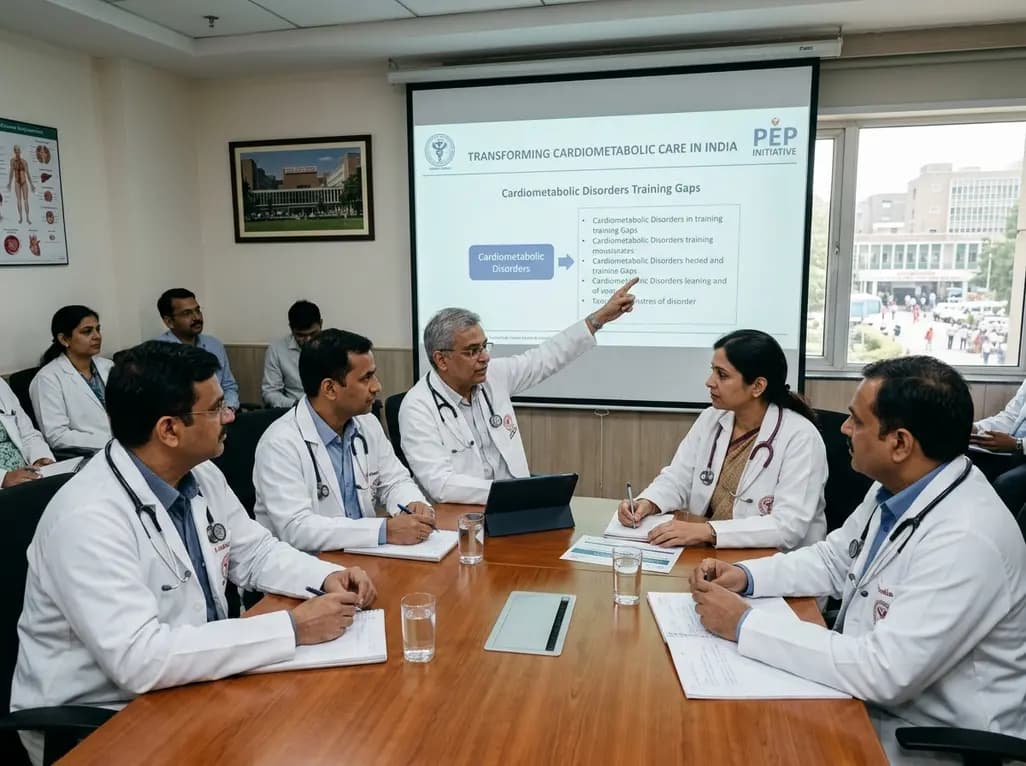
The All India Institute of Medical Sciences has convened national health experts, policymakers, and state nodal officers to transform medical training for cardiometabolic disorders. This collaborative effort under the PEP initiative addresses training gaps to elevate chronic disease care across Indian healthcare.
Today
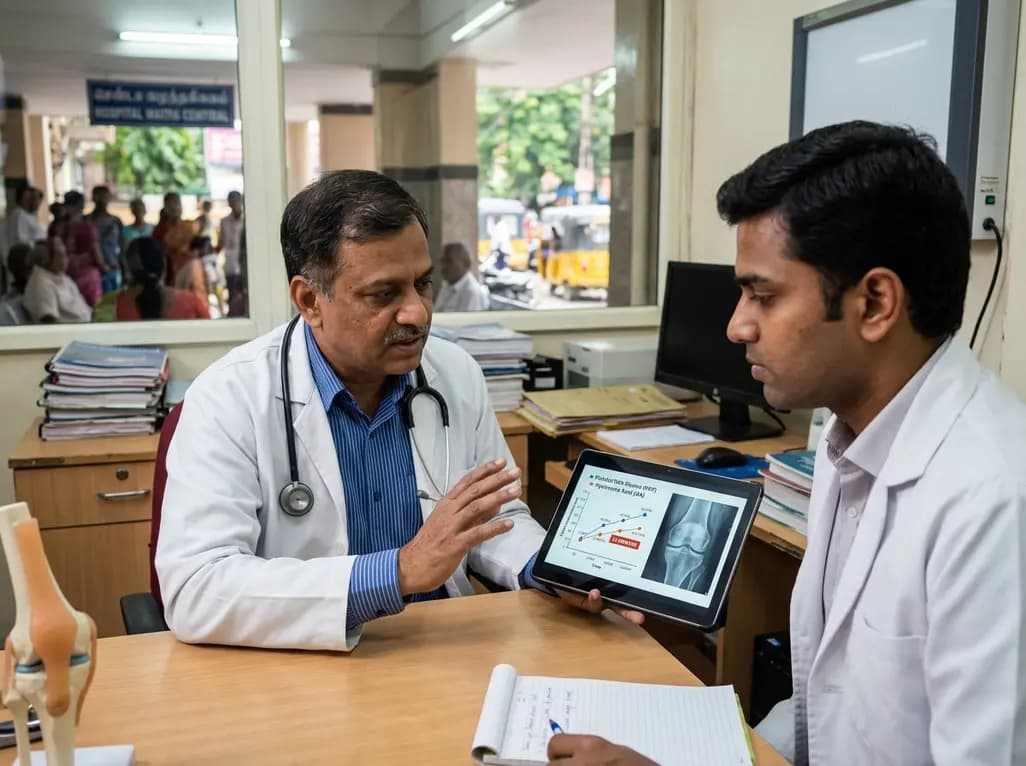
A systematic review and meta-analysis of 21 RCTs reveals that platelet-rich plasma provides small but statistically superior pain relief and functional improvements compared to hyaluronic acid at 12 months in knee osteoarthritis, influenced by platelet concentration and leukocyte enrichment.
Today

A multicenter real-world prospective study in Taiwan demonstrates that liraglutide effectively reduces body weight and BMI standard deviation score in adolescents with obesity. The therapy shows a favorable safety profile with mild gastrointestinal adverse events and zero treatment discontinuations due to intolerance.
Today
