.webp&w=384&q=75)

Loading, please wait...
Loading, please wait...

Knee osteoarthritis remains a major source of chronic pain and mobility impairment worldwide. In clinical practice, orthopedists frequently encounter patients who fail oral anti-inflammatory drugs and physical therapy. Consequently, biological injectables offer an appealing therapeutic option before considering total joint arthroplasty. Injecting PRP for knee osteoarthritis has surged in clinical adoption alongside established hyaluronic acid viscosupplementation. However, comparative clinical efficacy data have generated significant debate among orthopedic surgeons. A new systematic review and meta-analysis of 21 randomized controlled trials provides valuable clinical clarity on this question.
Researchers evaluated 21 randomized trials with 1,790 patients to compare autologous plasma against viscosupplementation. Initially, patient outcomes demonstrated comparable pain relief during early post-injection monitoring. At three and six months, visual analog scale pain scores showed no statistically significant difference between the two cohorts. Consequently, patients can expect similar symptom mitigation during preliminary months following either treatment.
However, a distinct clinical divergence emerged at the 12-month follow-up milestone. At one full year, autologous plasma produced significantly greater pain reduction compared to hyaluronic acid injections. Specifically, the pooled results demonstrated a standardized mean difference of 0.76 favoring the biological intervention. Furthermore, functional evaluations via the Western Ontario and McMaster Universities Osteoarthritis Index favored autologous plasma across all follow-up intervals. These improvements suggest that autologous biological therapy delivers superior symptomatic durability over extended clinical timeframes. Therefore, clinicians treating chronic osteoarthritis can consider autologous plasma for sustained mid-term relief. Nevertheless, orthopedists should counsel individuals that pain resolution unfolds gradually rather than instantaneously.
Although functional recovery favored biological injections on primary scoring tools, the global functional picture remained nuanced. The systematic review confirmed that Western Ontario and McMaster functional gains persisted consistently throughout follow-up. In contrast, secondary outcome measures failed to demonstrate any meaningful advantage for autologous plasma over viscosupplementation. Specifically, researchers observed no statistically significant differences between treatment cohorts when analyzing Knee Injury and Osteoarthritis Outcome Scores.
Similarly, evaluations utilizing the International Knee Documentation Committee subjective form demonstrated equivalent outcomes between the two interventions. Therefore, practitioners must interpret these diverse functional results with clinical caution. Notably, different clinical assessment instruments emphasize distinct aspects of daily joint mechanics and recreational performance. Substantial statistical heterogeneity also existed across the reviewed clinical trials. Moreover, several included studies demonstrated unclear allocation concealment risks. Consequently, clinicians should view these functional advantages as modest rather than completely transformative. Accordingly, physicians must evaluate patient physical demands before selecting specific intra-articular therapies.
Technical preparation parameters significantly influence biological activity within the degenerative synovial environment. Subgroup analyses demonstrated that platelet concentration plays a critical role in determining therapeutic success at 12 months. Specifically, formulations with high platelet concentrations achieved superior pain relief and functional restoration compared to low-concentration preparations.
Furthermore, metaregression analyses confirmed that final platelet concentration serves as an independent positive predictor of 12-month clinical efficacy. Cellular composition also altered patient recovery trajectories in unexpected ways. Formulations containing leukocyte-rich plasma produced superior clinical outcomes at one year compared to leukocyte-poor preparations. This observation challenges conventional beliefs that white blood cells promote deleterious joint inflammation. Additionally, exogenously activating the plasma suspension before injection yielded enhanced functional improvement over non-activated preparations. Therefore, laboratory protocols and processing kits directly determine downstream clinical efficacy. Orthopedic specialists should carefully select preparation systems that guarantee robust platelet concentration and appropriate cellular activation. Consequently, clinicians cannot consider all autologous biological products therapeutically equivalent.
Physicians frequently debate whether single injections or multi-injection regimens optimize patient joint preservation. Consequently, the systematic review analyzed injection frequency to determine if repetitive dosing improves therapeutic outcomes. Surprisingly, subgroup analysis revealed that injection frequency had no consistent or statistically significant effect on 12-month pain and function.
Patients who received a single intra-articular injection achieved clinical outcomes comparable to patients receiving multiple serial cycles. Therefore, increasing procedural repetition does not necessarily yield greater symptomatic improvement for degenerative knees. Furthermore, multiple injections elevate patient discomfort, clinic visits, and financial burden. This finding indicates that biological concentration and cellular quality matter far more than injection repetition. Clinicians can accordingly tailor dosing schedules around individual clinical responses rather than enforcing rigid multidose protocols. Nevertheless, further high-quality randomized trials must directly compare specific dosing regimens. Thus, clinicians should exercise restraint before recommending frequent serial injections without clear symptomatic rationale. Additionally, a personalized injection schedule preserves healthcare resources while maintaining patient compliance.
Translating these meta-analytic findings into real-world practice requires judicious patient selection and clear communication. Orthopedic surgeons in India frequently manage advanced knee osteoarthritis characterized by severe joint space narrowing. However, autologous biological injectables deliver their greatest clinical benefit in mild-to-moderate degenerative disease. Clinicians must explain that autologous plasma provides modest symptomatic relief rather than structural cartilage regeneration.
Furthermore, managing patient expectations remains critical during initial consultations. Patients should understand that pain reduction during the initial six months mirrors that achieved with hyaluronic acid. Consequently, the distinct benefits of autologous biological therapy emerge primarily over extended follow-up. Moreover, intra-articular injections must accompany comprehensive non-pharmacological management. Clinicians should consistently combine injectable therapies with structured quadriceps rehabilitation, lifestyle modifications, and weight reduction programs. Therefore, autologous plasma serves as a valuable adjunct within a multimodal treatment plan rather than an isolated curative intervention. Ultimately, shared clinical decision-making ensures appropriate therapy selection aligned with patient goals.
Platelet-rich plasma demonstrates comparable pain reduction to hyaluronic acid during the first three to six months following intra-articular administration. However, clinical meta-analyses reveal that platelet-rich plasma achieves statistically superior pain relief at the 12-month follow-up milestone. This autologous treatment provides extended symptomatic durability, although the overall magnitude of clinical difference remains relatively modest throughout the first year of management.
Yes, platelet concentration significantly influences long-term clinical outcomes in knee osteoarthritis treatment. Meta-regression analyses confirm that higher platelet concentrations positively predict superior pain reduction and functional scores at 12-month follow-ups. In addition, preparations enriched with leukocytes and pre-activated prior to injection demonstrate enhanced clinical efficacy compared to non-activated, low-concentration formulations, highlighting the vital importance of standardized biological preparation protocols in orthopedic practice.
Subgroup analyses from systematic reviews indicate that injection frequency does not consistently alter 12-month clinical outcomes in knee osteoarthritis. Patients receiving a single intra-articular injection experienced pain relief and functional improvements comparable to those receiving multiple serial sessions. Consequently, clinicians should prioritize obtaining an adequate platelet concentration and appropriate cellular composition rather than routinely subjecting patients to repeated, costly injection procedures.
Disclaimer: This content is for informational and educational purposes only and does not constitute medical advice, diagnosis, or treatment. Healthcare professionals should exercise their independent clinical judgment when evaluating medical literature and individual patient needs. Refer to the latest local and national guidelines for clinical practice.
References

Read summarized clinical updates, watch expert medical content, and earn CME certifications right from your smartphone.
Open your smartphone camera to scan and install.





A systematic review and meta-analysis of 21 RCTs reveals that platelet-rich plasma provides small but statistically superior pain relief and functional improvements compared to hyaluronic acid at 12 months in knee osteoarthritis, influenced by platelet concentration and leukocyte enrichment.
Today
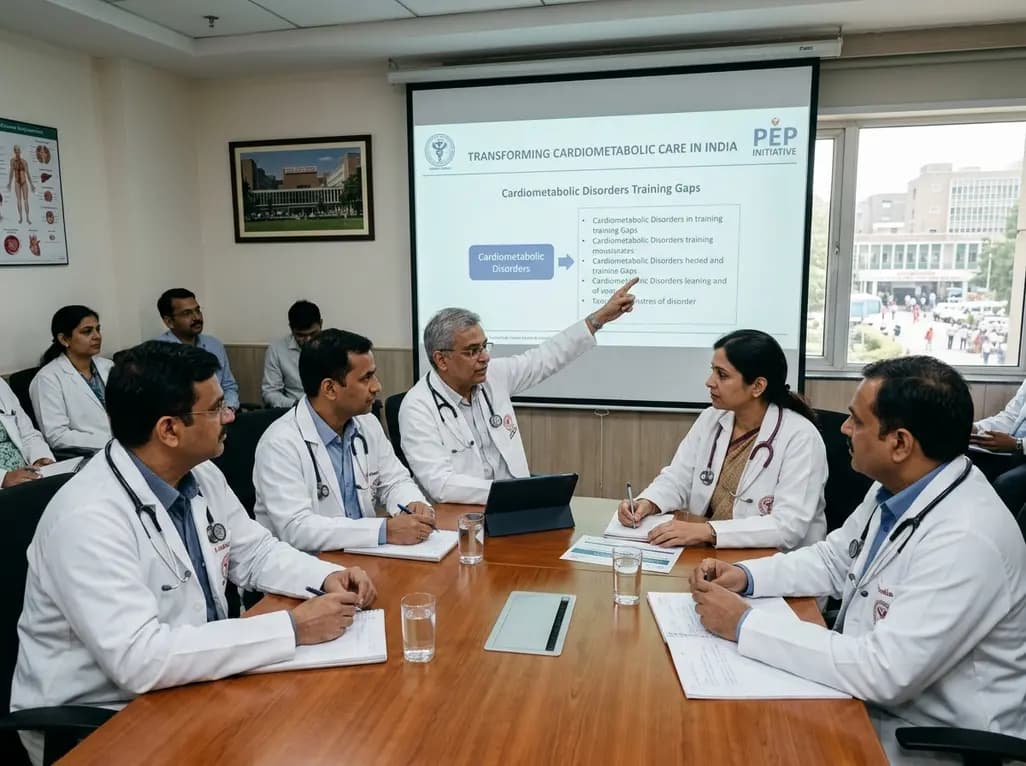
The All India Institute of Medical Sciences has convened national health experts, policymakers, and state nodal officers to transform medical training for cardiometabolic disorders. This collaborative effort under the PEP initiative addresses training gaps to elevate chronic disease care across Indian healthcare.
Today

A recent qualitative study examines how college students seek digital sexual health information under persistent uncertainty. Discover the concept of functional trust, the clinical hazards of search abandonment, and evidence-based approaches clinicians can adopt to guide youth toward verified reproductive healthcare.
Today

A randomized controlled trial demonstrates that curated FOAMed videos and podcasts produce superior gains in high-risk ECG interpretation and acute coronary syndrome clinical decision-making compared with print-based materials among interprofessional emergency care teams.
Today

A multicenter real-world prospective study in Taiwan demonstrates that liraglutide effectively reduces body weight and BMI standard deviation score in adolescents with obesity. The therapy shows a favorable safety profile with mild gastrointestinal adverse events and zero treatment discontinuations due to intolerance.
Today
