.webp&w=384&q=75)

Loading, please wait...
Loading, please wait...

Estimated glomerular filtration rate remains the cornerstone metric for assessing renal function and guiding therapeutic interventions worldwide. Clinicians routinely define chronic kidney disease as a sustained estimated glomerular filtration rate below 60 mL/min/1.73 m² for over three months. However, applying this uniform cutoff across all age brackets presents considerable diagnostic challenges. Because physiological nephron loss causes filtration capacity to decline naturally after age forty, adopting percentile charts for eGFR offers an evidence-based alternative to rigid thresholds. This paradigm shifts renal evaluation toward an age-standardized framework, much like the growth trajectories long utilized in general pediatrics.
Conventional nephrology guidelines establish a single diagnostic dividing line regardless of whether a patient is twenty-five or eighty-five years old. Consequently, an elderly individual with an estimated rate of 55 mL/min/1.73 m² and completely normal urine chemistry receives an automatic diagnostic label of chronic kidney disease. This uniform approach frequently causes unnecessary patient anxiety, excessive diagnostic workups, and premature pharmaceutical interventions. Conversely, relying solely on a fixed numerical limit fails younger adults whose filtration capacity drops significantly yet remains above sixty. Therefore, physicians often miss early opportunities to mitigate progressive renal damage in younger cohorts.
Physiological aging inherently alters renal microarchitecture. Healthy individuals typically lose approximately 0.75 to 1 mL/min/1.73 m² of filtration capability annually after the fourth decade. In addition, cellular senescence, arterial intimal thickening, and global glomerulosclerosis contribute to this predictable functional decrease. When practitioners ignore normal biological aging, they risk pathologizing ordinary senescence. Furthermore, pediatric populations present unique anatomical dynamics, as serum creatinine concentrations naturally change alongside muscle development and skeletal expansion. Accordingly, clinicians require standardized reference distributions that distinguish genuine intrinsic nephropathy from normal somatic development or benign senescence.
To overcome the shortcomings of static thresholds, investigators applied an indirect statistical method using extensive clinical production data to construct percentile charts for eGFR. Researchers analyzed serum creatinine distributions from a healthy cohort of white Europeans ranging from 2 to 84 years of age. By mining routine laboratory databases and filtering out individuals with overt comorbidities, investigators derived reference percentiles of serum creatinine. Subsequently, they converted these biochemical percentiles into continuous filtration rate curves using the European Kidney Function Consortium equation, which smoothly scales from infancy to extreme old age.
This innovative mathematical model directly resolves the mathematical artifacts and sudden discontinuities that affect piecewise equations. Traditional adult equations, such as the Chronic Kidney Disease Epidemiology Collaboration formula, often introduce sharp discrepancies when young patients transition out of pediatric care. In contrast, the indirect population-based method produces smooth, age-dependent percentile trajectories. Consequently, clinicians can track a patient’s renal performance along stable percentiles across their entire lifespan. Furthermore, this distribution-based methodology provides empirical percentiles—including the 2.5th, 10th, 50th, and 95th percentiles—that permit accurate risk stratification based on deviations from age-matched population averages.
Evaluating these novel curves reveals important similarities and divergences when compared with earlier clinical studies. For children aged 6 to 12 years, the newly generated percentiles align remarkably well with previously published validation studies of healthy European pediatric populations. This tight alignment validates the indirect statistical technique for tracking renal maturation during childhood growth spurts. Pediatricians can therefore rely on these trajectories to identify genuine developmental deficits without relying on complex height-dependent equations that frequently introduce measurement errors in routine practice.
Conversely, between the ages of 20 and 84 years, the newly constructed trajectories differ somewhat from reference curves derived from selected healthy adult cohorts. Specifically, the median filtration trajectories generated via indirect production data display minor variations in rate-of-decline slopes during middle adulthood. These variations likely stem from differences in cohort selection, environmental factors, and baseline laboratory sampling criteria. While prospective healthy cohorts rigorously exclude individuals with borderline hypertension or dyslipidemia, real-world production datasets encompass broader population variance. Nevertheless, the resulting percentile boundaries consistently reflect the universal, age-dependent decrement in filtration, confirming the clinical validity of continuous reference curves.
Adopting continuous percentiles directly addresses the widespread overdiagnosis of chronic kidney disease among geriatric populations. Under an age-adapted percentile model, clinicians define abnormally low kidney function as a filtration rate falling below the 2.5th or 5th percentile for an individual’s specific age and sex. Thus, an eighty-year-old patient with an estimated rate of 52 mL/min/1.73 m² and absent albuminuria might fall comfortably within the 25th percentile of normal aging. As a result, physicians can confidently reassure the patient while avoiding inappropriate medication adjustments and unnecessary specialist consultations.
Furthermore, reference percentiles enhance clinical vigilance for young and middle-aged adults. For example, a thirty-year-old individual whose filtration rate drops from 115 to 70 mL/min/1.73 m² remains technically normal under the rigid 60-unit threshold. However, plotting this patient on reference charts reveals a plunge below the 5th percentile for age. Such an alarming decline alerts the attending physician to investigate occult glomerulonephritis, toxic exposures, or secondary metabolic complications. Consequently, percentile charts encourage proactive intervention decades before end-stage damage manifests. Clinicians can initiate nephroprotective therapies, optimize glycemic control, and control blood pressure when lifestyle modifications yield the highest therapeutic return.
While European data established these initial curves, their broader clinical application demands careful interpretation in diverse healthcare settings, including India and other low- and middle-income regions. South Asian populations frequently present with earlier onsets of type 2 diabetes, accelerated cardiovascular disease, and distinct body composition profiles. Specifically, lower average muscle mass and vegetarian dietary habits alter endogenous creatinine generation. Therefore, applying reference equations requires local validation to ensure that serum creatinine percentiles accurately mirror true clearance capacity across different ethnic backgrounds.
Additionally, modern clinical laboratories should incorporate automated percentile reporting into standard electronic health record interfaces. When laboratories report an isolated numerical filtration estimate alongside an age-adjusted percentile ranking, general practitioners can immediately interpret the biological significance of borderline values. Moreover, integrating albuminuria assessments remains mandatory, because low percentiles combined with pathological albumin-to-creatinine ratios universally indicate progressive parenchymal disease. By transitioning toward standardized, age-calibrated reference tools, healthcare systems can rationalize nephrology referrals, reduce healthcare expenditures, and deliver personalized, stage-appropriate kidney care throughout the entire human lifespan.
The standard cutoff of 60 mL/min/1.73 m² fails to account for normal age-related structural nephron loss after age forty. Consequently, many healthy elderly individuals with mild, non-progressive declines in filtration and no proteinuria are incorrectly diagnosed with chronic kidney disease. This uniform threshold generates excessive clinical anxiety, leads to unnecessary drug dose reductions, and burdens specialized healthcare resources without offering proven clinical benefit to the patient.
Young adults typically maintain filtration rates well above 100 mL/min/1.73 m². When a younger patient experiences substantial loss of kidney function down to 65 mL/min/1.73 m², a static threshold classifies them as normal. In contrast, percentile charts clearly show that this level falls far below the expected 5th percentile for age, alerting clinicians to initiate timely diagnostic workups and protective interventions.
No, percentile charts cannot replace urine albumin-to-creatinine ratio testing. Glomerular filtration rate and urinary albumin excretion measure two entirely distinct dimensions of renal health. Even if a patient exhibits an age-appropriate filtration percentile, persistent albuminuria signifies ongoing glomerular barrier damage or systemic endothelial dysfunction. Therefore, comprehensive renal evaluations must always combine age-standardized filtration percentiles with quantitative urinary albumin measurements to determine true prognosis.
Disclaimer: This content is for informational and educational purposes only and does not constitute formal medical advice, diagnosis, or treatment. Healthcare professionals must exercise independent clinical judgment when interpreting renal function biomarkers and diagnostic thresholds. Individual patient management should account for clinical presentation, comorbid illnesses, and relevant demographic factors. Refer to the latest local and national guidelines for clinical practice.
References
Åsberg A et al. Percentile charts for eGFR. Scand J Clin Lab Invest. 2026 Sep 21. doi: 10.1080/00365513.2026.2727994. PMID: 42765280.
Delanaye P, Jager KJ, Bökenkamp A, et al. CKD: A call for an age-adapted definition. J Am Soc Nephrol. 2019;30(10):1785-1805.
Pottel H, Björk J, Courbebaisse M, et al. Development and validation of a new European Kidney Function Consortium equation for estimating glomerular filtration rate. Ann Intern Med. 2021;174(2):183-191.
Kidney Disease: Improving Global Outcomes (KDIGO) CKD Work Group. KDIGO 2024 Clinical Practice Guideline for the Evaluation and Management of Chronic Kidney Disease. Kidney Int. 2024;105(4S):S117-S314.

Read summarized clinical updates, watch expert medical content, and earn CME certifications right from your smartphone.
Open your smartphone camera to scan and install.





A fixed eGFR cutoff of 60 mL/min/1.73 m² across all ages risks overdiagnosing chronic kidney disease in older adults and missing early decline in younger patients. Novel percentile charts for eGFR offer an age-adapted, precision-guided paradigm for evaluating renal function from childhood through senescence.
Today
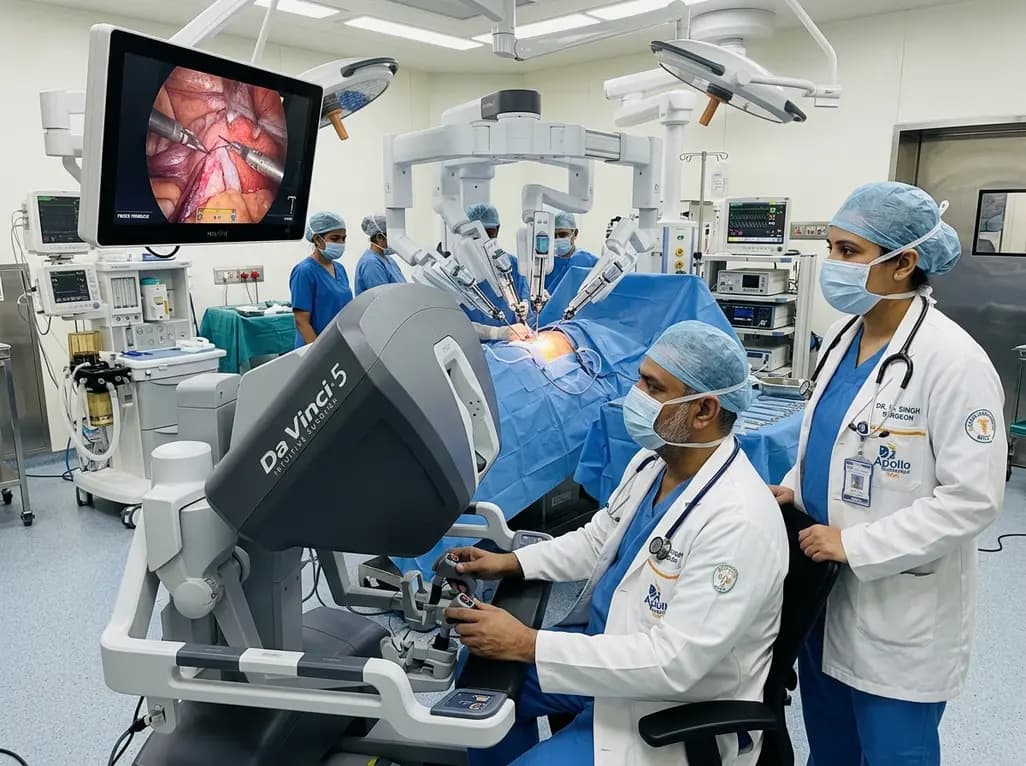
India expands its minimally invasive surgical landscape as Intuitive unveils its fifth-generation robotic platform. Equipped with real-time force feedback and immense computing performance, this innovation assists clinical specialists across urology, gynecology, and general surgery in optimizing operative care.
Today

Large-scale biobank research demonstrates that low-grade systemic inflammation quietly remodels ventricular architecture years before cardiovascular symptoms appear. Learn how emerging biomarkers like GlycA and targeted anti-inflammatory pathways could reshape preventive cardiovascular screening and clinical risk evaluation.
Today

Systematic review comparing labral repair and reconstruction in primary hip arthroscopy shows comparable short- to mid-term patient-reported outcomes, with lower THA conversion after repair but superior outcomes for reconstruction in patients aged 40 and older.
Yesterday
Diabetic peripheral neuropathy involves chronic neuroinflammation and blood-nerve barrier dysfunction. This review discusses advanced nanomedicine formulations, including nanoparticles and hydrogels, designed to overcome pharmacokinetic barriers and modulate the peripheral neuroimmune axis.
Today
