.webp&w=384&q=75)

Loading, please wait...
Loading, please wait...

The debate over the optimal PEM training duration has intensified as educational leaders evaluate workforce needs and financial pressures. A recent special feature by Jain PG et al. provides a comprehensive comparison between the traditional 3-year model and a proposed 2-year model. This discussion is vital for medical educators and trainees who are currently navigating the evolving landscape of subspecialty certification. Furthermore, the decision-making process involves balancing recruitment challenges with the necessity for high-level clinical expertise.
Reducing the PEM training duration to two years primarily aims to address recruitment challenges and financial burdens. Shortened programs might attract more candidates who often feel deterred by the long educational pathway. Furthermore, a 2-year model focuses heavily on clinical skills, potentially accelerating the entry of qualified physicians into the workforce. However, many critics argue that a shorter timeline might significantly limit the depth of scholarly activity and specialized research training. Therefore, educators must determine if two years provide enough time for comprehensive subspecialty mastery.
The traditional 3-year model remains the current standard because it provides ample time for both clinical mastery and academic development. This additional year allows fellows to engage in meaningful scholarly projects, which are often required for academic career tracks. Additionally, the extra time ensures that trainees encounter a wider variety of low-frequency, high-acuity pediatric emergencies. Consequently, maintaining clinical competency across diverse scenarios remains a cornerstone of this longer educational approach. Ultimately, the 3-year model supports a deep dive into leadership and administrative skills.
National conversations must weigh the benefits of increased recruitment against the necessity of rigorous training standards. While a 2-year model offers financial relief for trainees, the 3-year model secures a robust foundation for future educational leaders. Consequently, any shift in training duration will likely require a shift toward competency-based rather than time-based milestones. This transition ensures that every PEM graduate meets high standards regardless of their program length. Specifically, milestones must accurately reflect the complex nature of pediatric emergency care.
Educational leaders are rethinking the timeline due to concerns about subspecialty workforce shortages and the significant financial impact of long-term training on fellows.
A 3-year model typically offers more dedicated time for research and academic projects, whereas a 2-year model prioritizes clinical efficiency and earlier workforce entry.
This remains a point of debate. Proponents believe a concentrated 2-year clinical focus is sufficient, while others argue that the third year is essential for exposure to rare and complex cases.
Disclaimer: This content is for informational and educational purposes only. It does not constitute medical advice or establish a doctor-patient relationship. Professional medical training and certification requirements vary by region. Refer to the latest local and national guidelines for clinical practice.
References
Jain PG et al. Two Years or Three? Rethinking the Ideal PEM Training Timeline. Pediatr Emerg Care. 2026 Feb 20. doi: 10.1097/PEC.0000000000003585. PMID: 41714847.
Accreditation Council for Graduate Medical Education (ACGME). Program Requirements for Graduate Medical Education in Pediatric Emergency Medicine. 2023.
National Board of Examinations in Medical Sciences (NBEMS). Information Bulletin for Fellowship of National Board (FNB) - Pediatric Emergency Medicine. 2024.
"
Read summarized clinical updates, watch expert medical content, and earn CME certifications right from your smartphone.
Open your smartphone camera to scan and install.





An analysis of the national conversation regarding 2-year versus 3-year pediatric emergency medicine (PEM) training and its impact on clinical competency....
8 months ago

The 2026 KASID clinical practice guidelines present evidence-based recommendations for ulcerative colitis medical management. This update details induction and maintenance strategies, biologic and small molecule sequencing, the urgent handling of acute severe colitis, and indications for timely surgical intervention.
Today
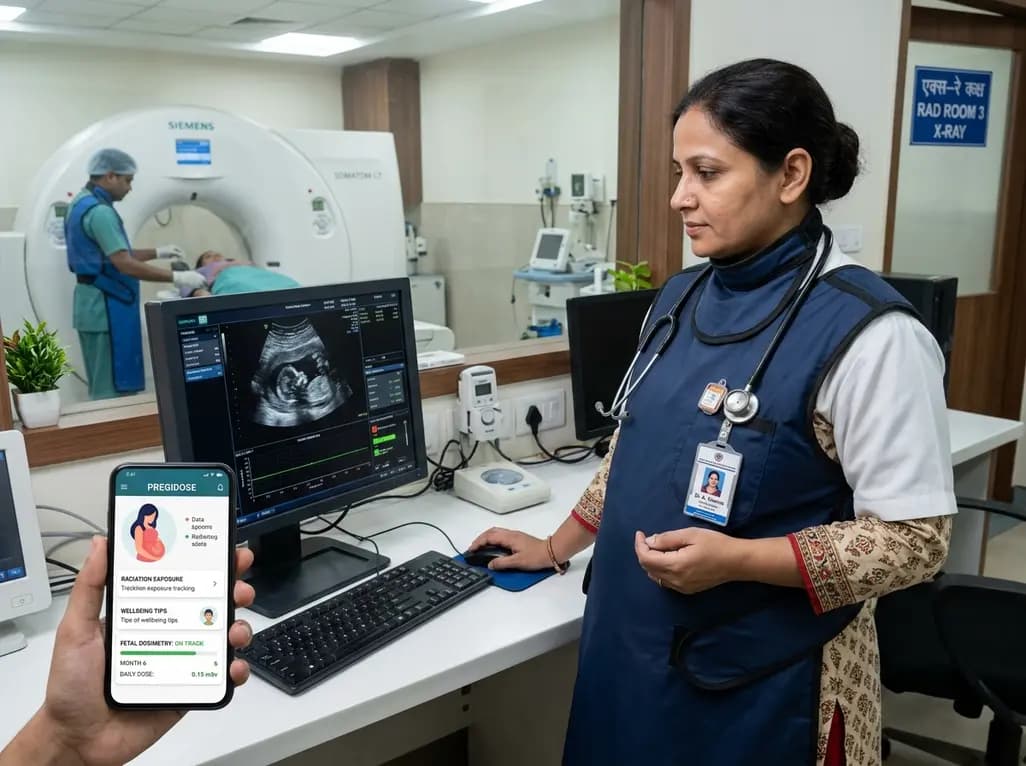
PregiDose is an innovative, user-centred mobile app designed to support pregnant radiographers by enhancing fetal dosimetry, occupational safety education, and psychosocial well-being. It bridges gaps in clinical radiation monitoring and aligns with global healthcare standards.
Today
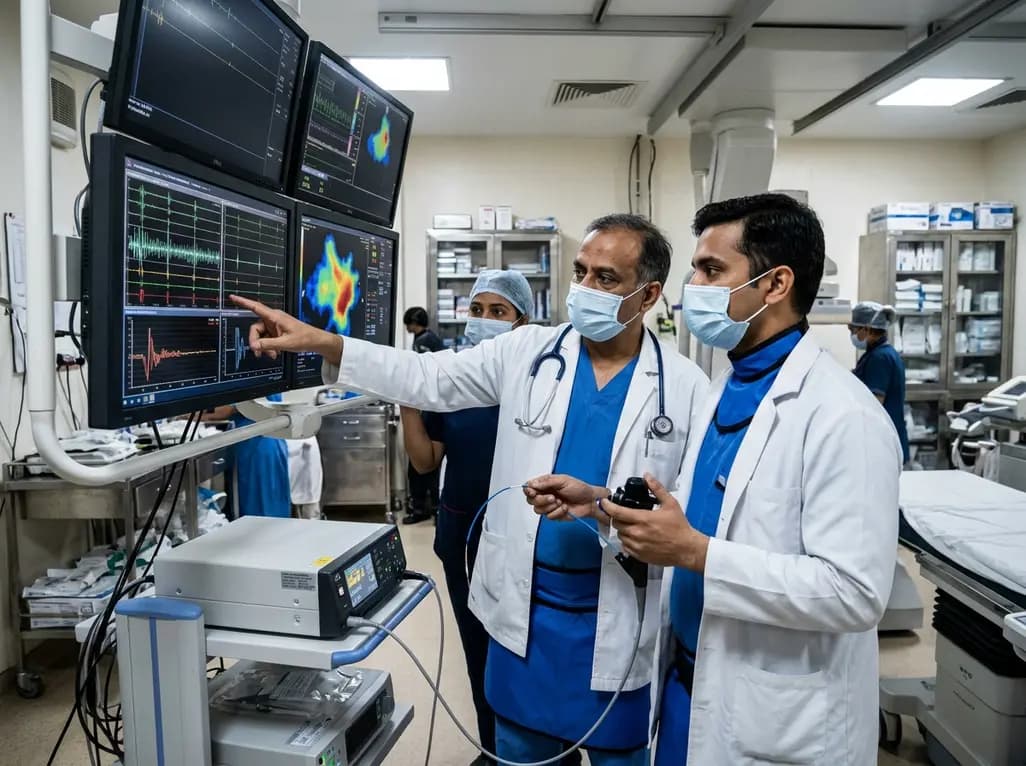
A comparative non-contact study reveals that high-power radiofrequency delivery with the QDOT MICRO catheter induces an artifactual contact force rise. Electrophysiologists must understand this power-dependent thermal and electrical phenomenon to avoid inadvertent catheter withdrawal and ineffective ablation.
Today

A novel proof-of-concept study presents a six-degree-of-freedom articulated manikin neck equipped with linear potentiometers. The system provides real-time kinematic motion feedback during cervical immobilisation, delivering sub-degree tracking accuracy to improve pre-hospital trauma training and patient safety.
Today

Novel glucose-responsive mPEG-PSA nanocarriers deliver insulin aspart on demand, achieving dual postprandial and basal glycemic control without hypoglycemia in diabetic models. This biomaterial breakthrough offers promising clinical implications for physiologic diabetes management.
Today
