.webp&w=384&q=75)

Loading, please wait...
Loading, please wait...

Conventional removable partial dentures (RPDs) have long relied on traditional lost-wax casting techniques and cobalt-chromium (Co-Cr) alloys. However, traditional fabrication methods present several clinical challenges, including procedure-related dimensional errors, prolonged laboratory labor, and compromised aesthetics due to metallic clasps. The rapid evolution of computer-aided design and computer-aided manufacturing (CAD/CAM) technology has transformed modern prosthodontics by streamlining production workflows and introducing high-performance polymers. Among these advanced materials, PolyEtherKetoneKetone (PEKK) has emerged as a promising alternative for dental restorations. PEKK offers excellent biocompatibility, a bone-like elastic modulus, and high mechanical stability. Recently, clinicians have investigated the performance of PEKK double crown RPDs in partially edentulous patients, specifically targeting challenging lower Kennedy Class I cases. Evaluating how high-performance polymers behave under functional stress compared to traditional metallic alloys remains crucial for clinical decision-making. Researchers continue to examine retentive performance and material wear over extended periods to ensure long-term prosthetic success in digital removable prosthodontics.
To rigorously assess material performance, investigators designed a standardized in vitro study utilizing 3D digital models of mandibular Kennedy Class I dental arches with bilaterally prepared premolars. Digital workflows enabled the precise fabrication of fourteen double crown RPD copies, divided equally into two distinct experimental groups. The first group featured RPD frameworks milled from high-grade Co-Cr discs, while the second group incorporated frameworks milled from PEKK blanks. Researchers initially measured retentive forces using a universal testing machine to establish baseline values. To simulate intraoral physiological function, the prostheses underwent dynamic mechanical loading in a chewing simulator for 100,000 cycles. Furthermore, technicians performed 540 manual insertion and removal cycles, effectively replicating six months of routine clinical usage. Following simulated mechanical aging, scientists remounted the prostheses on the testing machine to quantify final retentive values. Additionally, advanced surface analysis software evaluated dimensional wear on the primary copings by measuring negative deviations across critical contact points.
The experimental findings revealed significant statistical differences between the two tested material groups after simulated six-month clinical exposure. PEKK double crown RPDs demonstrated superior retentive values, maintaining a mean final force of 11.6 Newtons compared to merely 2.0 Newtons observed in the Co-Cr cohort. Furthermore, the total loss of retention was substantially higher in the traditional metallic group, which lost 16.9 Newtons of retentive force versus a modest 3.7 Newtons lost in the polymer group. Surface wear analysis supported these retentive measurements, indicating that primary copings paired with Co-Cr frameworks experienced greater structural degradation. The mean negative deviation for the Co-Cr group reached -0.25 mm, whereas the PEKK group exhibited significantly less material wear at -0.096 mm. Statistical testing confirmed a strong positive correlation between surface wear and overall retention loss, proving that excessive material abrasion directly compromises long-term prosthetic stability in friction-retained double crown systems.
The clinical implications of these findings are profound for contemporary prosthodontic practice. Retentive force loss represents one of the most frequent patient complaints regarding removable partial dentures, often leading to functional discomfort and secondary visits for adjustment. Traditional metallic double crowns often experience rapid retentive decay because friction between hard metallic surfaces causes surface scratching and material fatigue. Conversely, PEKK possesses favorable viscoelastic properties and a lower elastic modulus, allowing it to cushion functional loads without causing severe abrasion on primary copings. By maintaining stable retentive forces over time, PEKK double crown RPDs offer enhanced patient comfort, improved masticatory efficiency, and reduced risk of abutment tooth overload. Additionally, the tooth-colored aesthetic appearance of PEKK eliminates unappealing metal displays, providing a highly cosmetic solution for partially edentulous patients who demand both functional stability and natural appearance in their removable prostheses.
As digital dentistry continues to advance, the integration of high-performance polymers like PEKK into routine clinical protocols appears increasingly viable. CAD/CAM milling and additive manufacturing techniques eliminate human error during framework fabrication, ensuring repeatable accuracy and optimal marginal fit. Although this in vitro investigation demonstrated clear mechanical advantages for PEKK frameworks, clinicians must consider inherent study limitations, such as simulated oral environments that lack real intraoral saliva lubrication and complex thermocycling dynamics. Consequently, longitudinal clinical trials in human subjects are essential to validate these laboratory observations across multi-year follow-up periods. Furthermore, evaluating patient-reported outcome measures, plaque accumulation rates, and soft tissue health around PEKK telescopic restorations will further define their position in modern dental practice. Nevertheless, current evidence strongly supports PEKK as a superior, durable, and aesthetic alternative to traditional cobalt chromium alloys for double crown removable partial dentures.
PolyEtherKetoneKetone (PEKK) is a high-performance polyaryletherketone polymer utilized in restorative dentistry. It possesses excellent biocompatibility, high shock-absorbing capacity, and an elastic modulus similar to human bone. These unique physical properties make PEKK an ideal biomaterial for CAD/CAM-milled dental frameworks, telescopic crowns, and removable partial dentures, offering high durability alongside excellent aesthetic characteristics without using metallic components.
PEKK demonstrates significantly superior retention stability compared to traditional cobalt chromium alloys over extended clinical simulation periods. Due to its favorable elastic deformation and surface wear resistance, PEKK experiences substantially lower retention loss during repetitive insertion and removal cycles. Consequently, patients fitted with PEKK double crown restorations enjoy consistent prosthetic stability without the rapid loss of friction common to metal-on-metal designs.
PEKK double crown removable partial dentures are highly suitable for partially edentulous patients, particularly those with Kennedy Class I configurations who require non-metallic, lightweight, and aesthetic restorations. However, clinical suitability depends on individual interocclusal space, abutment tooth condition, and overall oral health. Dentists must perform thorough diagnostic evaluations to confirm that PEKK prostheses align with specific biomechanical requirements and patient expectations.
Disclaimer: This content is for informational and educational purposes only and does not constitute medical advice, diagnosis, or treatment. Always seek the advice of a qualified healthcare professional regarding any medical condition or clinical decision. Refer to the latest local and national guidelines for clinical practice.
References
Ramadan RAEM et al. Retention and wear assessment of novel PolyEtherKetoneKetone versus traditional cobalt chromium material used in digital double crown retained removable partial dentures. BMC Oral Health. 2026 Aug 08. doi: undefined. PMID: 42568076.

Read summarized clinical updates, watch expert medical content, and earn CME certifications right from your smartphone.
Open your smartphone camera to scan and install.





A comparative study shows that digitally fabricated PolyEtherKetoneKetone (PEKK) double crown removable partial dentures provide significantly higher retention and lower wear compared to traditional cobalt chromium alloys after simulated six-month clinical use.
last month

A retrospective cohort study demonstrates that comprehensive pharmacy transitions of care—including admission medication history, discharge review, and 72-hour telephone follow-up—significantly reduced 30-day readmission rates in acute care patients, highlighting the value of pharmacist-led clinical interventions.
Today

Meghalaya recorded a historic 55% reduction in maternal deaths, dropping from 244 to 107 over five years. Through the MOTHER app, dedicated transit homes, and expanded infrastructure like the 150-bed Tura Maternity Hospital with its first public NICU, the state demonstrates an effective public health model.
Today

Explore modern perioperative management protocols for clinical xenotransplantation. Learn how costimulation blockade, anti-inflammatory perfusion, and coagulopathy rescue overcome interspecies hurdles.
Today
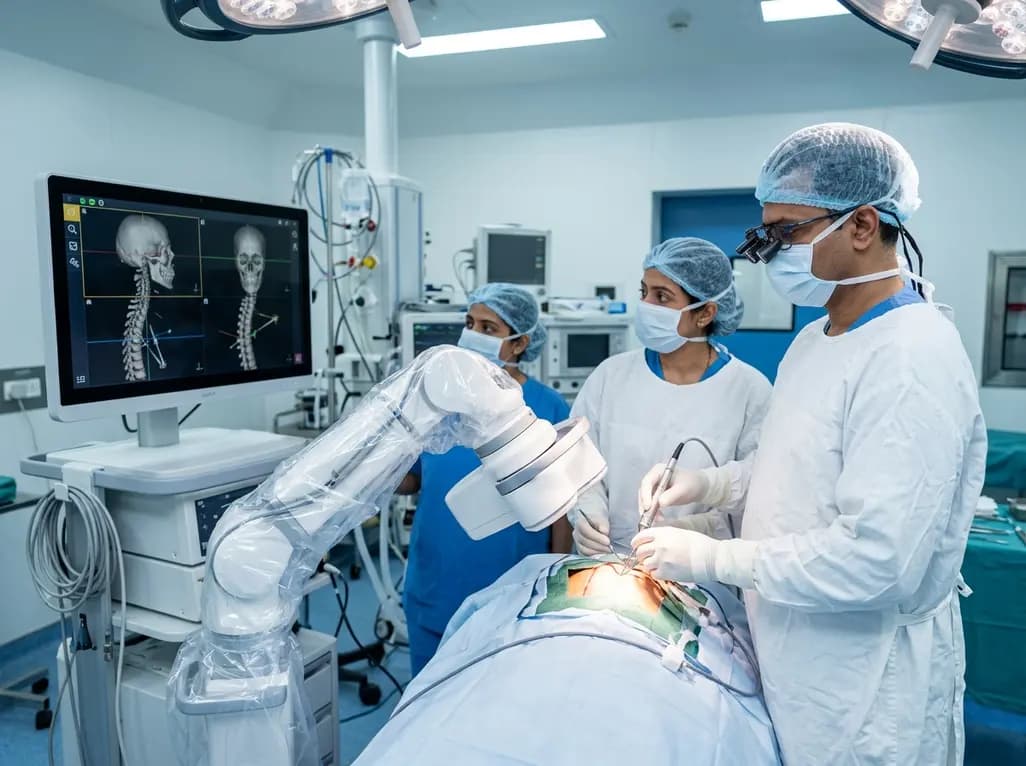
North India's first Centre of Excellence for Brain and Spine at Amrita Hospital Faridabad integrates Brainlab's Loop-X mobile robot. This landmark facility combines cone-beam computed tomography with surgical navigation to elevate precision, optimize operative workflows, and enhance specialized clinician training.
Today
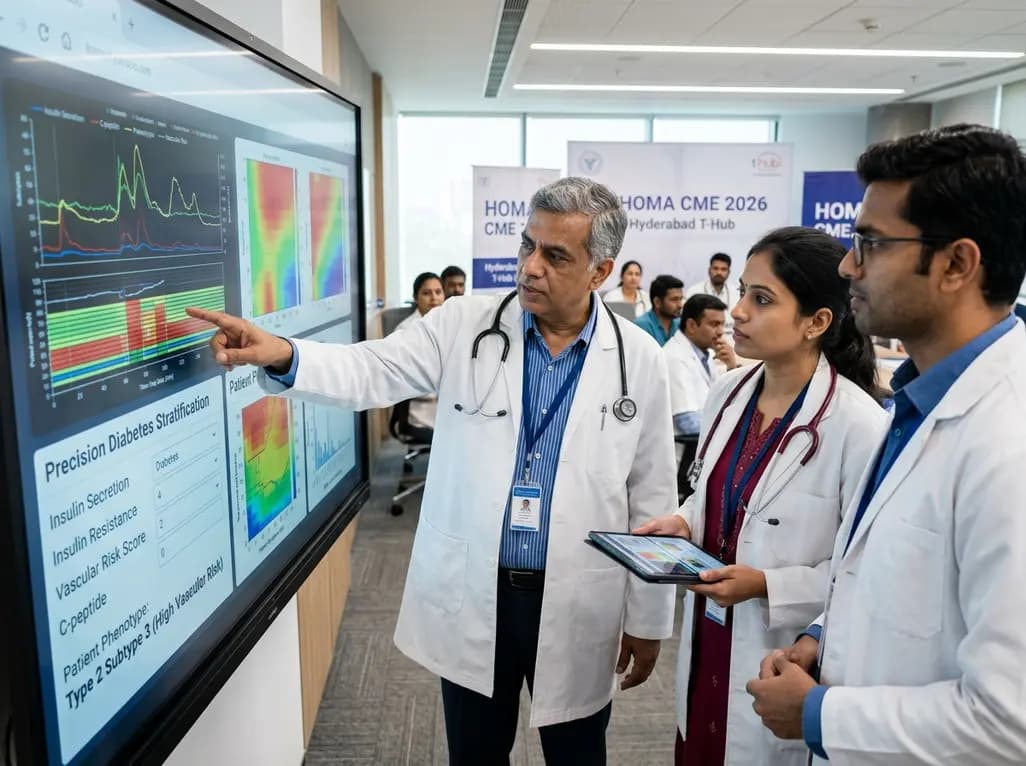
At Homa CME 2026 at Hyderabad's T-Hub, healthcare leaders emphasized moving beyond routine metrics through digital calculators and precision stratification. Discover why characterizing individual insulin secretion, resistance patterns, and vascular risks transforms chronic metabolic care in India.
Today
